Steve Matthiasson’s relationship to white wine took a radical turn while he was farming ribolla gialla in Napa Valley. He was working with Luna Vineyards, where George Vare had propagated three sticks of budwood he’d received during a visit to Josko Gravner in Friuli. Matthiasson remembers when those vines produced their first crop in 2003, and how he had walked in on Vare and his then-winemaker, Abe Schoener, punching down the fruit as one would for red wine—something he’d never encountered before. “This is how Gravner does it,” Vare responded. “He ferments it on the skins.”
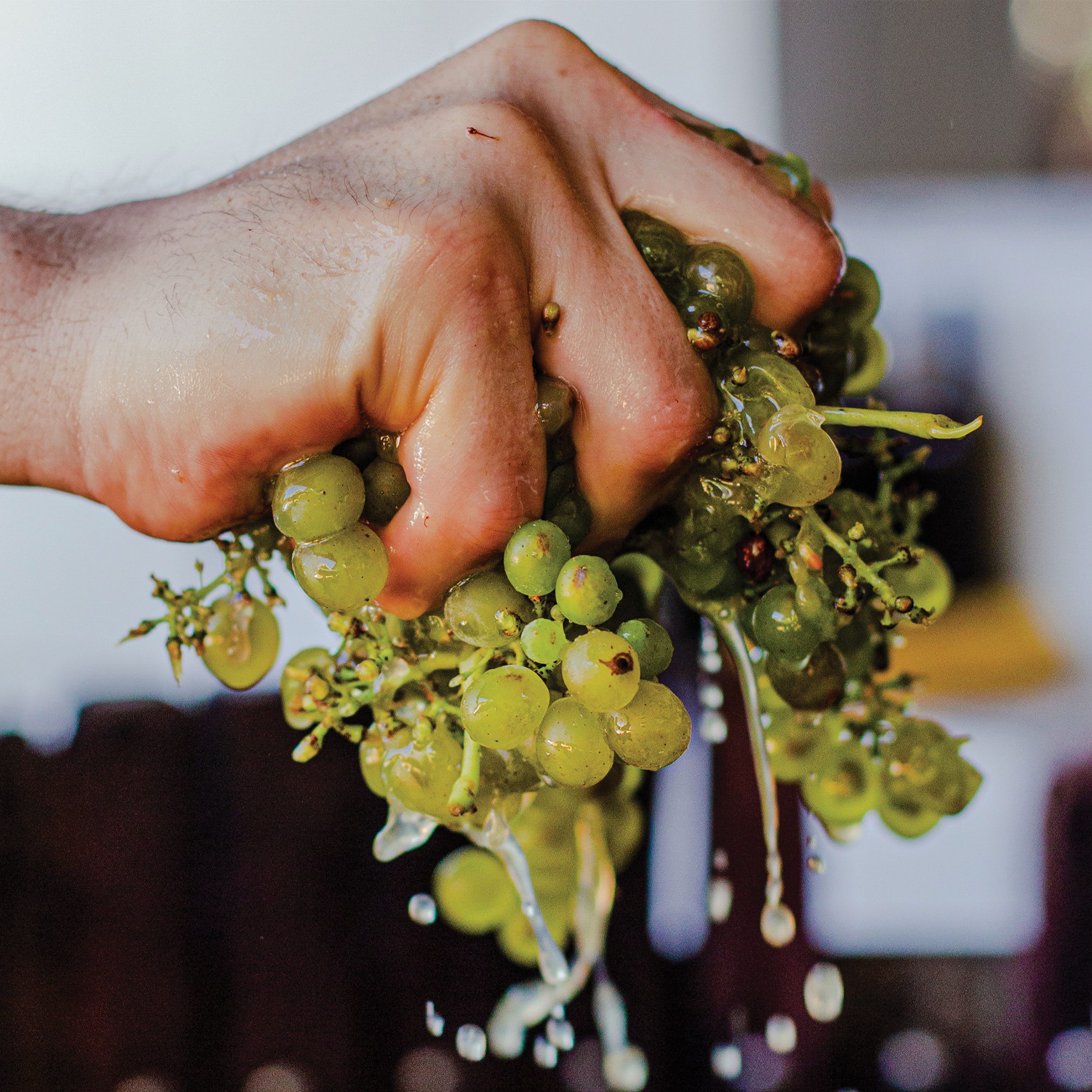
Matthiasson uses the terms skin contact, skin maceration and orange wine interchangeably as he describes white varieties fermented on their skins, stems and seeds. The latter term, referring to the orange hue the wine takes on, caught on in the US in the last decade, though the practice of fermenting white grapes as reds spans millennia. “It’s an ancient way of making white wine that producers like Radikon, Gravner and Movia brought back,” he says. “Then, all hell broke loose.”
In 2005, Vare took Matthiasson and Schoener to Friuli to meet Gravner and his skin-contact cohorts. Matthiasson noted how the region’s winemakers gave precedence to whites over reds and therefore gave them priority for the best sites. “Friuli has really good marl soils; other regions would probably have red grapes planted on them, but Friuli has white grapes,” he says. “You could see the textural possibilities of some of these white grapes when grown on great soil.”
“With orange wine, you need to be picky,” Matthiasson continues, talking about optimal sites. “With lower-vigor older vines, the vineyard is self-regulating.” But without older vines, you have to do what Matthiasson did, and plant your own.
Following the trip to Friuli, Matthiasson and his wife, Jill, purchased a property in the Oak Knoll District that came with three acres of merlot vines. The first variety they grafted to those vines was Vare’s ribolla gialla. Matthiasson has fermented that fruit on the skins since its first crop in 2008.
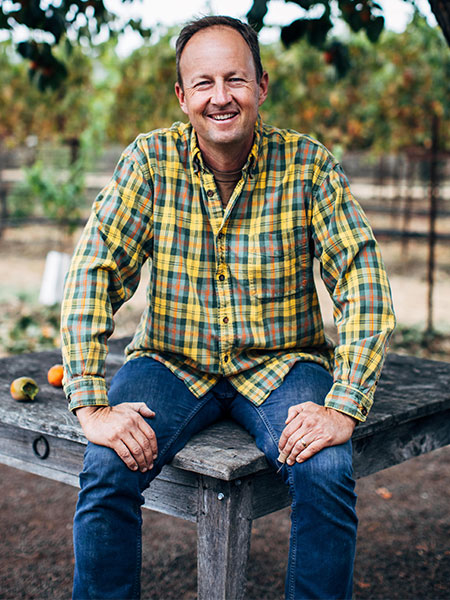
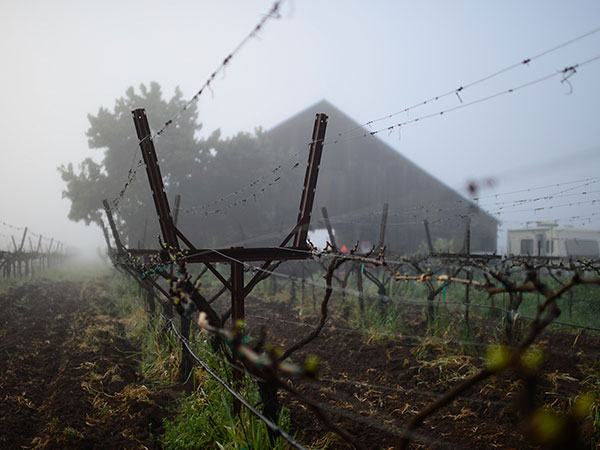
Though Napa Valley shares little resemblance to Friuli, he finds his vineyard’s loamy soils and relatively cool climate in Oak Knoll give wines with high-toned aromas and fresh flavors—so much so that he makes an exception for the ribolla gialla, pulling away more of the canopy and allowing the fruit some sun exposure to ensure it ripens to full maturity.
When growing white varieties, producers typically have room to be generous with vine vigor and watering, because they are more concerned about maintaining the acidity that makes white wines bright and fresh; these grapes are pressed for their juice as soon as they reach the cellar. However, the growing factors change when skin contact extends to fermentation. “You’re managing the vineyard as you would for reds,” says Matthiasson, “because you’re interested in mature skins.”
Like Matthiasson, Matthew Rorick of Forlorn Hope has also been influenced by Friuli’s skin-contact winemakers. An introduction to Gravner’s wines led him to produce more than a handful of skin-contact wines in 2010, including ribolla gialla from Vare’s vineyard. He learned a lot, particularly about grape varieties, that first vintage: “I found the aromatic varieties worked best , and those with some tannins fared well, too. But it’s oftentimes hard to tell which whites have tannins, because [winemakers] usually just chuck them in the press, squeeze them and the skins are gone.”
Rorick got another chance to experiment with white-grape tannins when his family purchased a 75-acre estate vineyard perched at 2,000 feet in elevation in Calaveras County. Parts of the vineyard were already planted to albariño and muscat blanc, both of which, Rorick says, lend themselves to skin contact. He’s since planted other aromatic white varieties such as vermentino and savagnin—as well as a virus-free clone of the ribolla gialla vines that Vare donated to UC Davis’s Foundation Plant Services before his passing—all with skin contact in mind, among other winemaking methods.
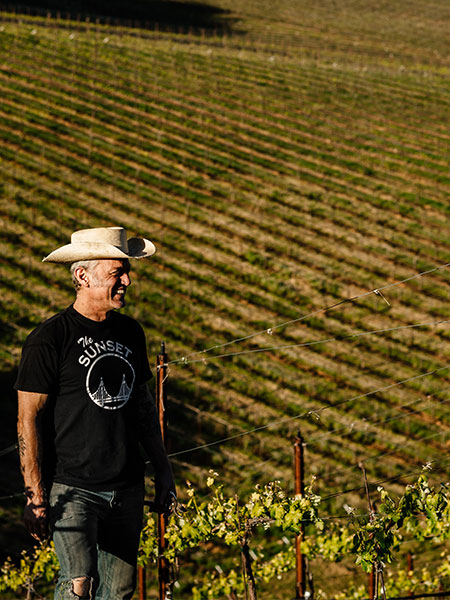
Aside from the select varieties he’s planted and his organic practices, Rorick says the biggest factor in farming for skin-contact wines is perceiving the maturity of grape skins. He’s looking for slightly more mature skin phenolics than he would if he weren’t using the skins—flavors and aromas that will give an added dimension, just slightly more luscious than tart. “There’s a core group of flavors and aromas that develop in any particular variety,” says Rorick. “Those initial characteristics are present as early as eighteen or nineteen Brix, then shift into the second wave in the low twenties.”
When it’s time to ferment those white grapes on their skins, with their relatively low levels of anthocyanins, the fermentation benefits from additional oxygen and that touch more phenolic ripeness to help soften the astringency added by the skins. Rorick points out how aromatic varieties come into play here. “The skin and pulp of white-wine grapes tend to be rich in aromatic compounds,” he says. “By fermenting in contact with the skins, primary aromas are volatilized and oxidized, and the profile of the wine is dominated by secondary aromas (and [even] tertiary, depending on élevage). The more aromatic compounds the variety possesses, the more potential it has to evolve into something complex and compelling.” Rorick then adds that skin fermentation makes for more phenolic extraction, resulting in more grip and texture on the palate.
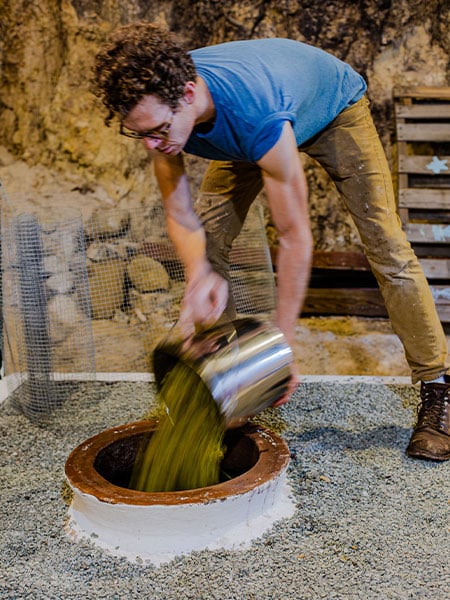
Like the majority of artisanal winemakers in California producing skin-contact wines, Caleb Leisure works mostly with purchased fruit. After living abroad, and working harvests in France’s Languedoc and Jura regions, Leisure returned to the States to apprentice with winemaker Tony Coturri on Sonoma Mountain. Georgian winemaking and skin-contact wine were points of inspiration when Leisure started his namesake brand in 2016. With crowdfunding, he imported ten Georgian qvevri and buried them at Coturri Winery where he produces all of his wines using those terracotta vessels. He started with varieties like marsanne and roussanne purchased from the Sierra Foothills, which resulted in his most overt skin-contact wine, Mother Knows, macerated on the skins until spring.
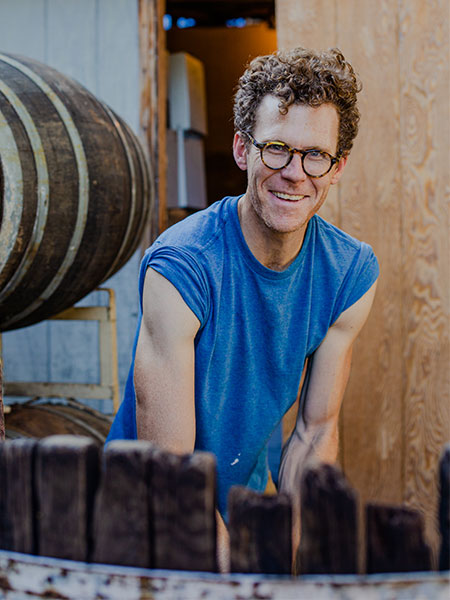
In 2019, he began leasing a three-acre vineyard in Calaveras County planted to viognier, mourvedre and syrah. He and some friends also started renovating a vineyard in the Yorkville Highlands. And he’s still searching for other parcels, aiming to someday farm more fruit than he buys. Farming organically, and at the mercy of Mother Nature, Leisure says he doesn’t commit to a full skin-contact wine until the fruit comes off the vine. Until then, he works to balance the vines—by pruning for the right amount of vigor, for example—and he’s opting for farming practices like tilling to help the soils regenerate a diverse biome under the surface that the vines can access for nutrients. “The goal every year is to have beautiful, pristine fruit that’s physiologically ripe, and has no mildew,” says Leisure. “All of these things need to happen before I decide [whether or how much] I’m going to use the skins.”
Leisure admits that most people want to know how he vinifies his skin-contact wines from a technical standpoint. Now, as he’s slowly gaining autonomy with his farming practices—how he tends to the soil and vines—he’s laying the groundwork for another conversation, one that can begin in the vineyard.

is the tasting coordinator for US wines at Wine & Spirits magazine.
This story appears in the print issue
of August 2020.
Like what you read? Subscribe
today.