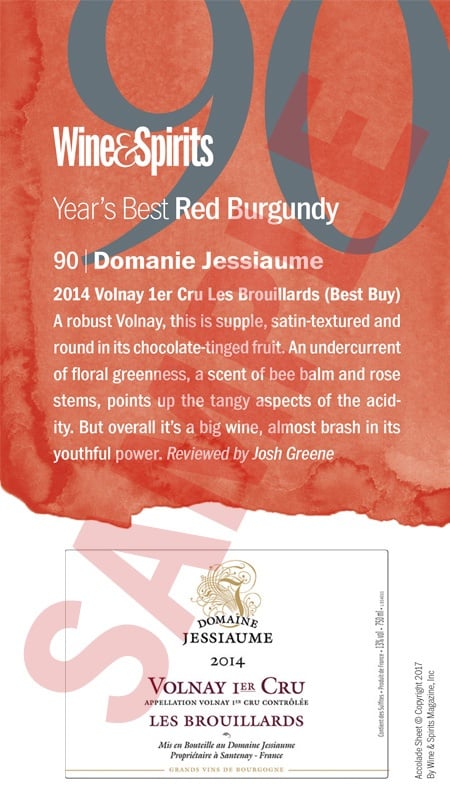
Two decades and two years after it was made, the wine is still fresh. The dark mineral tannins last, the wine’s flavor horizon capturing the view from high above the river canyon of the Douro. The wine is light and airy in its weight, silken in its texture, intensely flavorful, with deep scents of black raspberries and notes of crushed stone.
It isn’t Port, though it might have been had it been made 150 years ago.
Back then, a wine with 12.5 percent alcohol like this 1992 Duas Quintas Reserva from Ramos Pinto might have been considered a great Port—a natural Port, one without brandy, elderberries or other additives to strengthen it.
Throughout the 19th century, writers describe great wines made in the Douro without fortification. They may have been too fragile to ship, less stable and less sturdy. But for some, they were the most beautiful evocation of this landscape, one of the world’s most astonishing places to grow wine. In the 1840s and ’50s, a battle raged in the Douro over what proponents called natural wines, until, at a bad turn in the river, the man who had fought vociferously for natural Port lost his life.
Our current concept of classic Port dates to 1907, when, in the wake of phylloxera and amid the wholesale replanting of the Douro’s steep schist-walled terraces, Port was officially and legally defined as a Douro wine fortified with brandy. The rest of the Douro’s produce, whether grand or plonk, lost its brand.
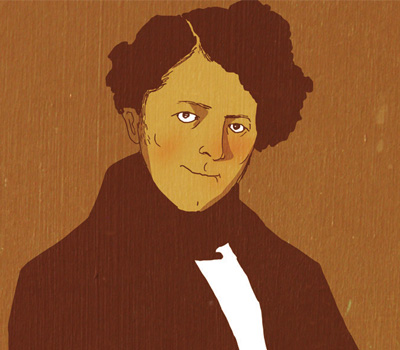
Joseph James Forrester, who drowned when his boat capsized in the Cachão de Valeira, wrote these words in 1848, in his inflammatory pamphlet, “A Word or Two on Port-Wine!”

A PURE AND FULLY FERMENTED
WINE is lively and clean on the palate, and dry flavoured, with an enticing bouquet. It is exhilarating and digestive, and the saccharine being perfectly decomposed and converted into alcohol—little, if any, additional spirit is required to preserve it.It improves with age, in flavour and bouquet; and when perfectly racked, will keep for any length of time, still preserving all its vinous properties.
In an IMPERFECTLY FERMENTED AND ADULTERATED WINE, the sweetness is heavy and cloying, and the smell mawkish and medicine like. When drunk it causes dulness and dyspepsia.
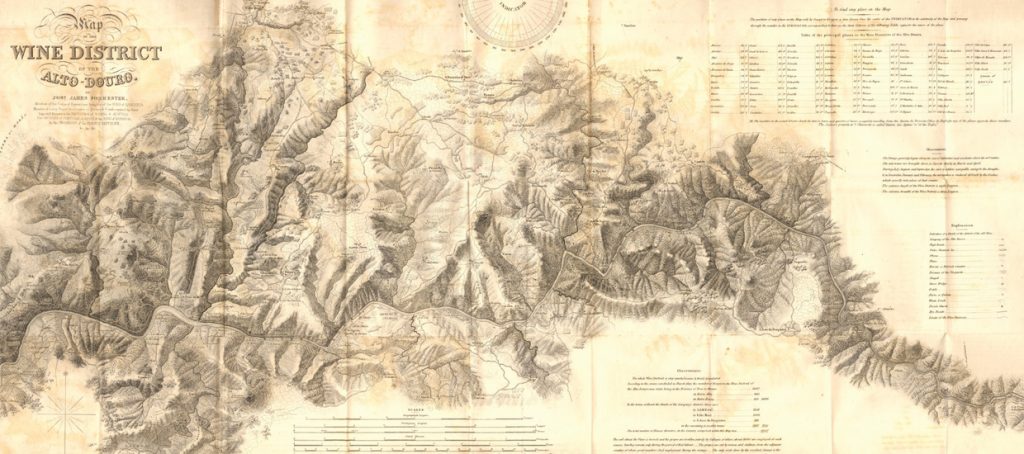
Take away the archaic English idioms and the text could come from a proponent of natural wine today. As a shipper, explorer and cartographer of the Douro river valley, Forrester believed in the region’s talent for growing elegant wines. He was a champion of “delicate,” “lightly coloured,” “highflavoured” wines that could be kept “for any length of time without brandy.” As an outspoken critic of the big, the ripe and the ugly, he made a number of enemies and was barred from the Factory House, the British shippers club in Oporto.
In the 1840s and ’50s, a battle raged in the Douro over what proponents called natural wines—made without brandy or other additions. For some, they were the most beautiful evocation of this landscape, one of the world’s most astonishing places to grow wine.
Classic Vintage Port is now defined as a wine foot-trodden in open stone lagars, the low-walled fermentation corrals that have been used in Portugal for millennia, where entire bunches are crushed with their stems by the soft soles of human feet, ground into a macerating mass of juice and skins that ferments until it is racked off into a vat and mixed with brandy, the yeasts suddenly finding themselves in a world of 20 percent alcohol, ending their work and their lives, leaving a wine with the sweetness of the grapes, the tannins of the skins and stems, and the alcohol from the brandy to sustain it through two years of aging in oak and another few decades in the bottle.
This style of wine, created by the British shippers for their home market, is made successfully only every few years, and represents about three percent of the production of the Douro region in any “declared” year.
Ask a Portuguese grower and most would tell you classic Port is Tawny Port. It is, as well, for David Leite—a Portuguese-American food and wine journalist at Leite’s Culinaria—who describes it this way: “A blend of finely aged, superb Ports from different years is what lends Tawny Port its nutty flavor, with overtones of vanilla, butterscotch and caramel.” Great Tawnies capture the Douro in a gentler, more transparent lightness of flavor than Vintage Ports do, the two styles growing ever more similar as they age to delicate maturity. And then there are the Douro classics that can no longer be called Port. The first commercial release of the Ramos Pinto Duas Quintas Reserva, the 1992 described in the first lines of this story, would have to rank among them—as would the original vintages of Ferreira Barca Velha, the wine that inspired it. While fortified Ports from the 19th century live on to this day, their freshness preserved, at least in part, by their brandy, the delicate, natural wines of the time are accessible only in books.
Forrester on Natural Wine
Baron Joseph James Forrester, the 19th century grower, shipper and Douro explorer, was a champion of “natural” wines from the Douro. He published a collection of his writings in 1859, including a speech delivered in 1844 at his quinta in the Douro, at Pazo de Regua. The translation excerpted here is by the late Portugal scholar Pasquale Iocca.
It has come to the point that elderberry, sugar, brandy, vinho abafado and jeropigas [unfermented and partially fermented grape juice preserved with brandy] are…considered absolutely necessary to perfect the wines of the Douro. To Perfect them?! It would be more appropriate to say that this ruins the wines…
I’m a grower, but also a merchant, and I declare that my fellow countrymen [the English] do not wish, as the law seems to impose, wines of only one quality, full of brandy.
On the contrary, the English consumer wishes wines to be more pure…Scrupulous people will always select pure wine according to their own taste. And this will happen when wines can be freely made according to the taste of these consumers.
But disgracefully, since a long time ago the special regulations of commerce for Port wines and the custom has been to attempt to make wines of just one quality whether the season is humid or dry, cold or mild. In one word, a legal wine, a wine for shipping that has ‘intrinsic quality,’ or in the language of the company, ‘a wine full of color, strong in spirit, and stuffed with sweetness.’
I do not intend to denigrate wines which are heavily colored and very big. On the contrary, as is well known among the growers of the Douro, I have been buying these wines for high prices, because the wines are pure.
The objection is not to the wine, but only to the mixture and imitation of wine—a wine deep, strong and sweet, the base of which could be whatever must you choose.
When Fernando Nicolau de Almeida started to tinker with the idea of a great Douro red without brandy, he worked at Vale Meão, the farthest outpost of what was once Dona Antónia’s empire, a place where secrets were safe.
Or on scraps of paper: While researching Vintage, a book João Nicolau de Almeida co-authored with Gaspar Martins Pereira, Almeida came across a piece of paper in Pereira’s archival material. Written by a farmer in the Douro in the early 19th century, the paper described the method of making wine without brandy. For Almeida, it was one more link in a chain that started when he was a boy, working with his father, Fernando Nicolau de Almeida, who served as the winemaker at Ferreira.
The Ferreira family was central to the development of the Douro in the 19th century. The firm, headed up by Dona Antónia Adelaide Ferreira, extended its vineyard holdings from the Quinta do Vallado, an estate located on the Rio Corgo, just above Regua, still in the hands of Dona Antónia’s descendants today, to the remote eastern reaches of the Douro. Her explorations and vineyard development took her past Pinhão, following the railway access past the falls at the Cachão de Valeira that once had made transport from the Douro Superior too dangerous. She developed Quinta do Vesuvio, just upriver from the Cachão, and Quinta do Vale Meão, 740 acres of virgin land in 1877, far upriver, near Pocinho, which the railroad finally reached in 1887.
Dona Antónia and Forrester were close friends. She was on the boat, in fact, the day they departed from Vesuvio, though when the river took Forrester, never to return his body, it spared her and most of the rest of the party. Perhaps she prayed for his soul at the chapels she built on each one of her quintas. At Vale Meão, her most remote refuge, the chapel walls are stained with the grapes that harvesters would bring as an offering.
Forrester on Douro Grape Varieties
The grapes most used for Port, and the kinds of wine which they produce, are the following : viz.—
Bastardo… produces a rich, delicate wine with delicious flavour and bouquet, and with little colour….properly made and judiciously treated, will in Portugal keep for any length of time without brandy.
Alvarilhão…produces a delicate, light coloured, spirituous, high-flavoured wine, with great bouquet. It is a very durable wine; and if perfectly made, may be kept in Portugal altogether without brandy.
Touriga…is dry and full-bodied, with great colour. When made pure, and without brandy, it requires peculiar treatment for the space of about two years; and it does not come early into use.
Tinta Francisca…affords a full-bodied wine with excellent colour.
Tinto Cão…produces a very dry wine, with body, fine colour, and exquisite aroma.
Mourisco Preto…gives a delicious, rich, highly flavoured wine, with excellent body, colour and smell.
Tinta Grossa…yields a fine sound claret-like wine, of light body, and most agreeable aroma.
Souzão …the wine which it produces is harsh and astringent; but it has the deepest colour of any produced in the Douro, and it is used almost exclusively as colouring for other wines, and for jeropiga.
Excerpted from “A Word or Two on Port-Wine!” by Joseph James Forrester (London, 1848); italics from the original text.
When Fernando Nicolau de Almeida started to tinker with the idea of a great Douro red without brandy, he worked at this farthest outpost of what was once Dona Antónia’s empire, a place where secrets were safe. He had been experimenting with dry red table wines when he happened to meet Emile Peynaud, the famed enologist from Bordeaux.
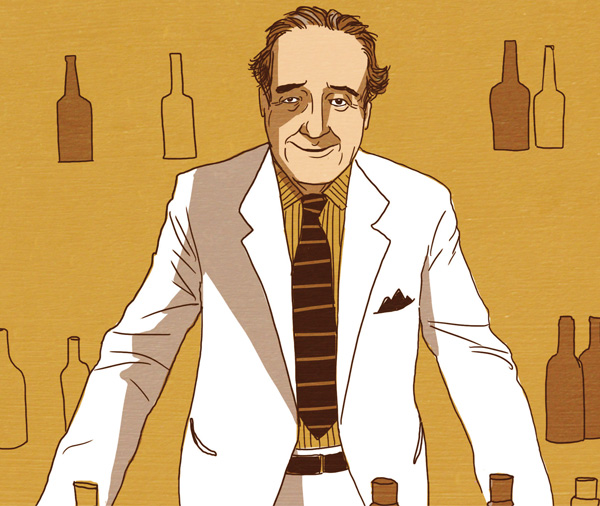
“My father was working on Vinho Verde to export to Brazil,” João Nicolau de Almeida told me. “The Vinho Verde started malolactic, with gas. At the time, Emile Peynaud had a solution for controlling malolactic fermentation. So Ferreira invited him to come to Vinho Verde.
“My father was making some Douro table wine and he invited Peynaud to taste it. Peynaud thought it was fantastic, and asked, ‘Why are you worried about Vinho Verde? You have fantastic wines here.’ Peynaud invited him to come to Bordeaux. That gave him the motivation to continue. And then he went around Bordeaux and he saw how cool it was when they made the wine; they had fresh cellars and they knew how important the freshness was for the health of the wine. The temperature in the cellars of the Douro could reach forty degrees [Celsius], impossible to keep the freshness in the wine.” It was a time before temperature control had reached the Douro, so Almeida enlisted his sons to help him haul blocks of ice from Porto, to cool the fermentations. He also balanced the ripeness of the fruit from the riverside vineyards at Vale Meão with tart fruit from high-elevation vineyards.
The first vintage was 1952—coincidentally, the first commercial release of Penfolds Grange. The parallels are fascinating, as Max Schubert, who created Grange, was also working in an industry focused on fortified wines. In South Australia, however, there was no vineyard classification and there were few restrictions. It may have taken a decade for Schubert to be recognized for his accomplishment, but the benchmark he created changed the industry. In the Douro Valley, Almeida was recognized for making a great wine, but nobody followed his lead for 40 years.
In Douro, the economics were born directly out of the restrictions on the Port trade. The first district lines had been drawn for Port in 1755, a reaction to the first planting boom and oversupply bust after England and Portugal signed an early trade accord—the Treaty of Methuen (see “Douro Boom & Bust”). In the early 20th century, after new restrictions limited Port to wine fortified with brandy, vineyards began to be officially registered, classified by quality level, the farmers given annual allotments to sell their grapes at a premium for Port wine (those authorizations are known in Portuguese as the benefício.)
Until recently, few shipping companies had any vineyard holdings at all. Ferreira was an exception to the general rule that growing grapes and shipping wine were separate activities; growers, in fact, were not allowed to ship wine unless they had a licensed warehouse in Vila Nova de Gaia, close to the sea. It wasn’t until shippers started buying vineyard land in the 1960s and ’70s that growers started to press for equal rights, and the laws changed again in 1986, allowing growers to ship wine directly from the Douro.
Douro Boom & Bust
John Croft described himself as a “Member of the Factory at Oporto, and Wine-Merchant, York.” In his “Treatise on the Wines of Portugal” (1788), he details the events surrounding the demarcation of the Port wine district, which has since expanded. Here are a few excerpts.
[When] the demand in England for the Wines was still increasing, and even much greater quantities were called for there than what could be expected from the natural produce, the English Factors and Wine-Coopers were induced to try the expedient of adulterating, and teaching the Portuguese to sophisticate them; and, according to the Proverb, ‘what the Lion’s skin would not do, to eke it out with the Fox’s tail;’ and this they effected principally with the juice of the elder-berry.
[Later], from the prodigious quantity of Wines in a favourable year of vintage, and owing, perhaps, to double the quantity by adulteration, it happened that, in the year 1755, the Wines were offered at about 2 and 3 [pounds] per pipe in the Wine Country, and even so they had hardly a sale for them…As the wines were in general but ordinary of that vintage, the English Factory not only neglected going to Wine Country, as usual, to purchase or buy the Wines, but sent remonstrating printed letters to their Portugueze Wine-Brokers, which were circulated about the country, purporting, that if the owners of the vineyards did not forbear the adulteration of the Wines…they would not buy their Wines of them at any rate, nor even give themselves the trouble of tasting them. This letter had such an effect on the Wine Country in general, and the Vintagers in particular, who were very much disgusted at it…that the Portugueze Farmers and Vintagers came down in body to Oporto, and offered their Wines to them at their own terms and price. But this was to no avail…and therefor they associated in employing Deputies to go down to the Court at Lisbon to represent their grievances…and produced to then Principal Secretary of State the printed letter which the English Factory had so very imprudently dispersed around Wine Country…
The letter, tho’ nugatory or trifling in itself, and so considered at first by the Vintagers, yet still served to make a principal handle and argument for establishing a monopoly of the Portugueze Wine Company at Oporto, a proceeding very fatal…for it was accomplished at the expense of blood and rebellion in Portugal, and to England of double the price for the Wines that they were used to be purchased at before.
There was to be a demarcation of a particular spot or territory of what they presumed to dictate to the Factory to be the best and properest situation for Wines, and which they termed Factory Wines, or such as they should deem most suitable for the English market; though it was equally impossible and absurd to attempt to ascertain this properly; for as those they selected were of the hottest situation, in a dry year the Wines would naturally be too mellow, and even some years like syrup, and not at all useable as a vinous liquor. The English were at the same time denied the liberty of mixing them with the Wines without the demarcation; for it might happen from a great variety of circumstances, but more particularly from a better management, or more favorable season, that the vineyards in these more moderately warm situations might afford the better Wines, which had frequently happened; for the Sun equally shed his beneficent rays on the just and the unjust.
The Wine of the poor Peasant would sometimes please the English purchaser better than that of his arrogant Lord; by this means they grew rich…and many families were raised out of Plebian stock to vie in honour as well as riches with their Superiors of more ancient and noble race. This more particularly clashed with the system of government, which, being absolute and inimical to the State as superior power in the Nobility; and this was a motive…which induced the Minister Pomball to mark out the line of district or allotment, including the vineyards only of the principal Gentry and Religious Houses, and excluding those of the menial Vintagers or Farmers, rendering these last forever incapable of producing Wines for English exportation, or for the Northern countries.
Suddenly, there was an alternative to the benefício: Quintas were building their brands from scratch, but accumulating the necessary inventory and stocks required to ship Port was financially prohibitive for many, and so they sought to create dry red wines as the prime expression of their land. The explosion of Douro table wine that followed shows the diversity of the region more fully than Port ever could. There are single-quinta wines and single-block selections. There are wines from cooler, north-facing sites, or high elevations, or ancient parcels of mixed vines. And there are single-variety wines—predicted by Forrester in the 1840s, though the featured varieties are often different today (see “Forrester on Douro Grape Varieties”). As for a classic style, all bets are still on the table.
“The Wine of the poor Peasant would sometimes please the English purchaser better than that of his arrogant Lord; by this means they grew rich…and this was a motive…which induced the Minister Pomball to mark out the line of district, including the vineyards only of the principal Gentry and Religious Houses, and excluding those of the menial Vintagers or Farmers…”
—John Croft
A Tasting of Douro Table Wine and Porto
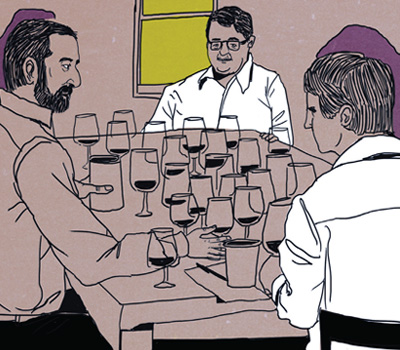
In contemporary Douro, many shippers and growers produce both dry table wines and fortified Ports. We organized a tasting that pitted a producer’s dry red wine against its Port wine, using the warm 2011 vintage to consider the status of classic Douro wines. Try this with a cool vintage, and the results might be completely different. Our panel included Scott Carney, MS, dean of wine studies at the International Culinary Center, NY; Roger Dagorn, MS, wine director at Toqueville and 15 East, NYC; Nacho Monclus, wine buyer at Lupulo, NYC; Tara Q. Thomas and Joshua Greene of W&S.

—Scott Carney, MS
“There was a time when sweetness was prized, but now there are so many places that people can go for sweetness.”
FLIGHT #1 – Altano 2013 Douro • Dow’s Fine Ruby Porto
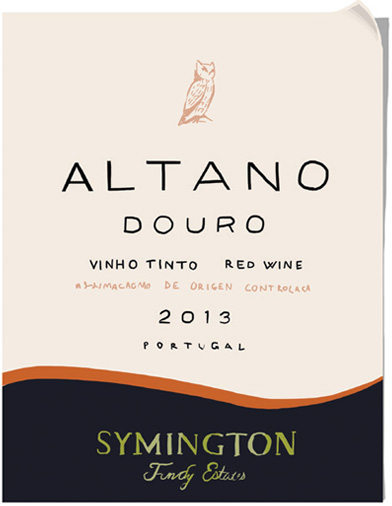
We began with a comparison of two basic wines from the Symington Family. The Symingtons have the largest vineyard holdings in the Douro, producing Altano from a modern, relatively flat vineyard in the Douro Superior; Dow’s basic Ruby represents a mix of grapes from throughout the region. The Altano is bright and youthful, showing some heat and plenty of tarry strawberry-jam flavor. The Ruby, a popular pour at restaurants, has a familiar flavor profile, a simple, sweet mouthful of jammy strawberry fruit. “There was a time when sweetness was prized,” Scott Carney pointed out, “but now there are so many places that people can go for sweetness.” In a sense, the dry wine reads as a more modern and fresh interpretation of the Douro.
FLIGHT #2 – Quinta de la Rosa 2011 Douro Reserva • 2011 Vintage Porto
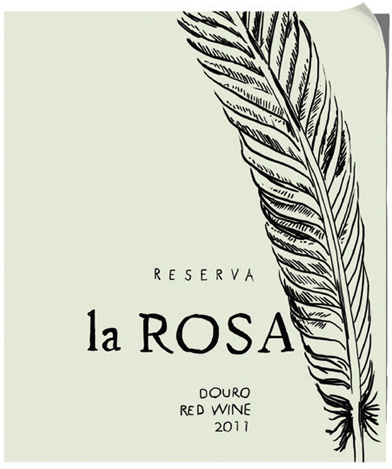
The Bergqvist family ran Eucalyptus Pulp Mills until 1987, when they sold the company and focused their attention on a small quinta they owned just downriver from Pinhão. Jorge Moreira has made the wines at the quinta since 2002. For the Reserva, Moreira blends touriga nacional, touriga franca, tinta roriz and other varieties from the older terraces at La Rosa, capturing the floral notes in the plummy fruit, as well as a bitter, tannic power. The Porto comes from the estate as well. Tasting the wines side by side, Tara Q. Thomas could envision an equation with the Reserva plus sugar equaling the 2011 Porto, that sweetness lending the fortified wine “a great, lush texture, wrapping around the wine’s structure like a hotel bathrobe.” Even so, the Port is focused more on fruit than sugary sweetness. Both wines were massive, with impenetrable color, two factors many people associate with classic wines from the Douro, but perhaps are really only one expression.
FLIGHT #3 – Quinta do Noval 2011 Douro • 2011 Vintage Porto
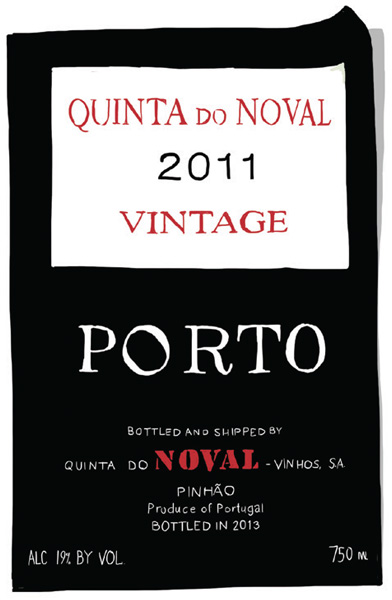
People assumed because Douro is a hot place, it was a place to make big wines,” Christian Seely told me recently as we tasted the 2012s at Quinta do Noval. Seely, now managing director of AXA Millésimes, had worked with Antonio Agrellos through the replanting and renovation of Noval in the 1990s, and though he now spends more time in Bordeaux, his heart is still in Douro. “If you taste old Vintage Port,” he said, “they are delicate. Hugely extracted wines are easy to do, but are masking the true nature of what Douro terroir is about. 2012 wasn’t quite as sunny or warm as 2011. You don’t have the same extraordinary ripeness or structure. But you’ve got beautiful fruit.”
It’s as good a reason as any to try this tasting with the 2012s, though it might not be particularly fair to the Port wines. The touriga nacional that Seely and Agrellos planted at Noval now provides a substantial component for one of the most compelling dry reds in the Douro. In cool years, the touriga is fresh and luscious, the violet-scented fruit primarily a vehicle for the schist soils of the Vale Mendiz.
In a ripe year, like 2011, the Douro red comes across as big and rich, a deeply saturated red that’s completely savory. Agrellos has managed the tannins so they still hold their mysterious, schist depths, without any sharp edges. The wine is bold, then quietly reserved. Noval’s 2011 Porto is tarry and as sweet as a sugar plum, carrying the classic violet scents of touriga nacional. The tannins rein in the sweetness of the fruit, contrasting its clean, modern lines with something that feels archaic. Like many 2011 Ports, this wine defines a new classicism for the Douro, Noval’s needing a decade, at least, for the wine to shed its baby fat.
FLIGHT #4 – Niepoort 2011 Douro Charme • 2011 Porto Vinha Velha Bioma
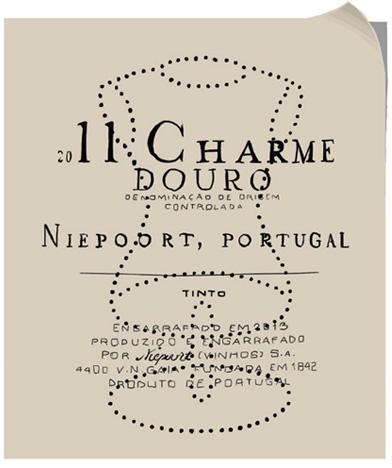
Dirk Niepoort, the leader of the revolutionary flank of the Douro table wine movement, started investing in vineyards in the 1980s. He steadfastly believes in selecting sites for table wine and Port and farming them for those styles and outcomes. Charme is the only exception: His lightest, most elegant, in some vintages delicate table wine, it grows at an ancient mixed block of vines in a vineyard where the concentration and ripeness of the fruit is suited to Port. In one of his many “Projectos,” Niepoort created Charme by foot tredding whole grape clusters in the round lagars in the old Sandeman museum in Pinhão (now a Niepoort vinification center), finishing the fermentation in French oak barrels. In some years, the oak can dominate the delicate complexity of the fruit, but in a cool year, Charme strips the Douro to its essence, a wine without weight, without heat and with an energy and hidden power that captures the Vale Mendiz in liquid form. That’s classical.
The 2011 vintage was not a cool year, producing a Charme of more moderate weight. In the glass, the color is a faded pink at the rim, completely different from every other wine on the table. The wine is not heavily concentrated, but the intensity of its flavor is unbridled. It’s a bright red wine with elegance and finesse, the delicacy of its fruit layered in scents of forest floor, dried flowers, mushrooms and crushed stone. “The Douro upside-down,” said Tara Q. Thomas.
Bioma comes off a block of 80-year-old vines at the Quinta da Pisca, long a major component of Niepoort Vintage Port. The wine ferments with all its stems in the same round lagars where Niepoort vinifies Charme. Bioma is then fortified and left to settle over the winter before it moves to a cool spot in the Quinta de Nápoles cellar, where it ages in pipes (550-liter casks) for three years. The old vines and their ripe stems give the Port a fresh herbal note, brightening its massive raspberry flavor. Another 2011 Porto that defines modern classicism.
FLIGHT #5 – Quinta do Vesuvio 2011 Douro • 2011 Porto
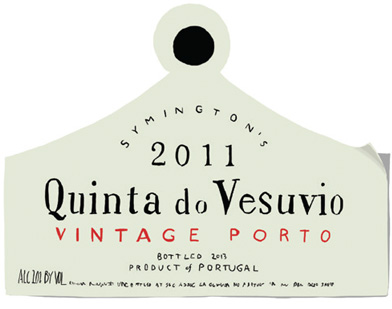
From one of Dona Antónia’s grandest 19th-century vineyard projects, just upriver from the Cachão de Valeira, Vesuvio’s 800 acres rise up a vast, conical hill, the vineyards at the top replanted by the Symington family after they purchased the property in 1989. Today, vineyards account for 329 acres at Vesuvio, providing fruit for both this estate red and single-quinta Port. The warmth of the 2011 vintage favors the Port in this pair, the table wine rich and chocolatey, with the Christmas-cake spice of a warm year in the Douro. While it’s full and complete, it doesn’t have the pure pleasure of the 2011 Port. Yet, Dagorn points out, the family resemblance is clear: “The dry wine is more vinous and the Port sweet, but not unctuously sweet; the tannic structure brings the two wines together.”
FLIGHT #6 – Ramos Pinto Douro Duas Quintas Reserva 2012 • 1992
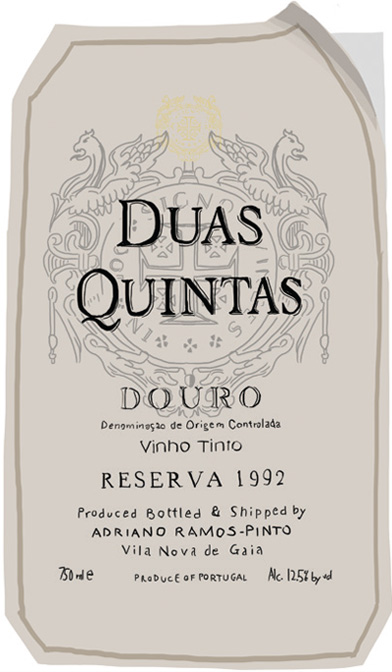
João Nicolau de Almeida at Ramos Pinto was among the first Port shippers to focus on table wine, eventually producing a red he called Duas Quintas Reserva in the early 1990s. Our panel had the pleasure of tasting the 1992 for this issue, a wine from a hot year in the Douro, built to withstand that heat—on the same architecture his father, Fernando, used for Ferreira’s Barca Velha. The wine benefits from vineyards João Nicolau de Almeida designed from the ground up—at Ervamoira, in the far upper Douro, where he implemented the results of his experimental work in the 1970s, when he was hired to select five recommended grape varieties for planting. He blends the fruit of that vineyard on the banks of the Coa river with grapes from the firm’s Quinta dos Bons Ares, a cool site high up in the hills.
Almeida’s latest release, the 2012, is a gracious, elegant young wine with plump fruit and earthy tannins following a parallel line. It benefits from experiments he did after finding that early-19th-century slip of paper with a farmer’s recipe for dry Douro reds. From 1995 through 2008, he made a wine called Reserva Especial, only in a few vintages, using the results to determine a strategy for Duas Quintas. “We are going to the traditional ways of farming the vines,” he told me, “using the old rootstock—rupestris—organic farming, and mixed varieties—but knowing what varieties we are mixing.”
He cited another paper from Pereira’s archives, this one from 1640, suggesting that varieties should be mixed. “It said, ‘if this one doesn’t work, the other one will.’ The mixed vineyards were a way to protect the production. The farmers did not think a lot about the variety, as their work was completely separate from the blenders. The farmers and shippers lived in two separate worlds.”
The worlds have since collided, with empirical knowledge from both forming new classics of the Douro.

Joshua Greene is the editor and publisher of Wine & Spirits magazine.
This story appears in the print issue of Fall 2015.
Like what you read? Subscribe today.