I went on a trip to wine country…in England. While this sounds like the start of a joke, what’s happening with winemaking there is very serious. Perhaps no region in the wine world has been a bigger beneficiary of climate change than England. And there’s no wine region in the world growing faster than the UK, even as producers learn to navigate Brexit, labor shortages and a ravenous domestic market.
The most dramatic visual of why English wine is no longer an oxymoron lies at the Seven Sisters. These spectacular white cliffs rising 600 feet above the English Channel are the sea-eroded end of the South Downs hills in Sussex. Like the better-known cliffs of nearby Dover, in Kent, these stark chalk faces are part of the same geological formation that underlies the vineyards of Champagne, across the Channel in France. This chalk runs under the verdant farmland and national parks throughout much of England’s southeast.
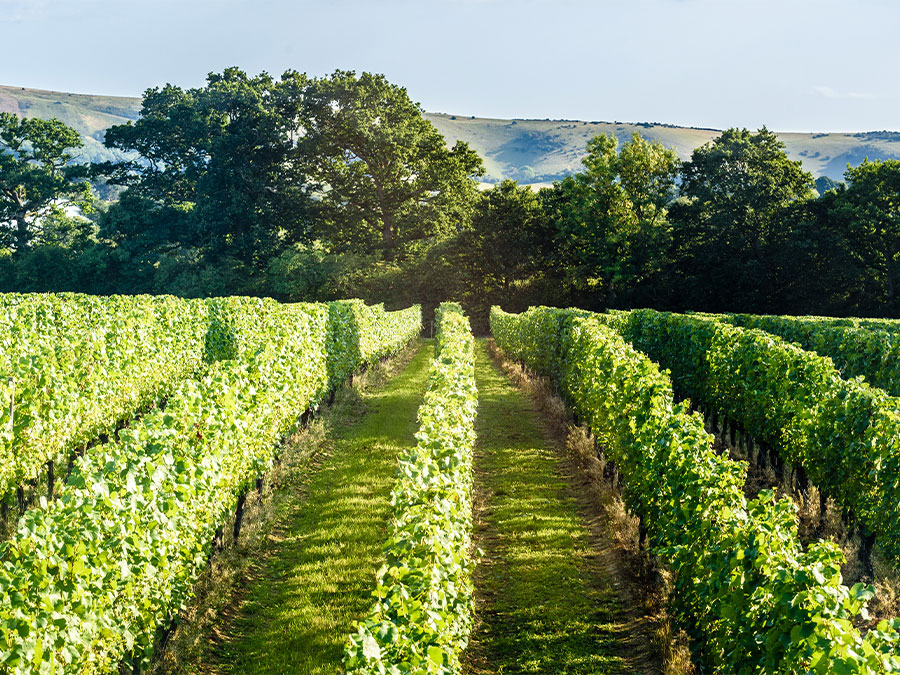
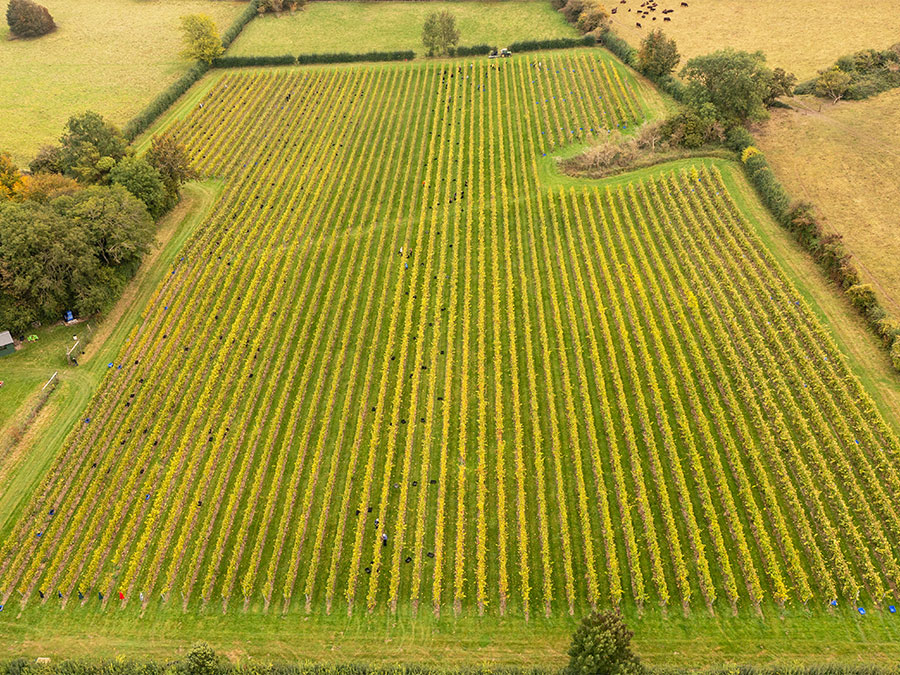
Above ground, vineyard plantings are running with a fervor more often found in a New World country, up a staggering 70 percent in the last five years. Including plantings this year, there are now over 10,000 acres under vine in the United Kingdom. While that’s still less than a tenth of the size of Champagne’s plantings, given the rapid growth, there’s a gold-rush excitement in the air. Recently I navigated the narrow country lanes and numerous traffic circles to visit producers driving the local sparkling wine boom.
OPPORTUNITY
While many established regions are grappling with excessive heat and drought, winemaking on the 51st parallel in Sussex has never looked more appealing. Previously, it was too cool for vines to consistently ripen their fruit; now, rising temperatures have growers looking to capitalize on the decomposing, chalky limestone that has always been there.
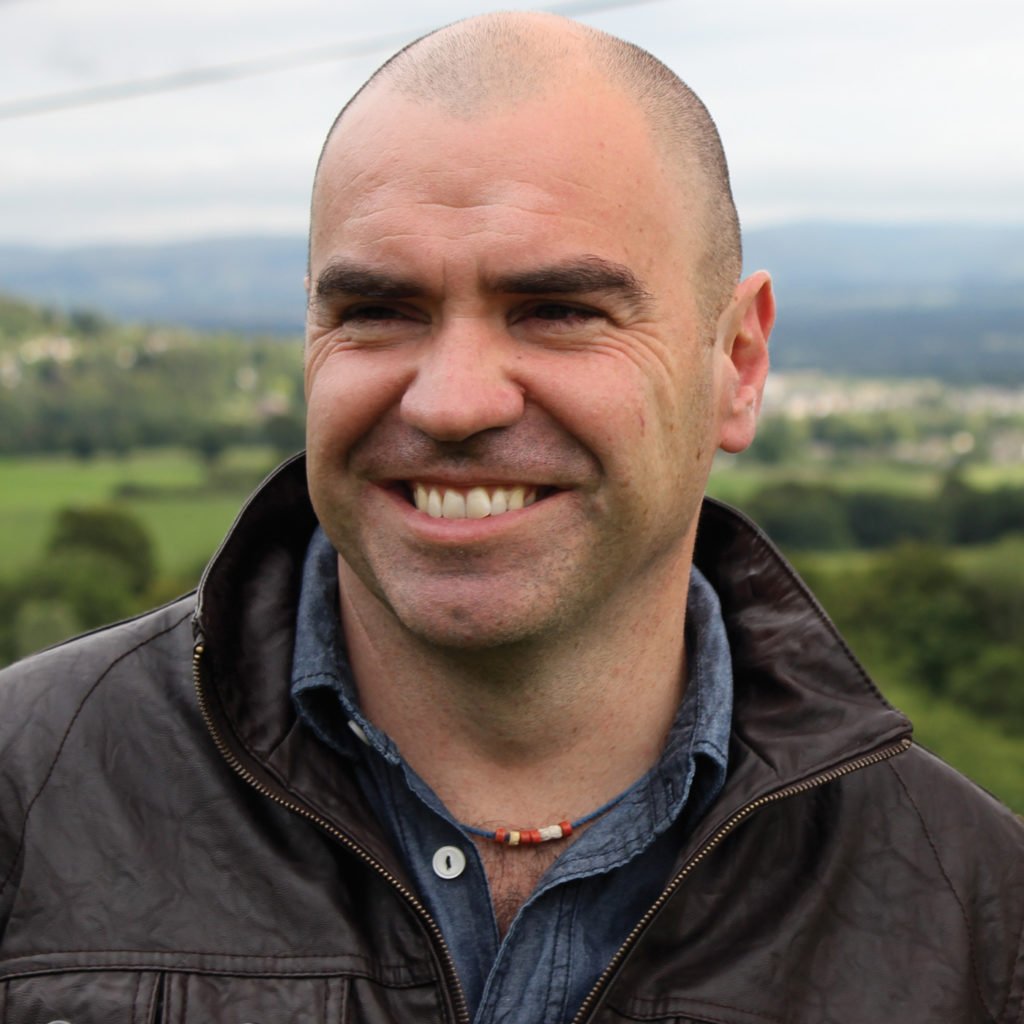
“My goal fifteen years ago was to plant a vineyard on chalky soil, an excellent terroir for sparkling wine, and make the best sparkling wine in England,” says Dermot Sugrue. He was the founding winemaker and oversaw the planting of 16 acres of vines at Wiston Estate in Sussex, a 6,000-acre estate that has been in the same family since 1743. Sugrue, hailed variously as “the Irish superstar of English wine” or, by the late Steven Spurrier, as “the best winemaker in England,” has an infectious enthusiasm, whether for the local terroir, his wooden basket press or all things bubbly. He has left Wiston to focus on his own razor-sharp wines at Sugrue South Downs.
“To do something really special, it needs to be planted in the right place, which starts with soil,” says Brad Geatrix. He is part of the winemaking team at Nyetimber, along with head winemaker Cherie Spriggs, his wife. Geatrix cites the chalk and green sand soils, but also the cool and moderate climate, which allows growers to harvest grapes with relatively low potential alcohol and fully developed flavors. In England, as in Champagne, the season typically extends from budbreak in April to harvest in October.
“My goal fifteen years ago was to plant a vineyard on chalky soil, an excellent terroir for sparkling wine, and make the best sparkling wine in England.” —Dermot Sugrue
For growers, while the climate trend provides a warm wind at their backs, it also brings unpredictability—as in 2021, a difficult vintage with lots of rain, followed by 2022, which brought a heat wave and drought rarely seen in the British Isles.
Champagne houses have started to dabble in South England, with Taittinger placing the biggest bet, buying a 171-acre fruit farm in Kent, in 2015; the Taittinger team has planted a portion of it to vines. Not only is the climate attractive but the land prices are very low compared to Champagne, where only a handful of vineyard parcels come on the market in any year. And when they do, they are often priced around $1 million an acre. Farmland suitable for sparkling wine in the UK can be found for as low as $15,000 an acre.
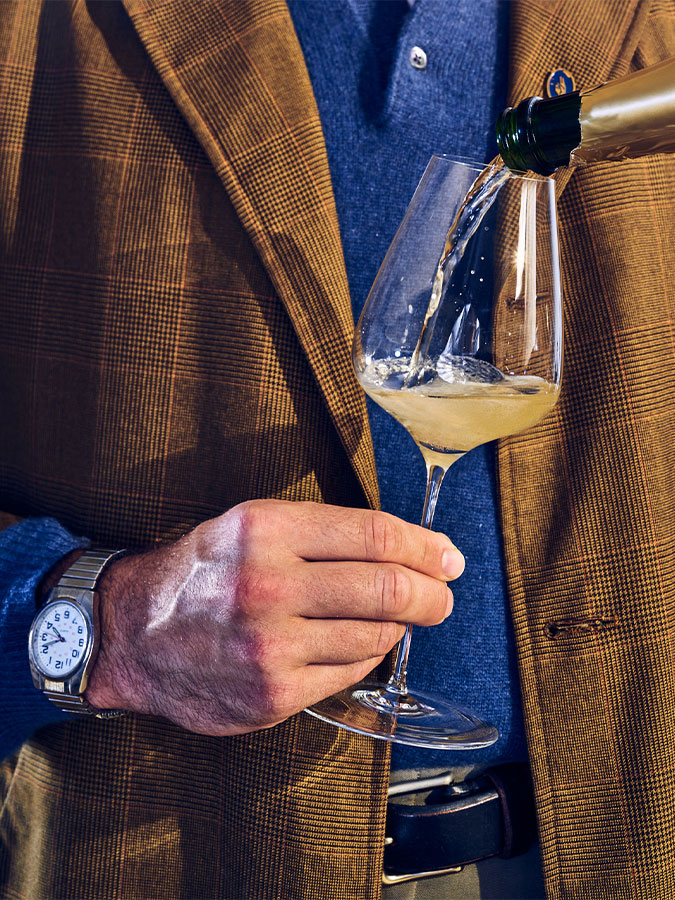
Almost all the English sparkling wines are made in the traditional method used in Champagne, with extended aging on the lees after a secondary fermentation in the bottle. Some in the industry are trying to mandate that this time-consuming, costly method become required instead of cheaper, faster methods of making bubbly.
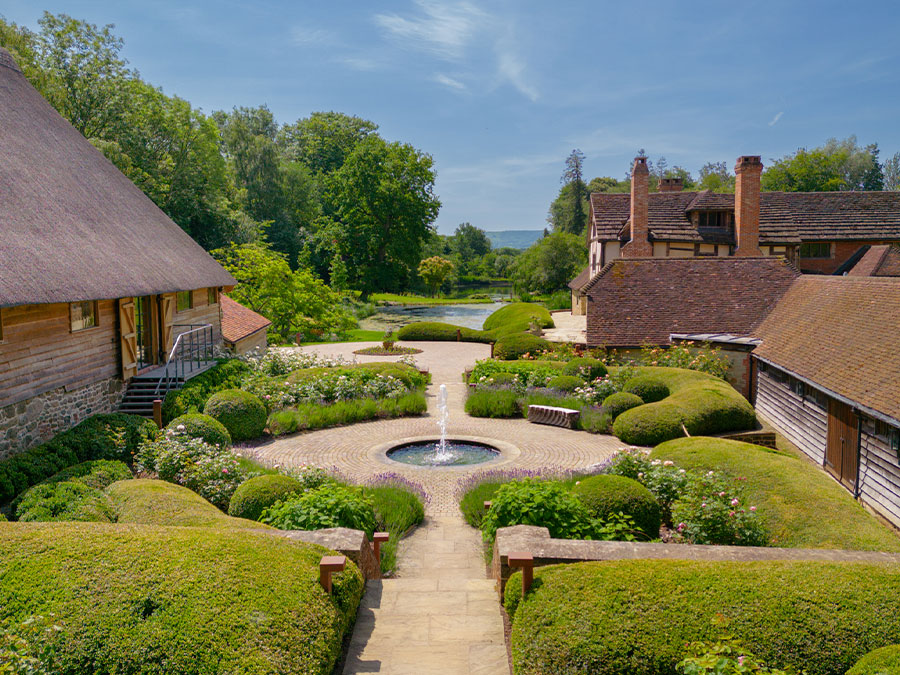
Consider Nyetimber, which had already received recognition in 1998 for the high level of their sparkling wines. In 2007, the year after current owner Eric Heerema took over, they were making 20,000 bottles from 35 acres of vineyards. Today, they are making one million bottles from 11 vineyard sites spanning 850 acres. The main reception area is picture-perfect, centered around a thatch-roofed barn that dates back 550 years. Their flagship Classic Cuvée is a blend of grape varieties, sites and vintages (currently based on the heralded 2018), aged for 36 months in the bottle. It is classy and compelling with good intensity in its notes of brioche and baked apple, all of which make it a worthy standard bearer for this nascent industry.
Coquard PAI presses, the Rolls Royce of Champagne presses, seem almost obligatory in the best wineries (Nyetimber has six of them). And, though there has been an emphasis on making vintage wines, an increasing stock of reserve wine and the unpredictability of the climate are driving more interest in multivintage blends. Ridgeview, for example, now has three wines that blend vintages. Hambledon, in Hampshire, started a solera in 2010. Dosage tends to be a modest 8 grams per liter and balances the acidity in these perceptibly dry wines. Sugrue South Downs is pushing the envelope making a zero-dosage wine, ZODO; its electric raciness would quicken the pulse of sommeliers worldwide.
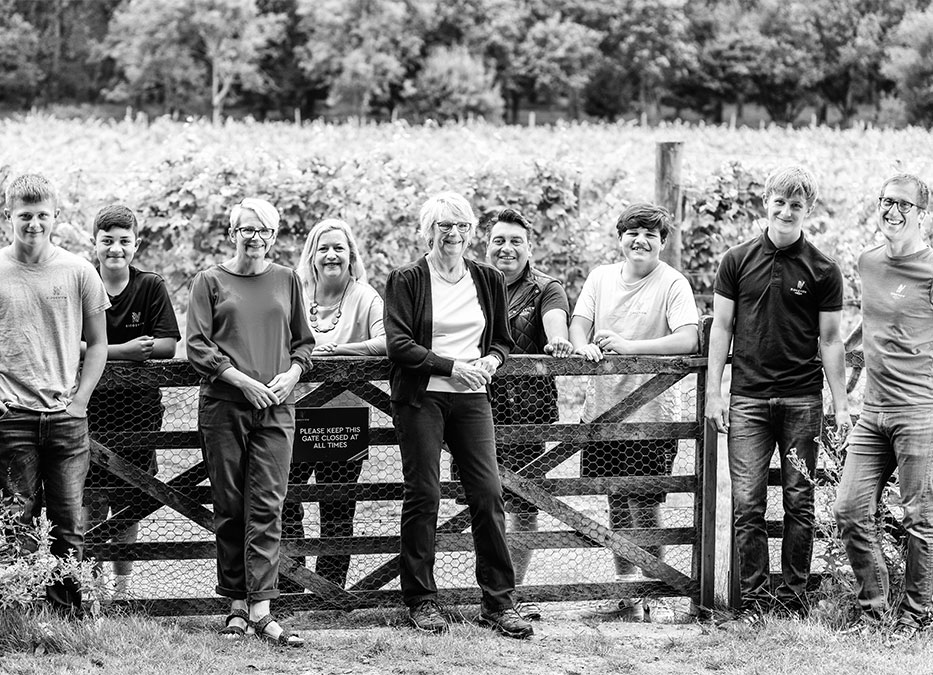
Many leading estates only work with their own fruit and harvest by hand. Adding to the growing pains of the industry, Brexit has made this much more difficult since professional pickers from the EU, notably Romania, were not available. One winery tried to recruit local volunteers. Another paid locals to pick but found their rate of 100 kilograms a day was less than one-quarter the rate of the professionals pre-Brexit. Scarce labor made the difficult 2021 harvest even smaller.
WHAT’S MADE IN ENGLAND, STAYS IN ENGLAND
The United Kingdom has an enormous thirst for sparkling wine. Primarily, this is for Prosecco, made by the cheaper Charmat method, which accounted for 122 million bottles sold in the UK in 2021. But the domestic production of six million bottles is growing alongside the 29 million bottles of Champagne sold. “At the beginning, it was about taking market share from Champagne,” says Geatrix of Nyetimber. “But now we’re growing and they’re growing.” Ten years ago, it used to be only sommeliers that were excited about English sparkling wine, he says. “Now, it has escaped into the realm of everyday consumers.”
“Demand is enormous—we simply can’t make enough to keep up with demand at home,” says Geatrix. “We can’t come to the US with no product.” All of Nyetimber’s multivintage wines are allocated “for the foreseeable future.” They withdrew from the US market and have narrowed exports to the Middle East and Asia. According to Wines GB, an industry trade group, Scandinavia, Japan and the US are the top export markets and account for the four percent of production that gets exported. By contrast, Champagne exported 56 percent of production last year.
“The US is a nascent market for English sparkling wine,” says NYC-based Dionysi Grevenitis of DNS Wines. He was happy to have some Sugrue South Downs wine to sell—a scant 30 six-packs—after not having any for two years. Other importers also cited annual import volumes that would not fill a container, which usually fits 900 cases of wine. Brexit has complicated the logistics of exporting the wine, since amounts under one container used to be easily combined with French exports in France. “It’s not an inexpensive product,” says Steve Graf of Valkyrie Imports, which imports Hattingley Valley wines and used to import Nyetimber. In America, “They are competing for some of the same slots as grower Champagnes,” he says.
While the collapse of the pound sterling this year might give exports a fillip, it seems the producers and industry have yet to work on developing export markets, favoring the ease of sales at home. Direct sales to consumers have risen 265 percent in the past two years across the industry.
It seems almost every winery is building a hospitality center or opening a high-end restaurant on the premises. Ridgeview opened a new dining room this year overlooking their main vineyard. Wiston opened a restaurant, appropriately named Chalk, across a courtyard from the winery entrance. One wall of Hambledon’s winery was largely tarps when I visited as they were enlarging the winery and preparing to install an ambitious restaurant on the property. Rathfinny, a grape’s throw from those chalky cliffs on the English channel, has a hotel in the middle of the vines.
Located an hour or so’s drive from London, English wine tourism is becoming a reality, not something that sounds like an oxymoron. Dermot Sugrue is no longer giving friends advice for winery visits abroad, he says. “A trip to wine country doesn’t have to start at Gatwick or Heathrow anymore.”

Tyler Colman, PhD, is a longtime contributor to Wine & Spirits and the author of Wine Politics: How Governments, Enviornmentalists, Mobsters and Critics Affect the Wines We Drink. He blogs at DrVino.com.
This story appears in the print issue of Winter 2022.
Like what you read? Subscribe today.