Climate change is shifting the world’s viticultural map. In Europe and North America, the frontiers of vine growing are moving ever northward. Beyond the developments in Washington’s Columbia Valley, there’s a red-wine revolution underway across the border in western Canada’s Okanagan Valley.
Thanks to global warming and free trade, Walter Gehringer has seen the wines in British Columbia’s Okanagan Valley evolve from sweet, foxy jug wines to multifaceted Bordeaux blends.
A compact, fine-featured man in his early 50s, Gehringer founded Gehringer Brothers with his younger brother, Gordon, in 1981. Walter grew up in the Okanagan and, following a suggestion from his father, a first generation German immigrant, moved to Geisenheim, Germany, after high school to pursue enology. Gordon subsequently studied vineyard and cellar management at Weinberg. When they returned from Europe, the Gehringers bought land at the southern end of the valley about 20 miles north of the U.S. border.
Most of their neighbors were growing hybrid grapes like Marechal Foch and Okanagan riesling, crosses of North American labrusca with vinifera vines developed to survive cold winters. Instead, the brothers planted the cool climate vinifera grapes they had learned to cultivate in Europe. Their ehrenfelser, riesling and pinot gris did well.
At first the Gehringers’ neighbors didn’t have much incentive to plant European grapes, but they were soon forced to. Written into the 1998 USA-Canada Free Trade Agreement was a ruling from the General Agreement on Tariffs and Trade that removed Canada’s economic protections on its wine industry. Spooked by the prospect of competing on even ground with the United States, Europe and Australia, wineries and grape growers negotiated with the provincial governments of Ontario and British Columbia to subsidize a massive replanting program. In British Columbia, farmers culled 70 percent of their acreage, leaving only 1,000 acres throughout the province. By 1990, they were importing vinifera varietals from France, Germany and the United States.
The pullout marked both the death and the rebirth of winemaking in the valley. In addition, after the pullout, major British Columbia jug-wine producers such as Calona and Mission Hill told the small-scale grape growers in the southern, hottest end of the Okanagan that when the growers replanted vinifera, the wineries would only purchase certain varietals. Red ones.
“The French paradox had come out, and red was the hot ticket,” Gehringer recounts. “The wineries said, ‘We don’t know what [grapes} to commit to but we know we can sell merlot.’ Everyone in the valley knew at the time that merlot was suicide to grow. But thanks to climate change, everyone who planted merlot hasn’t lost a vine.”
Gehringer says they harvest their first grapes an average of two weeks earlier than they did in the 1980s. The numbers from Environment Canada, the national weather service, back him up: Average temperatures have increased 1.6 degrees Celsius over the past 60 years, and winters are an average of 3 degrees warmer; furthermore, much of that increase has occurred in the past decade. Just as climate change has allowed England to develop a creditable sparkling-wine industry and has caused Germany’s rieslings to hit 14 percent alcohol levels, those few extra degrees have given the Okanagan the boost it needs to grow excellent chardonnays, merlots and, now, syrahs.
According to figures from the BC Wine Institute, merlot represents 40 percent of the red wine grapes grown in British Columbia. Even the Gehringers planted some. As they saw the valley hearing up, the brothers expanded into the property next door. This time they planted French varierals: pinot noir, merlot, cabernet franc, sauvignon blanc.
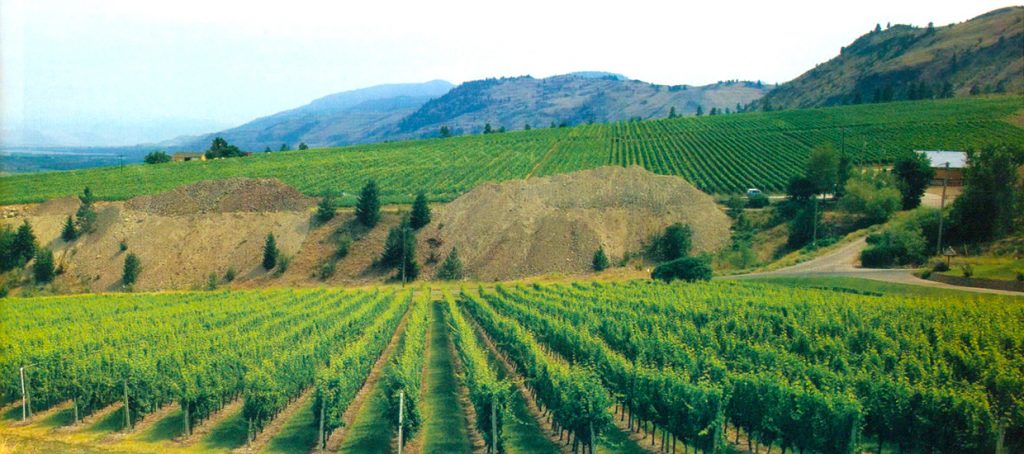
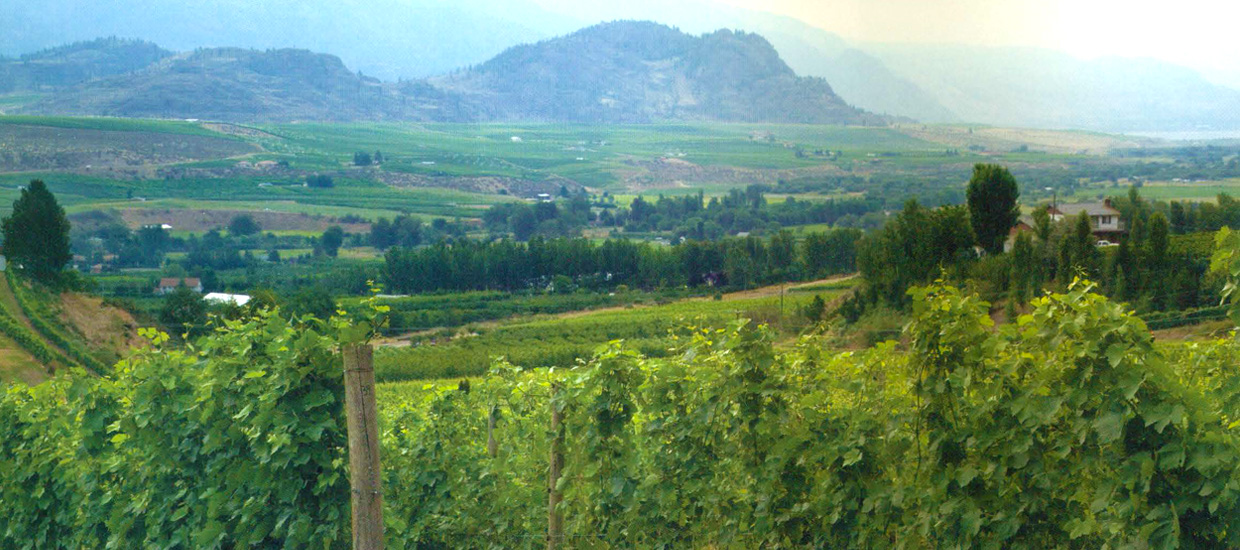
Looking across the Okanagan from the Gehringer Brothers Estate on the valley’s western upper reaches, you see epic desert landscape. The bowl of a valley is framed in rocky bluffs studded with jack pines and capped with a clean, cornflower-blue sky. Though sunlight beats down unfiltered and white, and late summer temperatures often top 80 degrees, the valley never feels arid. Rivers and lakes thread through its center, sometimes pressing up against the edges of the rocks. The bowl is patterned with green orchards, corduroy patches of vineyards and, at the borders of the irrigated zones, pure scrubland: silver sage, purple wildflowers and clouds of blossoming tumbleweed.
The glaciers that carved out the valley during the Tertiary and Pleistocene eras stopped at the dramatic Macintyre Bluff, seven miles north of the Gehringers’ land. The bluff marks a significant geologic shift: As the glacier melted, the ground-up rocks at its base drained into the southern end, producing gritty, granitic alluvial soil.
The Okanagan Valley snakes its way 75 miles north from the U.S. border. These days the cool northern stretches from Vernon down to Kelowna excel in the Germanic whites and icewine, Canada’s most famous export. Wineries from Summerland and the Naramata Bench, in the center, are picking up a reputation for pinot noir and pinot gris. Just beyond Okanagan Falls, 25 miles north of the U.S. border, the Sonora desert—and now Canada’s most prolific red wine region—begins.
The Okanagan between the towns of Oliver and Osoyoos is actually divided into two subregions. The Golden Mile, where the Gehringer Brothers’ winery is located, is the name given to a narrow, 10-mile strip on the western edge of the valley where the land slopes up to the bluffs. Across the river, the soil in the rolling hills of the eastern Black Sage Bench is coarse-textured sandy loam, with the occasional vein of gravel. The depth of the sand has been estimated at several hundred feet. Many call it “the beach.”
Located in the rain shadow of the Cascades, the southern Okanagan receives eight inches or less of rain a year. Yet because of the Okanagan River and chain of small lakes at the center of the valley, the region doesn’t lack for water. Many local winemakers affectionately call growing grapes on the sandy Black Sage Bench “hydroponic gardening”; they relish the control the desert climate gives them over the growth of the vines.
Of the 7,500 or so acres of vines in British Columbia, approximately half are planted in this 25-mile stretch, which in 2006 produced 63 percent of the province’s total tonnage of wine grapes.
And the numbers continue to grow. Pat Bowen, who runs the Summerland office of the Pacific Agri-food Research Center (PARC), the Canadian national agricultural research agency, estimates that 1,000 acres of Vitis vinifera grapes have been planted in the southern Okanagan in the last 18 months, and more plantings are in the works. Wine production is up 20 percent over two years ago. According to the British Columbia Wine Institute, the number of wineries in the entire Okanagan Valley has shot up from fewer than a dozen in 1990 to 82 in 2007, 22 of which have winemaking facilities in Oliver and Osoyoos, the south valley’s two main towns.
Though pinot blanc, German whites, merlot and cabernet franc dominated the earliest plantings in the early 1990s, once the wineries realized that winter wasn’t going to kill off vinifera grapes, they began experimenting, even pushing the boundaries of what the climate can support by planting such heat lovers as zinfandel, malbec and barbera. Seventeen years in, it’s not uncommon for a small winery to have a dozen varietals in its portfolio.
“What works well in the Okanagan Valley might sound strange,” says Michael Barrier, winemaker at Golden Mile Cellars, “because we have nontraditional grape varieties next to one another: riesling next to syrah next to pinot noir. People have a difficult time reconciling the Okanagan with the Rheingau, or Burgundy, or the Rhone. But we’re none of those .”
Barrier has gained a reputation by helping turn around Golden Mile Cellars in the southern Okanagan. In the late 1990s, Peter and Helga Serwo planted the vineyard and constructed a winery, which looks like a medieval Bavarian castle. But when the aging couple’s daughter decided she didn’t want to follow them into the wine business, they sold the winery to Mick and Pam Luckhurst four years ago. The Luckhursts hired Barrier, who had been assistant winemaker at Hawthorne and Township 7.
“I’m trying to make Okanagan wines, not Burgundies or California cabernets.”
—Michael Bartier of Golden Mile Cellars
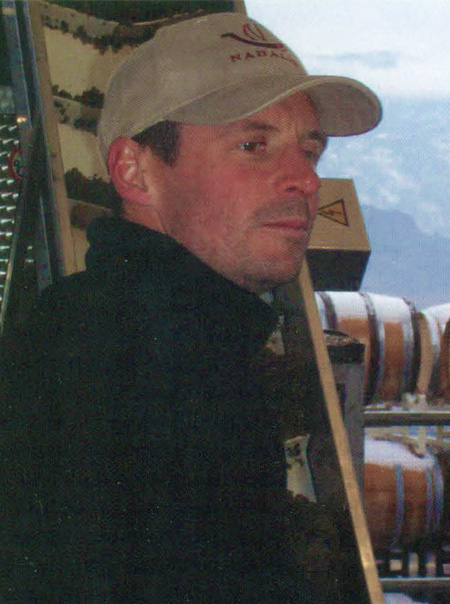
As a longtime resident, Barrier has developed some understanding of what different slopes and soils can bring out in his grapes, as well as a New World delight in flouting convention. ‘‘I’m trying to make Okanagan wines, not Burgundies or California cabernets,” he says, “and what’s important is that the wine reflects where it came from. What the Okanagan does well is fruit, and fruit purity is what shines through so beautifully here.” He layers it elegantly, preferring to showcase it in French oak rather than American. Fruit comes through in wines like his 2006 Chenin Blanc, with its nose of tropical fruits and lavender and its fresh hit of acidity. It’s also there in the layers of blackberry, pepper and roast-meat scents in his 2005 Black Arcs Syrah.
Jeff Delnin, winemaker at Burrowing Owl on the Black Sage Bench, led me up the winery tower to survey the estate’s vineyards. He explains that PARC recently completed a study overlaying climate and soil data with wine awards. The varietals he points out, his accent belying the decade the Canadian spent in South Australia, match up with PARC’s recommendations for the southern valley: pinot blanc on the lowest slopes, wide tracts of merlot and cabernet franc climbing up around the winery, and at the top, to catch the extra heat reflecting off the bluffs, cabernet sauvignon and syrah.
The winery was among the first to plant many of these grapes. Burrowing Owl’s owners, Jim and Midge Wyse, have been at the forefront of the region’s rebirth since 1993, w~en they bought a 360-acre parcel on the Black Sage Bench that had been stripped of its hybrid vines in the NAFTA pullout. “The sire was a dustbowl,” remembers son Chris, now general manager. “It was just twisted PVC piping and leftover trellises.”
Dick Cleave, one of their vineyard managers, recommended planting merlot and cabernet franc as well as cabernet sauvignon, which he had tested out on his own land. In 1997 the Wyses brought on board Bill Dyer, a former winemaker at Sterling Vineyards in Napa Valley, to help them design their facility and press their first vintage.
Though Dyer was more familiar with Bordeaux varietals than most Canadians, he says, “Everything you think you know from one context doesn’t necessarily apply to another.” For example, the Californian found that though temperatures in July and August could hit 100 degrees, by September, the hear waves typically ended and there was no rush to pick. Wineries in the southern valley start harvesting the third week of September, and some don’t finish until the first week of November, after the first frosts. “Sometimes in Napa your hand is forced because the sugars have gone so high and the grapes are starting to burn. You pick out of necessity,” Dyer says. “Here, that doesn’t happen, so the last stages of ripening rend to be slow. You can hang on and wait to get good maturities without being forced to pick.” Delnin credits the cool temperatures from varietal on with driving beautiful varietal characteristics.
Another factor that distinguishes the climate is the intensity of the sunlight the valley receives, partly because of lack of cloud cover, partly because of the northern latitude. “Even in years that are not so great you still have good color,” says Dyer. “The anthocyanins develop and you need tannin and pigment together to form linkages and build structure in the wine. The Okanagan’s grapes start in a very good place there.” Others claim that the length of the days during the summer months contributes to the intense fruit flavors that their wines express.
Close control of irrigation, micromanagement of each block of grapes and an intensive barrel program help Burrowing Owl produce some of the most extracted, powerful wines in the valley. Blackberries and chocolate are prominent in their 2004 Merirage before they’re checked by its spice, and the 2004 Caberner Sauvignon starts with plums, pepper and leather and moves outward from there. Summoning such powerfully concentrated flavors may yet be difficult for many Okanagan wineries, perhaps because of the region’s cool climate, perhaps because grape growers are still figuring our the best viticultural practices for the valley. The most consistent varieties I tasted were the early-ripening merlot and cabernet franc; they often show beautiful aromas, and their tannins, while substantial enough to carry the fruit through to the finish, rarely outweigh it.
With its hardiness and propensity to fully develop by harvest time, merlot drives many of the red Bordeaux blends produced by wineries like Burrowing Owl and Golden Mile Cellars. Dyer, who now consults for the Vancouver-based Church and Stare Winery, says he thinks that the valley’s merlot and cabernet francs are consistently strong and he sees great potential for syrah, pinot gris and chardonnay. Chris Wyse agrees. “Merlot is our anchor, and syrah and cabernet sauvignon are more of our flash. We’re going to have years when we’re going to be among the world ‘s best at those and years when we may not. I’ll tell you this: The not years are becoming fewer and fewer. It’s not just the changing climate. We’re learning how to manage grapes better.”
Nk’Mip Cellars
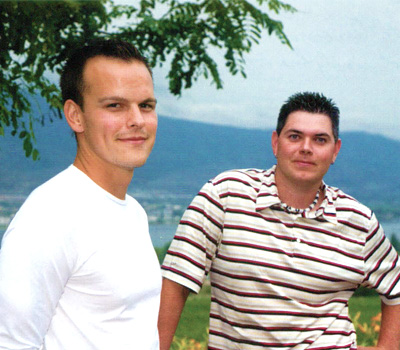
At the hottest, most rugged end of the Okanagan Valley, just a few miles north of the U.S. border, lie the reservation lands of the Osoyoos Indian Band. Close to 1,400 acres of the high-desert tribal lands are now striped in dark-green vines, which provide the grapes for an estimated 20 percent of British Columbia VOA wines.
The band leases out acreage to Canadian giants Vincor Canada and Mission Hill for growing Bordeaux and Rhone varietals. On 245 acres, the band grows grapes for its own winery, Nk’Mip Cellars. Pronounced ink-a-meep (which means “where the river meets the valley bottom”), Nk’Mip Cellars is the first winery owned by First Nations people in North America. Under winemaker Randy Picton’s aegis, Nk’Mip Cellars produces 18,000 cases of wine, ranging from pinot blanc to a Bordeaux-style meritage. Picton, a self-professed Burgundy lover, produces a delicate 2005 Pi not Noir with scents of violets, dried sage and bright red fruit. The 2004 Qwam Qwmt (their reserve designation) Meritage is juicy but not heavily so, balanced with dark fruit and coffee-scented tannin.
There’s also a cultural center, a 94-room resort and a golf course. The band is now buying land off-reservation to plant more vines. In addition, laughs Picton, “I’m making my own position redundant.” The Osoyoos have the option to buy out Vincor’s portion of the joint venture in another five years, and should that happen, the non-native winemaker is training two First Nations cellar assistants—Aaron Grey and Justin Hall—to replace him.
This story appears in the print issue of October 2007.
Like what you read? Subscribe today.