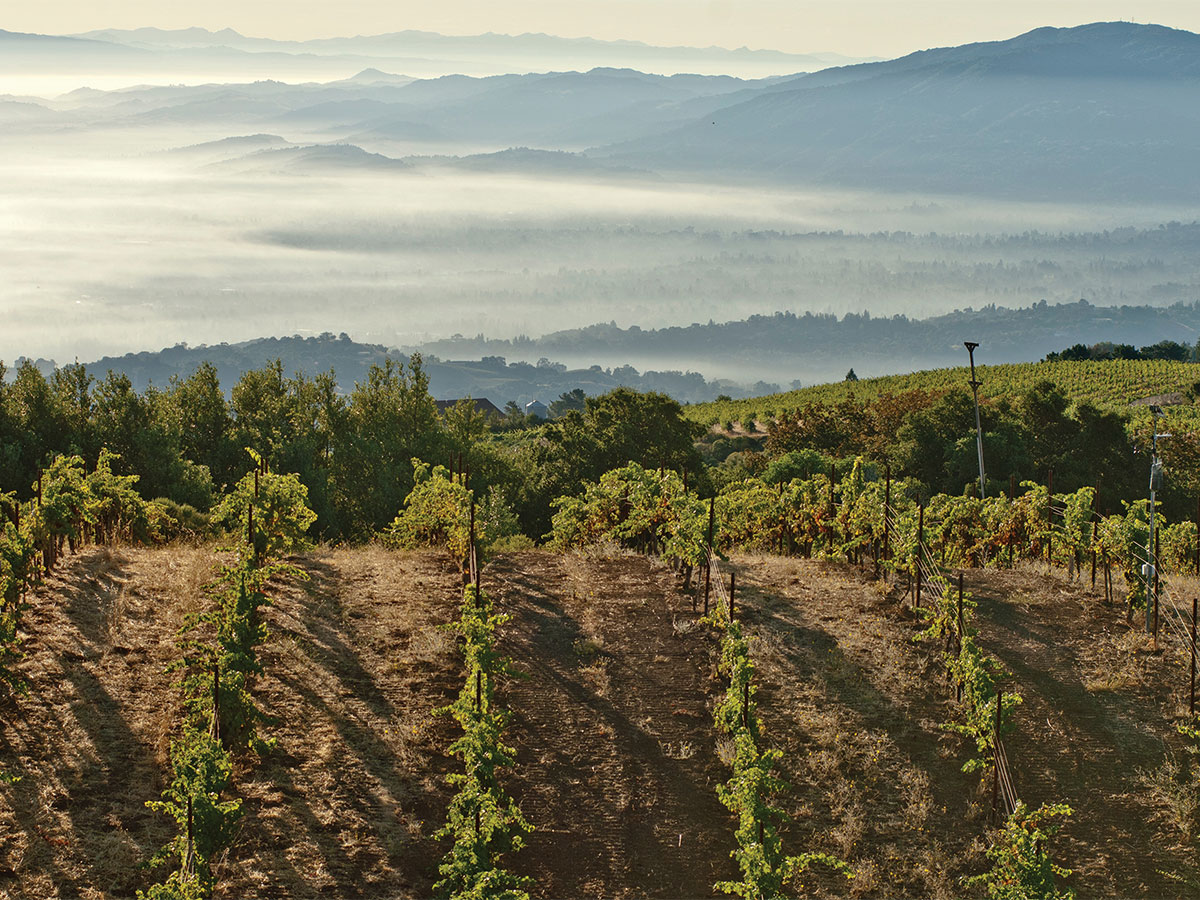
“There’s only one appellation in California that I know of that grows the Bordeaux varieties at elevation on the coast,” says Jeffrey Patterson, “and that’s the Santa Cruz Mountains.” Patterson has been making wine at Mount Eden Vineyards since the early 1980s, dry farming vines in the region’s rocky, ridge-top soils to harvest limited yields of potent, concentrated fruit.
If you prefer foresty, firm, savory cabernet, you probably have an affinity for wines from the Santa Cruz Mountains. The coastal influence makes this California’s coolest major cabernet region. So, while the wines are dark and dense, they’re also notably fresh. As for me, two of Patterson’s cabernets rank among the best California wines I’ve ever tasted: a pair of 1990s Old Vine Reserve bottlings he made from vines that Martin Ray planted in the 1940s on a rocky, shale-laden ridge high above what’s now Silicon Valley.
Throughout the 1980s, Patterson says, Martin Ray’s old, rangy, basket-pruned vines produced leafy, pyrazine-inflected cabernet that struggled in the market. But around 1990, he began focusing on thinning the bushy vine canopy and allowing more light to reach the fruit. Cool, high-altitude sunlight began ripening that cabernet into something magnificent.
While Patterson eventually pulled out those old vines as yields cratered, he’s continued to propagate the original cabernet selection that Martin Ray planted. Collected by Emmet Rixford at the end of the 19th century, purportedly at Château Margaux, that vine material first took root at Rixford’s vineyard in Woodside before Ray took it up into the hills. Patterson’s dry-farmed cabernet blocks, one planted between 1979 and 1981 and the other in 2000, continue to produce wines that can approach the rich, savory grandeur of those Old Vine Reserve bottlings from the 1990s.
Ridge’s Monte Bello, an equally profound wine, grows one ridge to the north of Mount Eden. I suppose you could say that Monte Bello tends to be sleek and reserved, whereas Mount Eden tends to be more muscular and spicy, but that probably overstates their differences. Both wines have that combination of firm structure, cool and woodsy scents, and bright California fruit that can take on the Platonic form of cabernet after 20 years in the cellar.
So, two high ridges and a pair of world-class Bordeaux-inspired reds that age beautifully for decades. End of the Santa Cruz Mountains story; no drama up in these hills.
But as I talked to Patterson and some of the region’s other major cabernet growers and winemakers recently, the effects of climate change kept coming up. Even here, in California’s coolest major cabernet region, climate change is posing new questions for growers and winemakers. (Spoiler alert: Yes, the cabernet up in these hills is still great. But if you love the chiseled, maybe slightly masochistic beauty of a cool-vintage Monte Bello, those wines are probably going to be fewer and farther between.)
For Jeffrey Patterson, the recent drought has mainly hampered vineyard redevelopment. He dry farms his mature vines, and the site’s fractured shale allows those vines to find some moisture deep in the mountain even through a multi-year drought. (Especially in dry vintages, yields below two tons per acre are often the karmic wage required to grow Mount Eden’s dynamic cabernet.) But he does need to use his property’s modest well to irrigate new plantings as the roots establish themselves in the rocky soil.
“I have this three-acre cabernet vineyard I took out after the 2019 harvest, and I was all set to replant it,” he recalls. “I ordered the rootstock and everything, and then we had a drought year. And this year I was going to do the same thing, and I had no water.”
The block remains barren.
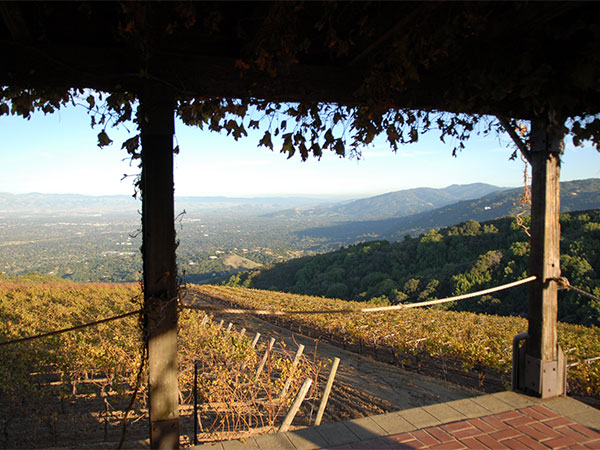
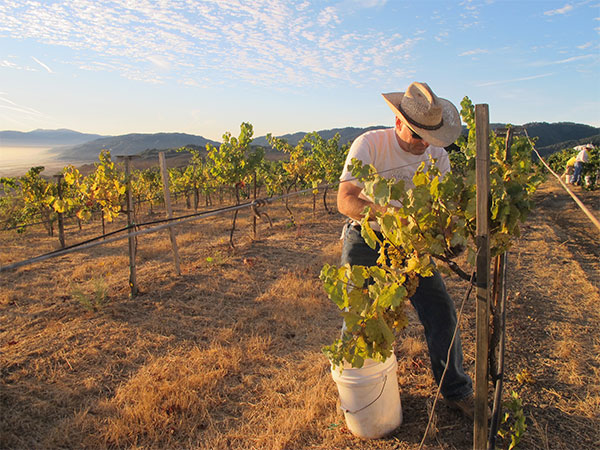
I visit Ridge on what turns out to be the last day of harvest at Monte Bello. On the outdoor crushpad, John Olney—who took over the Monte Bello program from longtime Monte Bello winemaker Eric Baugher earlier this year—is carefully babysitting a new press that’s squeezing some chardonnay. Next to the press, a few white bins of just-picked cabernet represent the final Monte Bello fruit harvested this year. It’s October 5, an unusually early harvest at a property where, in the coolest years, the picking has stretched well into November.
An extraordinarily early harvest isn’t the only evidence of the impact of recent heat and drought. Longtime VP of Vineyard Operations David Gates tells me that they planned to get about one ton per acre from the new planting just down the hill that came into production this year. Instead, the water-stressed vines managed to eke out two tons from the entire nine-acre parcel.
At Thomas Fogarty Winery, I meet up with Nathan Kandler, who helped the Fogarty family launch their Lexington project in 2011. It’s based on a cabernet-dominant vineyard they planted in 2000, on the site of a dilapidated Christmas tree farm on Green Forest Road. While Kandler wasn’t there for the initial planting, he knows there was some early debate about whether the site was too cool for cabernet, as the family consulted with legendary Santa Cruz Mountains winegrower David Bruce.
“There’s no problem getting it ripe now,” Kandler says. “Sunburn’s more of an issue.” The last vintage he’d call “cool,” he says, would be 2011. Contra Patterson’s experience in the 1980s and ’90s, Kandler has actually backed off on canopy thinning to protect the fruit.
“It’s the only cabernet vineyard I know of where you can see the ocean,” he says. “The curveballs have been the weather. In the Santa Cruz Mountains, vintage character is getting intense.”
In 2015, cool and wet weather during flowering prevented the site from setting a full crop; then heat and drought began to stress the vines. They harvested one-quarter of a ton per acre. As the drought continued, they began watering the vineyard, despite an initial intention to dry farm. Speaking of 2021, as the multi-year drought became especially severe, he says, “I watered the vineyard more this year than I probably have in all the other years combined.”

“Lexington (southeast of the winery) is the only cabernet vineyard I know of where you can see the ocean…The curveballs have been the weather.”
Nathan Kandler
The site also happens to be due east of the massive redwoods and Douglas firs of Big Basin State Park, the same park that was ravaged by a massive wildfire in 2020. Because of the resulting smoke taint, they made no red wine that year.
Because the past decade has lacked the oscillations between cool and moderately warm vintages that defined the region in the past, the wines have been riper than historical norms.
Monte Bello, for example, has reached an alcohol-by-volume measurement of between 13.5 and 13.8 percent in every vintage since the cool 2011. Not ostentatiously ripe by any means, but, as recently as the 1990s, the wine came in below 13 percent in the majority of vintages, and none was over 13.5.
But a string of warm vintages doesn’t mean a string of dull vintages. In 2017, both Monte Bello and the Lexington cabernet lead with scents of ripe berry fruit—not much in the way of olive or tobacco here. The Monte Bello smells like fresh dark cherries, while the Lexington seems a bit grapier. The biggest upside of that warm vintage is terrifically resolved tannins—firm enough to age, for sure, and obviously mountain-grown, yet not even close to lean or astringent. The Monte Bello has a supple vibrancy that’s captivating, and the Lexington Cabernet feels remarkably integrated given its ripe fruit flavors. If the vintage is any indication of where climate change is taking Santa Cruz Mountains cabernet, there will be plenty of pleasure to be had in the coming century.


Photo by Emma Morris
So, while the recent warm, usually dry vintages have brought challenges to vintners, they’ve also opened up new opportunities. Another intriguing data point: The 2018 Bates Ranch made by Diana Snowden Seysses at Napa-based Ashes & Diamonds. With its plush tannins, as fine as cocoa powder, and its mulberry-purple fruit lifted by bright acidity, it’s a sunny cabernet that would be hard to imagine in a cool vintage in the Santa Cruz Mountains. While this sort of easy, abundant ripeness might not quite match the stereotype of the Santa Cruz Mountains, there’s no denying that it’s a delicious and compelling expression of its terroir.
Bates Ranch is farther south than most other cabernet vineyards in these mountains, at the base of Mount Madonna; the property is currently overseen by Charlie and Diane Bates. Since 2012, Santa Cruz Mountains grape guru Prudy Foxx has been their viticulturist.
At Bates, Foxx farms a parcel of old-vine cabernet franc planted in 1972 as well as a number of cabernet sauvignon blocks planted in the past two decades. (Ashes & Diamonds sources some fruit from each of the parcels.) The changing climate likely contributes some of the open structure the vineyard displays, but Foxx also points to the new block of two French ENTAV clones she developed in 2014.
“They’re incredible,” she says. “These big beautiful berries. They have enough room for very good juice in there. Deep berry flavors, classic cabernet flavors, great skin tannin, but also some real fruit character to it. Oftentimes our wines are thought of as having more olive and green-fruit character. And some people like that because it’s more of a Bordeaux style. But I think you can have that real fruit character and still be Santa Cruz Mountains in style.”
A fan of the 2018 vintage, Foxx is also excited about the extraordinarily dry but fairly temperate 2021. “This year, the depth of the flavors and the balance—the flavonoids and the anthocyanins—had such a chance to evolve,” she finds. “We have incredible flavors without super-high alcohols. The skins had a chance to grow in this very soft and supple way, without the harshness that a hot year brings. When I’m out there chewing the fruit, the skin is so thick, it just chews and chews and chews, almost like fruit leather, but rich—not dry at all.”
That syncs up with my impression of the 2021 ferments at Ridge. With this year’s severe drought on my mind, I was taken aback by the clean, fresh, deep flavors emanating from several lots that may make up the 2021 Monte Bello.

They’re incredible. These big beautiful berries. They have enough room for very good juice in there. Deep berry flavors, classic cabernet flavors, great skin tannin, but also some real fruit character to it.
Prudy Foxx
Back in the Monte Bello cellar, David Gates thieved a taste from a vat, the fruit of a block of Ridge’s old Fountaingrove selection—a local 19th-century heritage selection that, like the La Cuesta from Mount Eden, ranks among his favorites: It smelled like a forest floor covered in violets. Then a fermentation lot off a young block of the La Cuesta selection itself brought a scent of dried herbs and flinty tannins. The juice from a 1970s planting of some cuttings from Napa gave a dense, chewy impression of wild blueberries; a vat from a block of Clone 585 tasted propulsive and brisk, its red-fruited acidity suggesting cranberries.
Whatever the 2021 Monte Bello becomes, it probably won’t ever taste like some of those tense, slightly leafy vintages of the 1990s. On the other hand, the density and brightness of the 2021s coming out of those stainless-steel tanks couldn’t be confused with cabernet from anywhere else in California.

Longtime senior editor at Wine & Spirits magazine, Luke now works for the Stanford Technology Ventures Program.
This story appears in the print issue of December 2021.
Like what you read? Subscribe today.