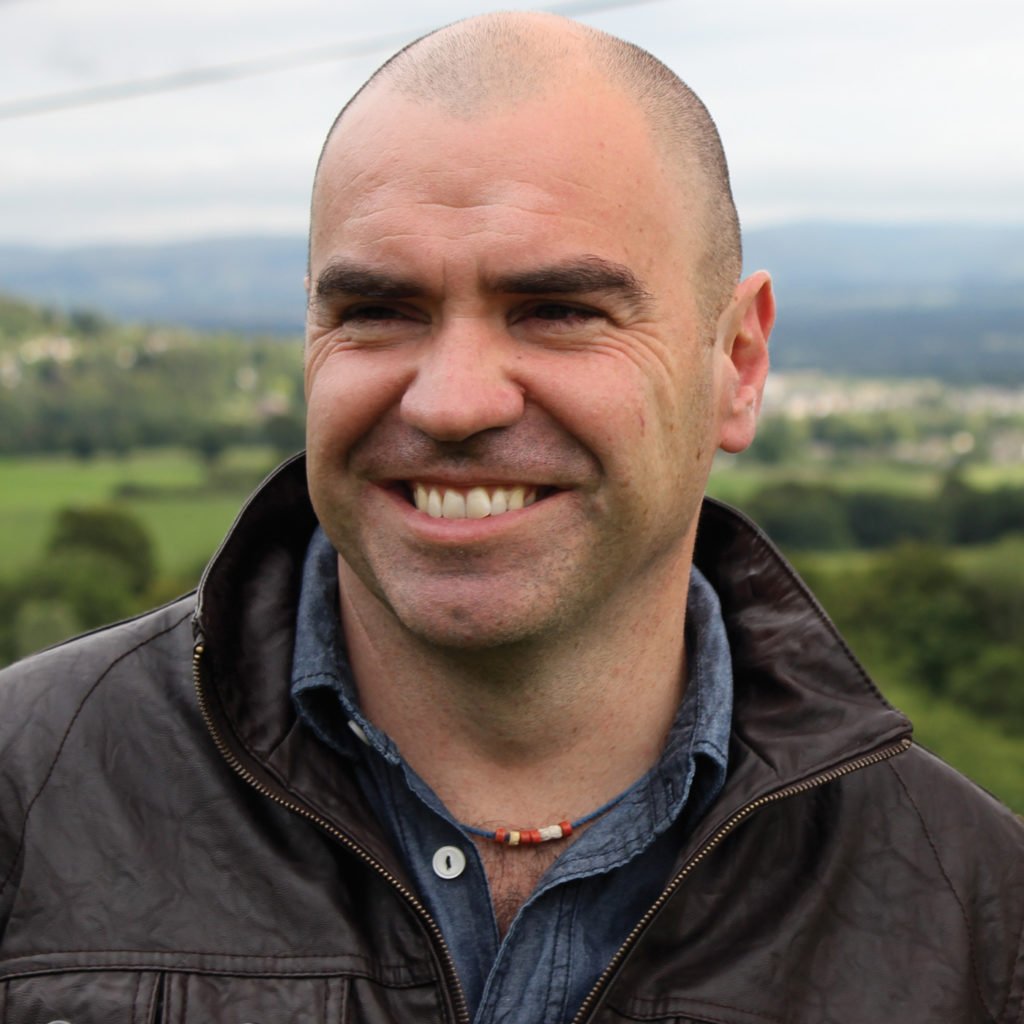
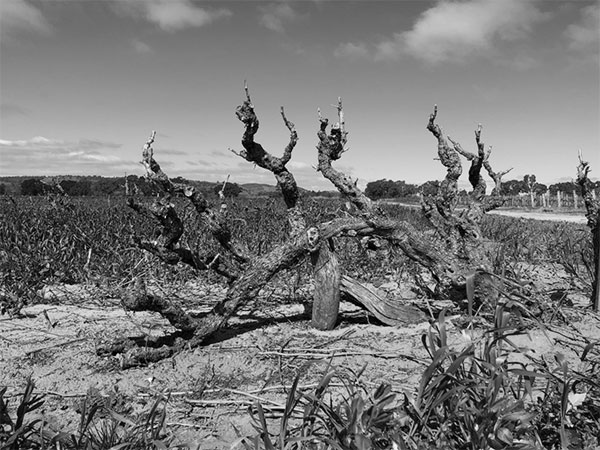
McLaren Vale looks a lot like a young British schoolboy’s fever dream of the Mediterranean. Or so you might be led to believe by Chester Osborn, decked out in his brightly patterned shirts and his British rock star’s curly blond locks. But this is, in fact, Osborn’s reality: An inheritance of ancient basket presses for the fruit of his family’s centenary grenache and shiraz vines, a collection expanded with the near-abandoned vineyards he recovered in the 1980s and ’90s, those dry-farmed vines challenged by droughts of increasing severity, heat to light the bush on fire and the certainty of more extreme weather.
Growers could be forgiven if they allowed the Australian government’s dire climate warnings to take them down. The tolling bell is grim around the world, but the Aussie penchant for humble fortitude thrives on the clear statement of facts. The government’s climate studies for South Australia predict, with “very high confidence,” increasing average temperatures in all seasons, more hot days and warm spells, declines in annual rainfall with increases in the intensity of heavy rains, and—deep breath in—a harsher fire-weather climate.
Osborn long ago began to experiment with vines that might thrive in a warmer, drier climate than his shiraz had known for more than 100 years. He and his father, d’Arry, before him, had relied on those shiraz vines as the source of their livelihood, particularly when d’Arry shifted the family’s reliance on fortified wines to a focus on table wines in the 1960s. The vineyards d’Arry’s grandfather, Joseph, had acquired in 1912 had been planted with fortified wines in mind. And, in the 1960s, the climate was right for shiraz to take the lead in table wine, as grenache didn’t offer the same depth of color and needed more time to adequately ripen.
On video feed from his office overlooking the Peppermint Paddock at d’Arenberg, Osborn recalled how his father developed the family’s portfolio around shiraz. “Dad’s early-picked shiraz made the Claret,” he told me. “Middle-picked shiraz made the Shiraz, and late-picked shiraz went with a heap of grenache (70 percent of the blend) to make the Burgundy.” That last wine became shiraz-dominant in the 1970s, closer to 50-50, always with a little more shiraz than grenache, and it remained that way when Chester starting making it in the 1980s and later, when he dropped the Burgundy label and rechristened the wine as d’Arry’s Original.
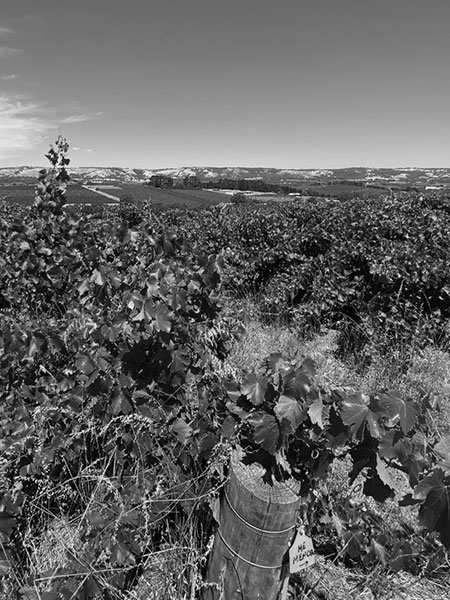
Recently, facing down a 50-year tradition, Osborn began to change the blend. “The 2017 d’Arry’s Original is the first vintage that’s been grenache-dominant since 1998. That was the only other one, in all the years that I’ve made the d’Arry’s Original, or the Burgundy, as it was called originally, they were always shiraz-dominant, except in the 60s, which I wasn’t here for. I was here, but annoying my father, probably.
“The 2018 and 19 are even more grenache than what the 2017 was. The 2017 was 55-45. They are going to be more like 70 percent grenache in ’18 and ’19.”
In our recent blind tasting, the 2017 d’Arry’s Original was a standout. It’s a great wine in a vintage that may come to be viewed as a turning point for grenache in South Australia.
“Grenache is really trendy now,” Osborn reports, with the satisfaction of a longtime supporter. He had bought up grenache vineyards while others were ripping them out during the riesling-and-chardonnay frenzy of the 1980s and ’90s.
“Last vintage, grenache outdid shiraz as the most expensive grape variety by average price in McLaren Vale. It’s the first time, probably ever, that grenache has overtaken shiraz. Now, only six percent of McLaren Vale plantings are grenache and 56 percent are shiraz, so supply-and-demand is part of it. But there’s absolutely no doubt that McLaren Vale grenache has changed since I made it in the 1980s and ’90s. As in, climate change has certainly had an influence. The wines have more purple-ness about them, in their fruit character and their color. They were much more in the red, savory, herbally, spiced character in those days. Now, they are much bigger wines.
“Shiraz has changed as well, but for grenache, it’s probably been a more positive thing. Where most of the grenache is planted in McLaren Vale, we’re about one degree [Celsius] colder than Châteauneuf-du-Pape, so it was probably a little marginal before, and now the wine is a bit darker. We still have our red years, like 2017—quite a cool year, ripened later with much more elegant, red-fruit characters.”
Tinkering with the d’Arry’s Original blend is only one of the ways Osborn is responding to the increasing variability and extremes in the weather. Currently, he has 37 varieties in the ground, most of them hailing from Mediterranean climates in the south of Italy, France and into Iberia.
“McLaren Vale is going absolutely berserk on new varieties,” he says with unsuppressed glee, having led the charge starting in the 1990s. At the time, he went all in on viognier when his growers were pushing back on planting more shiraz, for fear of a glut. They wanted to grow white grapes. “I said, Well, don’t plant more chardonnay or riesling or whatever. Viognier could work here. After about two years, I added up the plantings we had and with our growers we had about 140 acres of viognier planted.” That was before he had a crop. Fortunately, viognier worked and he is still buying all the grapes to blend with his own for one of his most successful white wines, The Hermit Crab.
He has since expanded to a range of new red varieties, starting with tempranillo and souzão for his first Sticks and Stones blend in 2002. When he found the old-vine parcel of souzão, the grower was calling it cinao—maybe cinsault? No, the grower told him, it was Portuguese. As the fruit set he noticed that the grapes were small and the yields were limited: “It looked nothing like cinsault. And it made this wine as black as black can be—really exotic earth characters and really lively minerality. It had acidity and very fine minerality.” A Portuguese grower at a trade show gave him a lead to souzão, and ampelography confirmed it.
Meanwhile, he had planted tempranillo on ancient red-brown soils over limestone, two miles from the coast. “It gets a lot of tannin off that geology,” he has found. “Tempranillo does end up being a relatively tannin-driven wine, still perfumed out the end and not heavy. It has a bright spice, a fragrant red character.” He blended the tempranillo and souzão with old-vine grenache, to lend earthiness to the young-vine fruit for his early Sticks and Stones bottlings. As his tempranillo vines have matured, he finds he needs less of the old-vine grenache for the blend.
In terms of the contemporary climate, the variety that has impressed him for its resilience is mencía. “It just yields no problem and has good vigor. Eight or nine years ago, we grafted some merlot over to mencía and negroamaro, and the negroamaro was even more vigorous. We had two crops of negroamaro, and it was light and fresh; really, it’s just too cold for negroamaro here. But then, even worse, it was too hot at veraison— too much sun and heat—sunburn wiped out 90 percent of the crop two years in a row.” He decided to graft those vines over to mencía—growing right alongside those sunburnt vines, it was untouched. Osborn harvests his mencía a full five weeks after shiraz, and the fruit holds its fresh dark-cherry flavors in the wine that he calls The Anthropocene Epoch.
“McLaren Vale is going absolutely berserk on new varieties.”
—CHESTER OSBORN, D’ARENBERG
You don’t have to be an Aussie to fall in love with contemporary McLaren Vale grenache. It was ancient vines in Barossa, in fact, that caught the attention of an American. Richard Betts was working as a sommelier in the early 2000s when he got turned on to Château Rayas (it wasn’t as expensive as it is today). That wine convinced him that grenache could be “a warm-climate analogy of pinot noir,” he told me in video interview, joined by his wife and winegrowing partner, Carla Rza Betts. “In the best years, you could mistake Rayas for a great Burgundy.” He zeroed in on the sandy soil that made Rayas unique in Châteauneuf-du-Pape and, determined to find a place he could make his own, he went looking for grenache grown in sand in Sardinia, Spain and California.
A wine from a side project made by Chris Ringland, RBJ Theologicum, led Betts to the Barossa, and the Dry Grown Grenache from Robert O’Callaghan at Rockford led him through Ebenezer and Bethany districts to Vine Vale. “Eventually, I found my way to Christian Knute at Rusden, and he was making wine like that, specifically with grenache. And I thought: Here it is; here’s a home. Let’s get started.”
Later, after he and Carla joined forces, they began making An Approach to Relaxation wines, including Sucette, their ancient-vine grenache from Vine Vale. Their 2017, tasted for this issue, shows how old-vine grenache, planted in the right place, may be a predictor of what some of the new, alternate vines might produce as they mature into the decades to come.
It was the year when the Bettses purchased 16 acres of land, including a 10.5-acre plot of vines planted in the late 19th century, growing on their own roots in deep sand.
“We sit at the bottom of the gullies that come down from Eden Valley and the Barossa Ranges into the Vine Vale,” Richard explained. “Over time, quartzite and granite has eroded and come down through these gullies into this little alluvial fan, this little puddle of sand.
“The sand is almost a visualization of the wind. Those same gullies that deposited the sand bring those cold winds and, yes, they can definitely screw things up at flowering but, at other times, its good for vine health.” The wind also emphasizes the radical shift in temperature from day to night—if it is 100 degrees [Fahrenheit] during the day, winds cascading down the gullies into Vine Vale can drive it down to the mid-50s within an hour after the sun sets. “It makes for a much cooler area than the rest of the Barossa. Once you drive from the Vine Vale out into the rest of the valley, it gets warm pretty quickly. It’s amazing to see what a kilometer will do.
“The past two vintages were nice and warm and sunny. And then ’17 was freezing cold.” That was the first vintage with the estate parcel, which they found, in fact, because it had gone to them in 2016 without their knowledge, a clandestine substitution by a grower who sold them grapes (but that’s a different story). Those ancient vines provided more than half of their Sucette wine in 2017, and increasingly higher percentages in recent harvests. The cold provided the other distinctive ingredient, giving their grenache in granite sands the sort of mysterious freshness and grandeur of the Rockford Basket Press Dry Grown Grenache wines, especially from back in the 1990s.
“I was in three jackets and had gloves on,” Carla recalls of the 2017 harvest. “It gets very cold, and people don’t tend to pin that next to their idea of the Barossa. It’s not a cool climate; let’s not get crazy here. But in certain pockets, it has a different temperament than people might assume.”
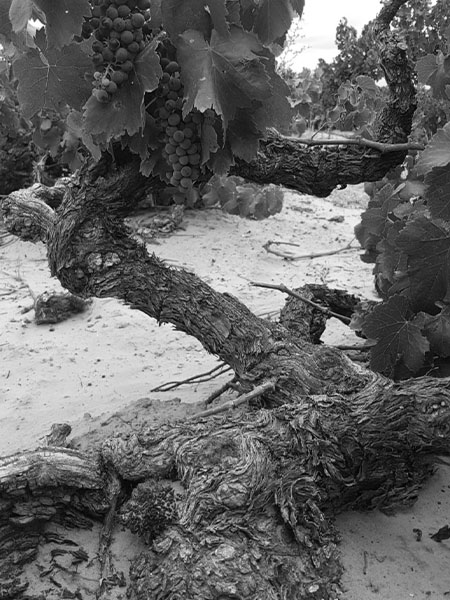
“The sand is almost a visualization of the wind. The same gullies that deposited the sand bring the cold winds.”
—RICHARD BETTS, AN APPROACH TO RELAXATION
For a third perspective on the Australian-Mediterranean soul of grenache and its siblings, I spoke with Kate Goodman, winemaker at Paxton, a biodynamic vineyard in McLaren Vale. Though Dave and Anne Paxton’s collection of seven vineyards in McLaren Vale focus mainly on shiraz and grenache, though they are increasing their plantings of new varieties as they sell out of their tempranillo and graciano wines every year. Goodman joined the team two years ago to provide some outside perspective on their winemaking, or, as she told me in a video interview from her home in McLaren Vale, “to shake things up a bit.”
When I complemented her on her 2019, a mineral-driven, red-currant-scented beauty from grenache vines Paxton planted in the 1990s, Goodman began to wax romantic about grenache in McLaren Vale. She also admitted to just having contracted a parcel of 120-year-old dry-grown grenache vines in Blewitt Springs for her own label. “Is it an indulgence?” she asked rhetorically, her determined eyes behind round, owlish glasses. “Maybe.”
At Paxton, she works with 15 acres of grenache, along with more recent plantings of tempranillo (10.6 acres) and graciano, (3 acres, with another 2.5 in the ground this spring). All of that seems diminutive when compared to Paxton’s 163 acres of shiraz. But it also forms a Rioja triumvirate, especially if you consider that garnacha probably originated in Spain (ground zero believed to be in Aragon), before migrating to southern France and, eventually, to Australia.
When asked if there’s any intentional link back to Rioja, Goodman reports that she has worked in Spain with Telmo Rodríguez and that, for David Paxton and his wife, Ang Tolly, Spain has long been a favored destination. Still, she says, “I think our grenache is more Australian than it is Spanish. The style that Paxton has moved to seeks the ethereal perfume and the evocative character you can get from grenache.”
Paxton’s graciano is also quite different from the variety in Rioja, where a small amount adds tannic structure to a blend with tempranillo and garnacha. Rarely presented on its own in Rioja, where it can be quite mean, there’s some joy in Paxton’s graciano from McLaren Vale.
Seven years ago, the Paxtons grafted a row of chardonnay to graciano as an experiment and have been expanding on it since then. “Graciano likes McLaren Vale,” Goodman says. “It likes the summer and the heat. When you walk into the vineyard, pre-harvest, tasting grapes, the graciano vines always have a freshness to them. The leaves are green and the canopies still have energy in them. To me, that says they’re actually happy, whereas the shiraz can look tired. And graciano is a later-ripening variety, well after shiraz. It takes time for the acid to drop back—and that’s coming from someone who loves acidity.”
Goodman finds graciano more challenging to grow than tempranillo. “Making the acid and tannin work together, to me, is the biggest challenge of graciano— to have those two components fit together neatly so you can’t see the edges of either of them.” It ripens later and takes time for the acidity to drop back. “I actually prefer the feel of tempranillo [to graciano],” she says. “I like the tannins and the supple texture you can get—that almost chocolatey-rose, Turkish-delight character, compared to that full-on pepper in the graciano.” She describes tempranillo as more mainstream but says there is a lot of interest in them both. “If we could double production, we could sell it, easily.”
Still, it is McLaren Vale’s old-vine grenache that has stolen her heart. “Can you believe they pulled out old-vine grenache and planted chardonnay?” she asks, referring to the government sponsored vine pull that began in 1985. “It makes me want to weep. It was the ugly duckling, bulk workhorse. It wasn’t treated as grenache, it was treated as a way to make red wine.”
What she’s after is the savory balance, the lightness of texture combined with the depth of flavor that she finds in some of her favorite Old-World wines and, increasingly, in McLaren Vale grenache.
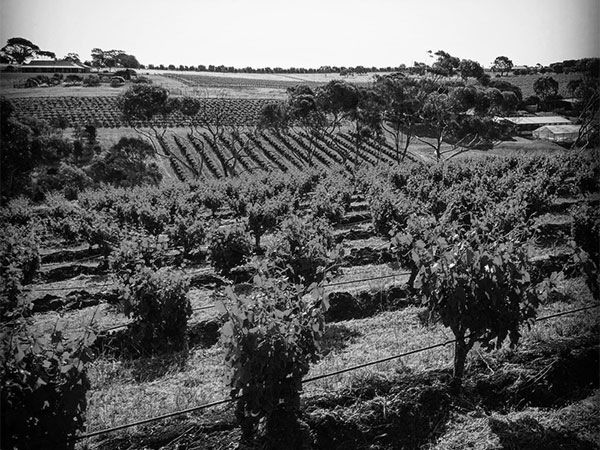
“Graciano likes the summer and the heat. Pre-harvest, the leaves are green and the canopies still have energy.”
—KATE GOODMAN, PAXTON WINES
While South Australia’s ancient grenache vineyards may be responding to climate extremes in delicate and delicious ways, growers planting graciano, tempranillo, mencía and host of other Mediterranean varieties are working with a future climate in mind. On the hottest days of the year, in the heat of the vast Murray River plain east of Barossa, you might find Ashley Ratcliff tasting grapes at the Riverland Vine Improvement Committee. “It’s just up the road, a repository of hundreds of different varieties that might never have seen a commercial day. If you want to import a vine out of, say, Portugal, they import it, they put three or four vines in.” It’s his way to keep tabs on the next vine to plant. “Whenever it’s really, really hot, I tend to go and have a look at this vineyard, because it’s got such a collection, and see which ones are performing the best, how the acid’s looking.”
Ratcliff already planted close to 40 different vines and is growing grapes for some astonishing wines, especially considering they come from a region long dismissed as a bulk wine source.

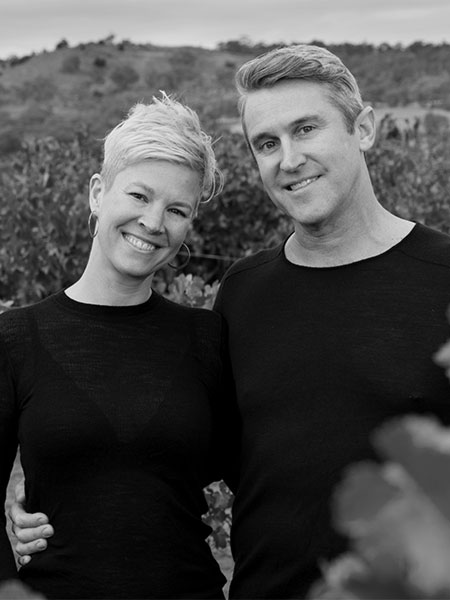
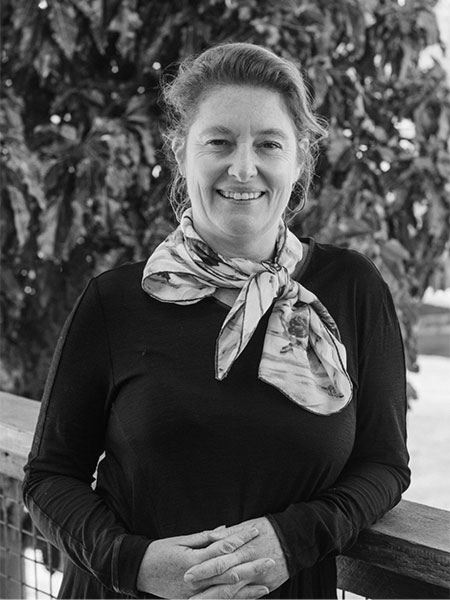

Recently, it was a nero d’Avola, made by Laura and Brendan Carter at Unico Zelo, cheekily and accurately named Fresh A.F, that had completely turned my head around—a lightning bolt of tart plum and cracked black pepper. I had never tasted a wine from the Riverland that was anything like it and I wanted to know who was growing it. An email to the Carters went unanswered, but, another door opened when Mark Davidson of Wine Australia provided some leads on growers invested in experimental varieties. He pointed me to Ashley Ratcliff, a Barossan viticulturist late of Yalumba, who earned his master’s in marketing and started building his own estate in 2003. He was 34 years old at the time and couldn’t afford land in Barossa, but he found 20 acres in the Riverland; now he has 200 acres there and manages another 100. Shiraz, cabernet, chardonnay—“the commodity stuff we grow”—still accounts for the lion’s share, but he’s become the go-to for alternate varieties since he started planting them in 2008. And, as it turns out, he grew the nero d’Avola and zibibbo for that Unico Zelo wine.
Early on, Ratcliff bet big on vermentino, working with a large producer, only to watch it become a neutral white and to see prices crash. He has since built his business around artisanal producers, delivering small lots of carefully farmed fruit in refrigerated trucks to 40 different winemakers. And he can do it at higher yields in the Riverland than would be typical in McLaren Vale or Barossa. “This yield versus quality thing is a bit of a furphy sometimes,” he says, using a local word he translates as “folktale sort of stuff, or bullshit.”
He had a different kind of challenge with nero d’Avola. “The first year we grew it, we bunch-thinned it, shoot-thinned it. Threw everything at it and we thought we were doing right, and then we had a wet vintage that year and lost most of it to rot.
“We went back to the drawing board and said, How do we actually manage this variety?” His team decided to cut back on irrigation and fertilizer, and to stress the vines at flowering. “You want to get a lot of berry shatter,” so he turns off the water that got the vine started for the season. Then, since the vines throw a lot of leaves into the bins when they are machine harvested, he handpicks most of his nero.
Today, he says, “we just can’t keep up. We just purchased another property this week, another 22 acres. With the whole aim of top-working it over to more alternative varieties.” He plans for tastes to change, and for his vineyards to be ready: “Our whole approach will continue to evolve, to try to preempt what the next market’s going to be.” For now, his divide-and-conquer strategy might be helping to shape the trends rather than chasing them.
In addition to the southern Italian vines, he’s had success with Portuguese varieties, including tinta amarella, tinta cão and touriga nacional. “And I really like tinta barroca. To me it’s almost like an inland pinot noir. We’ve only got 20 tons of it, so it’s not massive amounts. We’re getting some really funky winemakers that are taking that on, so that will help.”
“I really like tinta barroca. To me, it’s almost like an inland pinot noir.”
—ASHLEY RATCLIFF, RICCA TERRA
Though his friends in Barossa try to convince him to buy land there, business, for now, is booming at his parcels in the Riverland. And you won’t find a wine in Barossa like his own Ricca Terra Nero d’Avola, or, really, anywhere else. Perhaps this sour plum and dried cherry beauty is an indication of the Riverland terroir…and what that land may produce in the years to come.

Joshua Greene is the editor and publisher of Wine & Spirits magazine.
This story appears in the print issue of February 2021.
Like what you read? Subscribe today.