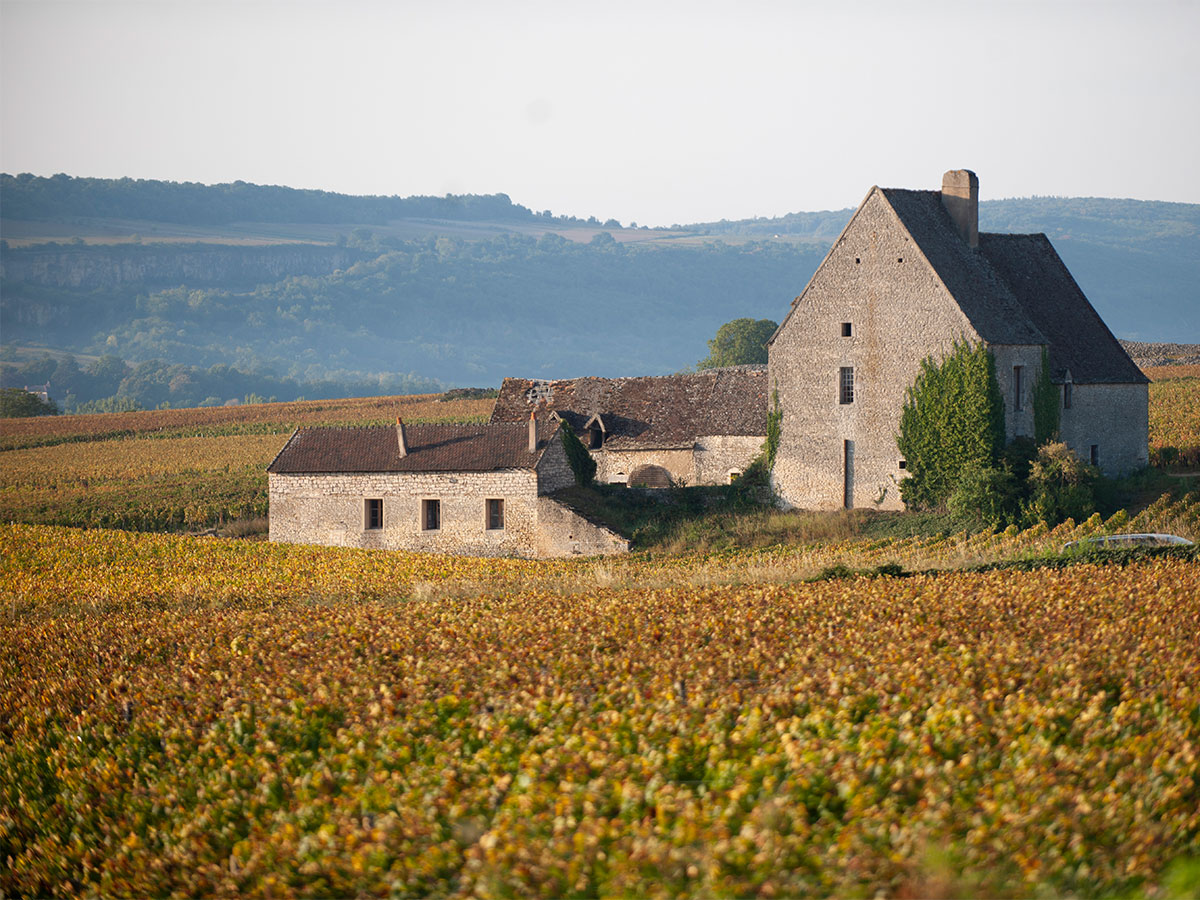
Back in 1999, I had the opportunity to buy a small piece of Burgundy—a share in a half-hectare of Beaune Pertuisots, farmed by Jean-Yves Devevey. It’s enough premier-cru land to make up to 10 barrels a year at the full permitted yield—if the weather were to cooperate. Instead, Devevey made two barrels a year in three consecutive hail-affected vintages (2012–2014), three barrels in 2015 as the vines took time to recover, and half a barrel in the frost-out of 2016: in other words, less than 10 barrels in total across five vintages. Recently, he reported back to me, ruefully, “Ever more work for ever less wine.”
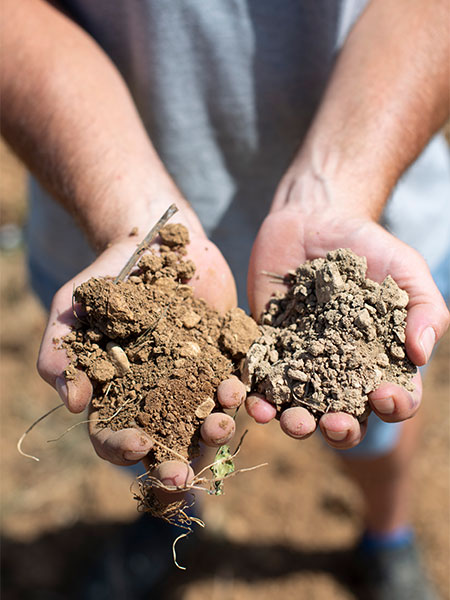
Long among the sweet spots of the Côte d’Or, some vineyards with premier- or grand-cru classification may not have been spared from the ravages of a changing climate. At some point, Burgundy drinkers will have to wonder, how valuable is a classification if the site cannot reliably produce fine wine? Meanwhile, in recent vintages (2018–2020), the profile of vineyards that have gained and lost in quality may be turning the status quo upside down. Consider, for instance, the upper part of Bonnes-Mares, where pinot noir grows on white marly soil. Cyprien Arlaud, of Domaine Arlaud in Morey-St-Denis, notes that the marl is cool in the spring and is prone to suffer from frost (as in 2016 and 2021). Then it compacts easily and turns to a cement-like consistency in the hot summer months, rejecting water, which then flows down the hill—a challenge in the drought and heat of 2018, ’19 and ’20.
At first, it looked as though the winners in Burgundy’s warming climate would be cooler, higher hillsides, but that would be an oversimplification. Drought has become a significant concern, making the lower slopes, on deeper, water-retaining clay soils, more favored in a dry vintage than more esteemed parcels higher up the slopes: these include the Morgeot sector of Chassagne-Montrachet and generic Bourgogne vineyards at the foot of each appellation. Cooler and damper sites in the less famous villages of the Côte de Beaune, such as La Fussière in Maranges, are also benefiting. The villages that make up the Maranges appellation (Cheilly, Dezize, Sampigny) are home to a series of small, often avant-garde producers who have only emerged on the scene in the last few years (see inset).
There are three (or two and a half) villages which sit behind the main Côte de Beaune: Monthélie, Auxey-Duresses and St-Romain. The half is Monthelie, several of whose vineyards, including the prime site of Champs Fulliot, are a continuation from Volnay on the principal east-facing vineyard, though others lie in a side valley behind, less open to the sun all day long.
Auxey-Duresses has potential in both colors. The whites are a continuation of Meursault as the east-facing hillside turns around towards the north—a less-valuable exposure in the past but now perhaps a bonus as these wines retain their freshness. Vineyards such as Les Hautés and Les Macabrées are not in premier-cru territory, but have become super sources for chardonnay, while the east-facing flank on which the premiers crus lie tends to favor pinot noir.
Continue farther up the valley and you come to St-Romain, only promoted to appellation status in 1947 and for a long time considered to be something of a second-class citizen, with its vineyards both at higher altitude and often hidden from the first rays of the morning sun—factors which have made St-Romain a prime candidate to thrive in current conditions. At the forefront is Domaine Henri & Gilles Buisson, in the form of the eighth generation of the family, brothers Franck and Frédéric.
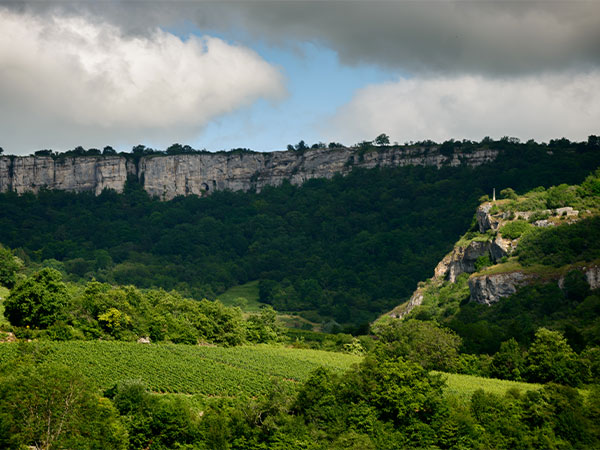
The domaine has been certified organic from 2008, and biodynamic from 2019. The Buisson brothers have planted trees at the edges of their vineyards and are careful not to mow the verges early in the season because of the number of small birds such as larks which nest there. The vineyards are grassed between the rows to minimise water evaporation but tilled underneath the vines. And they are experimenting with trial plots for future development, testing cover crops planted and then rolled back into the soil, or grafts onto rootstock in the vineyards rather than at the nursery.
In the Côte de Nuits, interest is growing in the Côte de Nuits-Villages—a non-contiguous appellation separated into two parts, one in Brochon to the north, with the majority in the southern end of the Côte across the villages of Prémeaux, Corgolin and Comblanchien. Now, for the first time, multiple producers are making single-site bottlings. Pascal Pernot, who is transforming domaine Pernot Père & Fils from sound to scintillating, makes a superb bottling of La Croix Violette in Brochon, as does the longer-established Laurent Fournier of Domaine Jean Fournier, while, further south, micro-négociant Camille Thiriet offers both Les Retraits and Aux Montagnes. Thiriet and her partner, Matt Chittick, who set up Maison MC Thiriet in 2016 with just a handful of barrels of simple appellations (Bourgogne Blanc and Côte de Nuits-Villages), have expanded to interesting sites further afield in the Bourgogne Franche-Comté region. They make a pure savagnin from Arbois and a delicious white from Vézelay, where Thiriet’s grandmother was a teacher.
Frost, Hail, Heat & Drought
A vigneron in Burgundy may not feel temperatures rising as quickly as they have been at the earth’s poles. But she will feel the results. Higher polar temperatures have reduced the power and consistency of the jet stream, wind currents in the atmosphere that have usually kept the cold air in the Arctic region. Now, it is more common to find massive blocks of cold air descending. Such global changes in wind patterns appear, at least for the period of 2018–2020, to have impacted late-season weather in France, with less incidence of rain-bringing westerlies than has been normal. Alternating winds from due north (cold and dry) or due south (hot and dry) have been much more common, bringing heat spikes and drought. Recent heat has encouraged pinot noir grapes to wrinkle in the sun, while drought was causing the vines to shut down the processes which complete the internal ripening of the grapes—leading to some wines with raw tannins and cooked-fruit flavors. Below ground, drought and heat are affecting the very survival of rootstocks such as the popular 161-49C, widely planted in the Côte d’Or and now having to be pulled out.
In fact, whether driven by climate or the price of land (or both), many of Burgundy’s interesting new projects are based outside the Côte d’Or. Some involve Côte d’Or producers who want to expand their portfolio in the direction of more affordable wines: thus, Lafon, Leflaive and Jadot in the Mâconnais and many more in the Beaujolais. Importers may make use of these established names from the Côte d’Or to supply their needs from elsewhere in Burgundy, but what a shame it would be to ignore the brilliance of some of the small estates making Mâcon-Villages, such as Domaine de Thalie and La Vigne Mouton in far-flung Bray, or Frantz Chagnoleau in Pierreclos.
Chagnoleau, who cut his vinous teeth working with Olivier Merlin in Mâcon–La Roche Vineuse, has put together a domaine with his partner, increasingly working with their own vines, owned or farmed. These come mostly from relatively unknown corners of the Mâconnais, including their Clos St-Pancras and a new project to plant aligoté, savagnin and pinot noir, along with chardonnay in a plot of Mâcon-Cruzille, Au Quin Château, which is also referenced by the longer-established Julien Guillot of Domaine des Vignes du Maynes.
In the north, the superb value of Chablis may be a little bit under threat: all producers are putting up prices for 2020 in the light of the certain shortfall in 2021, but, even so, the quality-price ratio remains very reasonable by Burgundy standards. Regular visitors to Chablis may easily make the small detour to the appellations of St-Bris (for sauvignon) and Irancy (pinot noir) but there has been not much interest from the wider wine world in the other appellations of the “Grand Auxerrois” and other vineyards of the Yonne department. Now, this may be changing.
Take the stories of Xavier Julien (Domaine Saint Pancrace) and Yann Boissenet, for example. Neither comes from a winemaking family. Xavier, from Auxerre, caught the bug and, having worked for producers in Vézelay and Chablis, decided to invest in vineyards closer to home, in the village of Vaux, which falls within the appellation of Côtes d’Auxerre, planting his vines at high density even where he needed a crowbar to break into the rock in order to get the vines into the ground. His best vineyard site, bizarrely, is called La Côte d’Or.
New Names to Watch for in a Changing Burgundy Climate
Maranges
Domaine de la Cassiopée (Hugo Mathurin and Talloulah Dubourg)
Fiona Leroy
Nicolas Perrault
Elodie Roy
Domaine des Rouges Queues Isabelle and Jean-Yves Vantey)
Monthélie
Domaine Changarnier
Domaine Dubuet-Monthelie
Domaine Dujardin
Domaine Florent Garaudet
St-Romain
Domaine Henri & Gilles Buisson
Côte de Nuits-Villages
Domaine Jean Fournier
Jérôme Galeyrand
Pernot Père & Fils
Camille Thiriet
Mâconnais
Domaine de Thalie (Bray)
La Vigne Mouton (Bray)
Frantz Chagnoleau (Pierreclos)
Vineyards of the Yonne
Yann Boissenet
Domaine Saint Pancrace
Domaine des Sénons
Further north, Yann Boissenet decided to branch out from the cereal crops which were his family’s principal activity. In 2008, he decided to add vineyards to his portfolio and now has a small holding of just over seven-and-a-half acres in the village of Volgre, on the banks of the river Tholon, just south of the old city of Joigny. He makes attractive chardonnay and pinot blanc, to which he has added a spectacular and refreshing rosé, made from pinot gris.
Closer in to Joigny, Alain and Julien Vignot own the lion’s share of the vines on the celebrated Côte St-Jacques hillside overlooking the city itself. The latest development, still a few kilometers further to the north, is the Domaine de Sénons, reclaiming vineyard land abandoned after phylloxera. There may be no direct link to climate changes in some of these new plantings, but it likely plays a role in the pace and direction of Burgundy’s recent expansions.
Writing this has made me thirsty. The potential to make better wines than before on less-hallowed ground has opened up a whole new array of exciting wines. I could be tempted by a Mâcon-Cruzille Aragonite from Domaine Julien Guillot—not one of the new brigade: The property has been in existence for the last 1,111 years.
This story appears in the print issue of October 2021.
Like what you read? Subscribe today.