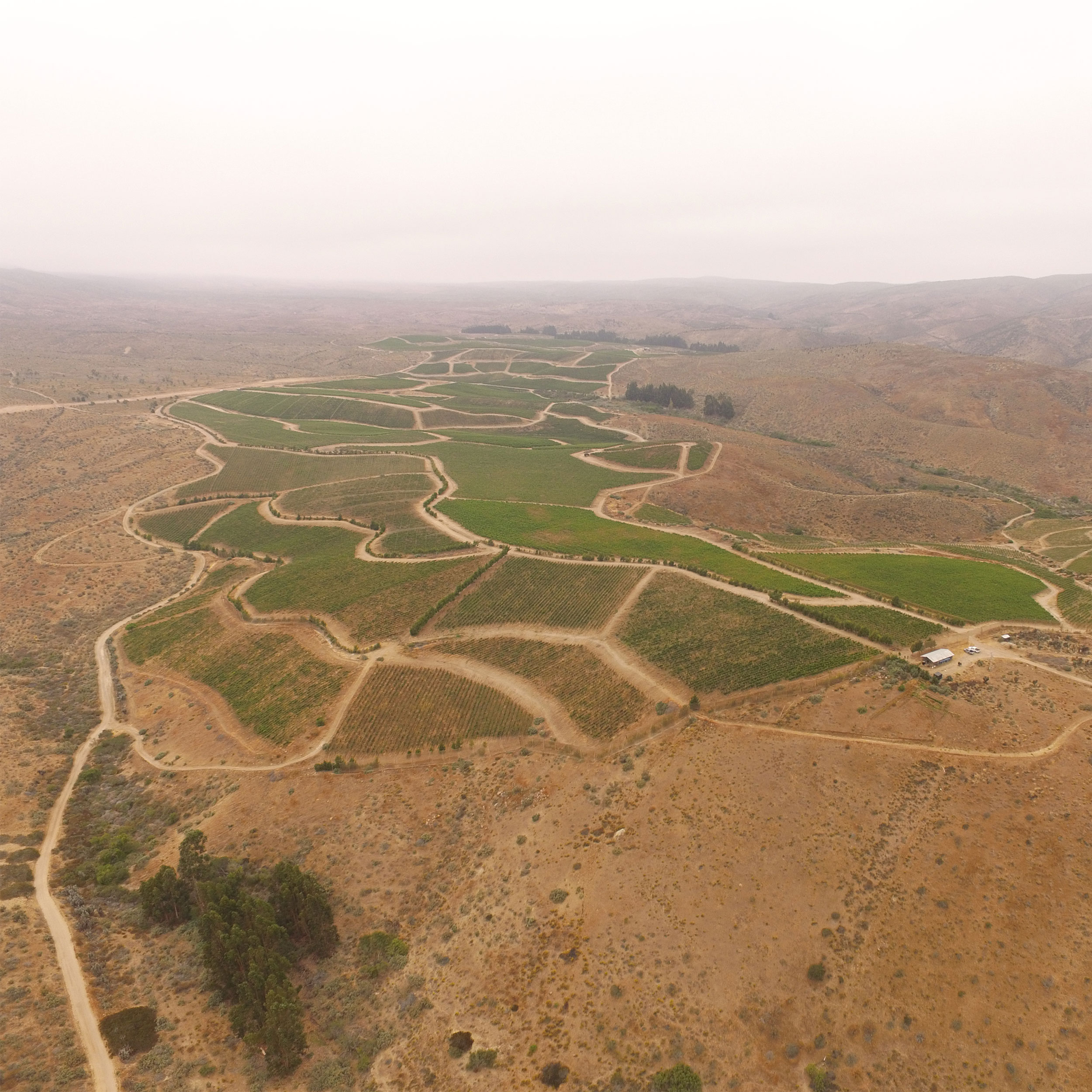
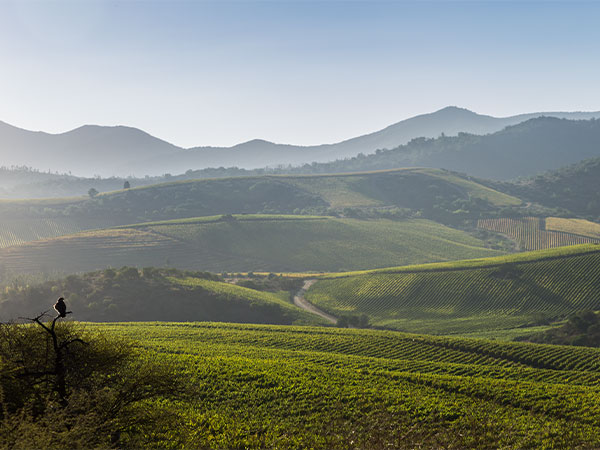
Above: The Talinay vineyard, at the edge of the Atacama Desert, on the hills of the coastal mountain range
The Talinay vineyard is a patch of intense green at the edge of the Atacama desert, five miles off the coast. The soil beneath the vines is white, a dense layer of chalk reflecting the intense luminosity of the sun, even as the leaves are cooled by winds from the Pacific.
At the edge of the vineyard, facing north, there’s a small block of pinot noir, a hillside bearing the brunt of the winds. Tabalí’s winemaker, Felipe Müller, farms this 2.8-acre block for Pai, one of the new pinots presenting Chile’s coast in a completely new light.
It’s a pinot noir that’s structured by the site, Müller says: “The soil is almost pure chalk and that offers a deep verticality to the wine.”
Since the mid-nineteenth century, when the first French vines were imported to Chile, the vineyards have been marked by the influence of Bordeaux and its cabernet sauvignon. For wealthy Chileans, the epitome of a great wine has been the cabernet that has adapted to the alluvial soils and the cold mountain breezes of the Alto Maipo.
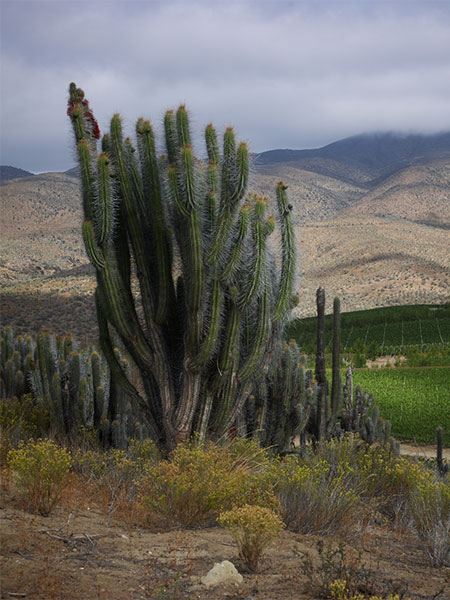
the fresh breeze from the Humboldt Current,
which bathes the Chilean coast.
Winemakers trained in cabernet, whether in Chile or elsewhere, rarely have an equal talent for pinot noir. “Thinking of Bordeaux,” says Francisco Baettig at Errázuriz, “we were focusing on the smoothness of the tannins in pinot noir. So, we waited and waited until the texture felt smooth, and we didn’t care if the fruit was overripe in that process.”
Pinot was often treated like cabernet in the cellar as well, with aeration during fermentation to accentuate the tannic softness followed by extensive aging in new French oak barrels. At the end of the 1990s, the fashion had been to extract so much from the grapes that they showed intense colors and monumental weight, filling the mouth with sweetness. There was nothing tight, taut or balletic about these pinots.
But in the last decade, Chilean winemakers began to look beyond Bordeaux or Napa, enticed by the wines of Barolo and Burgundy. Following the global trend that favors lighter and fresher wines, Chilean pinot has been transformed into much more drinkable juice. Under the sun that floods the vineyards of Chile, enjoying the cold breezes off the Pacific, it was suddenly a pleasure to drink Chilean pinot.
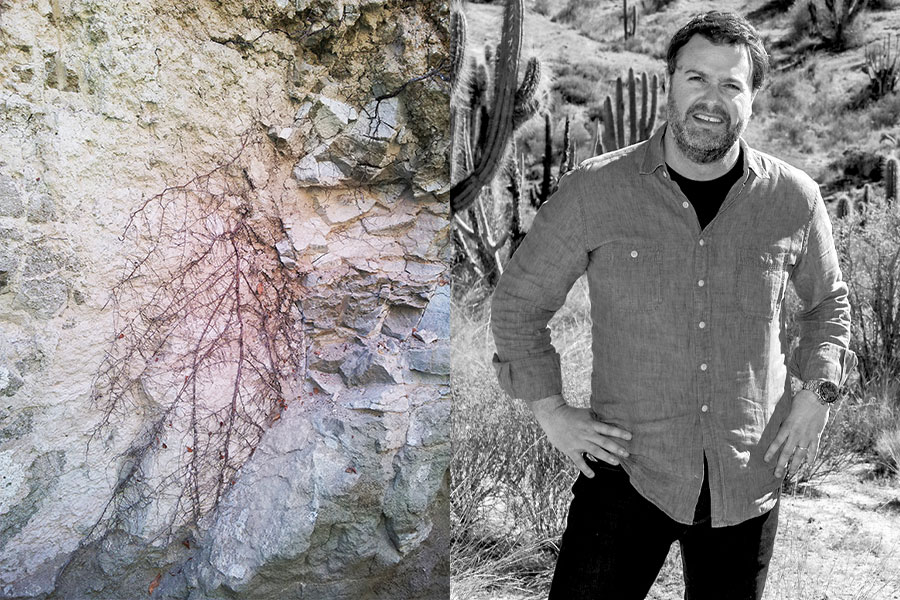
—Felipe Müller, winemaker at Tabalí
While the winemakers’ approach has played a fundamental role in the development of these new wines, they would not have been possible without new plant material.
For the last 25 years, winemakers have complained about the low quality of a clone known locally as Valdivieso, the pinot material that until very recently was the most widespread in Chilean vineyards. Introduced by Nicolás Valdivieso, from Viña Valdivieso, around 1860, it provided the fruit for Valdivieso’s sparkling wines.
“The first pinot vineyards to be planted in Limarí were with the Valdivieso clone” Müller explains, “but it was full of viruses and the ripening of the bunches was very uneven. Today, I no longer use it in my wines, and we did not plant it in Talinay.”
Given its propensity for bad fruit set and uneven ripening, wines from the Valdivieso clone can taste more vegetal than fruity, with little aromatic clarity, the result of ripe berries and green grapes fermenting together.
At the beginning of the 1980s, Concha y Toro worked with the University of California at Davis to import Clone 5. But it wasn’t until the mid-1990s that the firm established Cono Sur, a winery dedicated to pinot noir.
Adolfo Hurtado, Cono Sur’s chief winemaker from 1997 to 2018, recalls that in the early 2000s, he was producing more than 600,000 cases of pinot a year, sold mostly in the British market.
In 2003, with its Clone 5 vines well established in Casablanca, Cono Sur launched Ocio, “the first Chilean pinot noir with serious ambitions,” says Hurtado.
Meanwhile, starting in 1998, Chilean nurseries began to import French clonal material, especially from Dijon, including clones 777 and 828, which, at many of Chile’s far-coast sites, offered wines that taste of red fruits with fresher acidity than in Clone 5.
Baettig worked with Dijon clones when he started planting Errázuriz’s Aconcagua Costa vineyards in 2005. The vineyard, an hour’s drive north of Santiago and about six and a half miles from the sea, inhabits the undulating granite-and-clay slopes of the Cordillera de la Costa.
“These clones have behaved very differently from those we farmed in other vineyards,” Baettig has found. “If we compare 777 and 828, which predominate in Aconcagua Costa, with the Valdivieso clone, the maturity is very even and the fruit expression is much clearer.” He also manages the vineyards in a different way than he once did, when he left the bunches well exposed to the sun and the harvest was much later. “Now I am concentrating on protecting the grapes from the sun to obtain redder fruit,” he says, “and I no longer look at the tannins, but instead I am guided by the flavors and their freshness.”
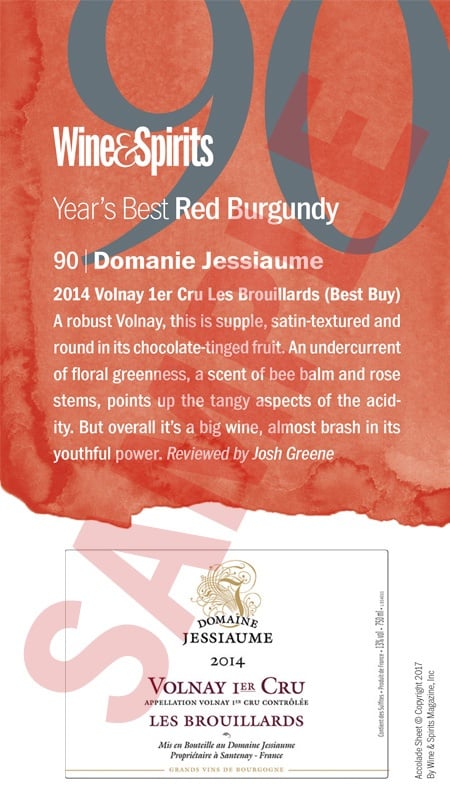
Watching for those flavors, he began to notice a sector of the vineyard was giving a special character to his wines. He identified several parcels of decomposed slate—about 11 acres out of the 125 Errázuriz planted to pinot noir at Aconcagua Costa. He vinified the fruit from these slate soils separately, releasing his first Las Pizarras Pinot Noir in 2014.
The most recent vintage of Las Pizzaras, the 2019, is the most successful so far. Las Pizarras comes from three blocks, the most important of them facing south, away from the direct sun, an orientation that sustains freshness in the grapes, even in warm years like 2019. The result is a red full of light, packed with tannic tension and an edge of acidity, all bathed in the scent of the sea.
In addition to the Dijon clones, two more selections arrived in Chile between 2001 and 2004. Jorge Villagrán, General Manager of Guillaume Chile worked with his counterparts in France, benefitting from a project the nursery conducted for the Interprofessional Committee in Burgundy (CIVB). To improve the pinot noir plant material in Burgundy, the CIVB asked a number of growers to conduct mass selections of their vines, which Guillaume went on to reproduce. “Of those selections,” Villagrán explains, “they chose the best, which turned out to be from two appellations: Vosne-Romanée and Gevrey-Chambertin. Those were the selections we imported to Chile.”
“The problem with them is low production,” Baettig says. For his personal project, Vinos Baettig, in Traiguén, in the south of Chile, he planted some of the Gevrey-Chambertin selection, but he was not completely convinced by the results. “Traiguén is very cold, and that selection has problems with bunch set due to the cool spring conditions.”
If not for the results that Tabalí has obtained in the white chalk soils of Talinay, these two selections might have gone unnoticed. In terms of both climate and soil, Talinay is completely different from Traiguén: much sunnier, and with strongly calcareous soils. “Of the nearly three acres that we have planted, roughly 80 percent is the Vosne-Romanée selection, the rest is the Gevrey-Chambertin selection,” Müller says.
He finds both tend to produce very little crop and give wines with pale colors; the fundamental difference between the two is in their flavors and texture: “The Gevrey-Chambertin selection is somewhat more rustic in texture, with more concentrated flavors, while the Vosne-Romanée selection is more elegant, with more layers of aromas and flavors and with greater depth.” Blended together in the 2018 Pai, the combination is explosive. The wine’s flavors are salty and fruity, while its structural tension is built on firm acidity and pungent tannins that will sustain it in the cellar.

“Thinking of Bordeaux, we were focusing on the smoothness of the tannins in pinot noir. So, we waited and waited until the texture felt smooth, and we didn’t care if the fruit was overripe in that process.”
—Francisco Baettig, winemaker at Errázuriz
While the block is planted to more than 4,000 vines per acre, those 12,000 vines produced only 6,000 bottles of Pai—or the fruit of two vines per bottle. That low productivity has led several wineries to uproot these selections, requiring greater volume to cover their costs.
So far, Pai is the only Chilean pinot made entirely from the Vosne-Romanée and Gevrey-Chambertin selections. Still, the range of new plant material combined with more subtle winemaking has created a community of refreshing pinots, most of them filled with delicious red fruit. Yes, some are built to drink poolside and quench thirst, but a small handful reach higher levels: pinots no one might have believed could come from Chile.

is the author of Descorchados, an annual guide to the wines of South America, and covers Chile for W&S.
This story appears in the print issue
of August 2021.
Like what you read? Subscribe
today.