The plain in Spain is mainly limestone, or so I was told by a number of people who should know. I also had heard that growers on the plain in Rueda were resurrecting Pálido, a historic style of wine aged under a veil of flor, in the manner of Fino Sherry and the wines of Jura that rest sous voile, developing savory complexity.
On my past visits to Rueda, all I had tasted were fresh, modern whites. But the news of a wine aged under flor led me back this spring to taste this new ancient wine…still a rarity, as it turns out: There was only one producer I could find who plans to commercialize it next year, when Pálido will be allowed by the DO Rueda.
Carmen San Martín met me at her family’s cellars in Serrada, a town 18 miles southwest of Valladolid and only a few miles from the Duero River. She’s a descendent of Alberto Gutiérrez, who established Bodegas de Alberto in the 1940s in a warren of 17th-century caves excavated by Dominican monks. San Martín now uses those caves not only to produce fresh verdejos, but also to age her vinos de licor, fortified wines made in two styles: Dorado and Pálido—golden and pale.
These categories were defined by Spain’s Ministry of Agriculture in 1932, in the first regulations for the region: Those regulations stipulated that the wines would be made from late-harvested grapes—or fortified if they did not achieve 15 percent alcohol on their own—then aged in differing ways, one oxidative (in de Alberto’s case, in glass and in barrel), one biological (in barrel under flor).
A few months before my visit, San Martín had presented her Dorado at the Second European Meeting of Dry Oxidative Wines, organized by the Association of Dry Rancios of Roussillon (another historic oxidative wine now emerging out of obscurity—see Tara Q. Thomas’s article on Rancio Sec in W&S February 2020).
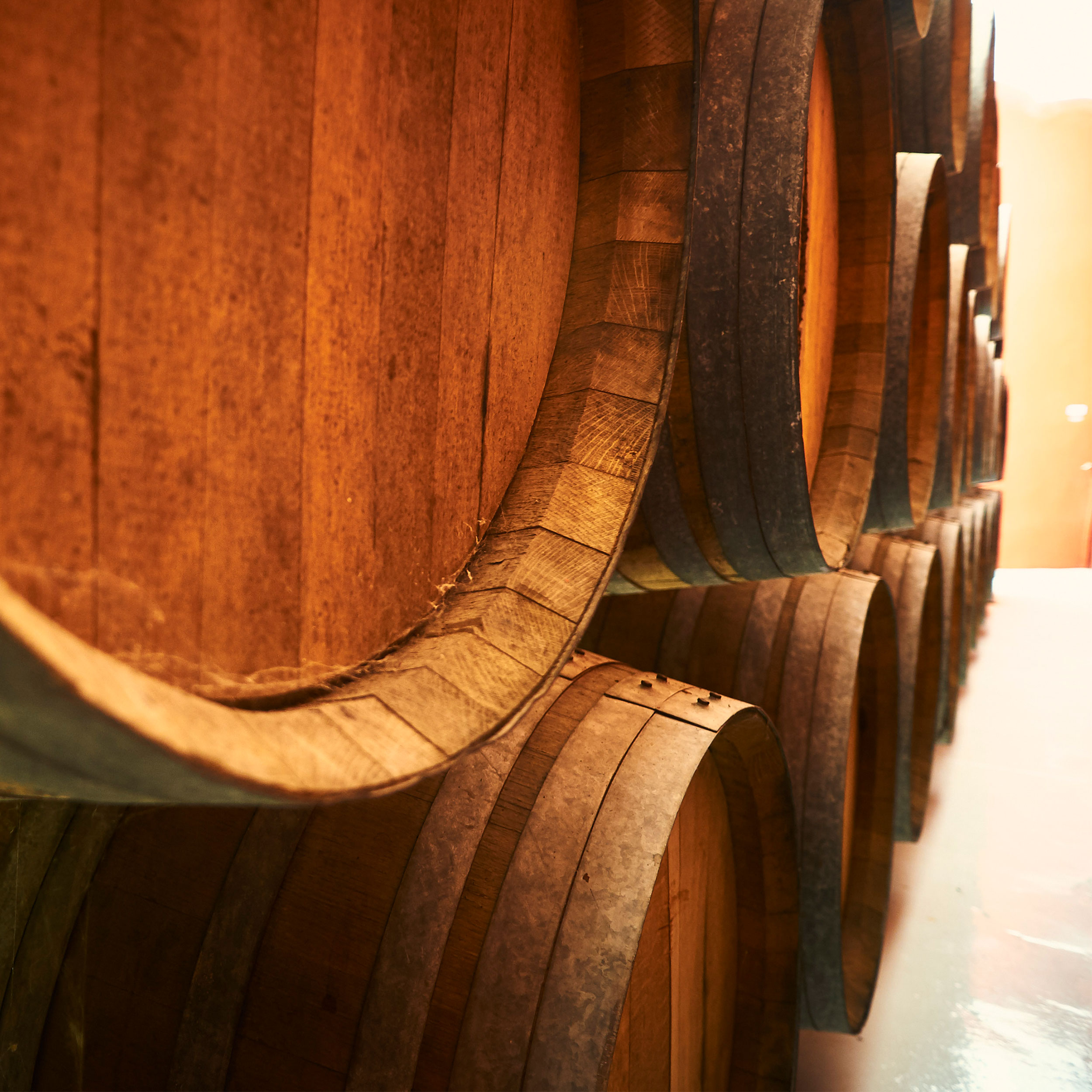
San Martín bases her Dorado on a solera her family established in the 1940s, racking off ten percent every few years for bottling, and replenishing the solera with an equal amount of newer wine that’s been aged outdoors, in the winery’s courtyard, in damajuanas, glass demijohns. After a year exposed to the heat of the sun, as well as the cold nights of the high plain, she moves the wine into barrels, where it rests for several years in the caves until the winery is ready to produce the next bottling from the solera.
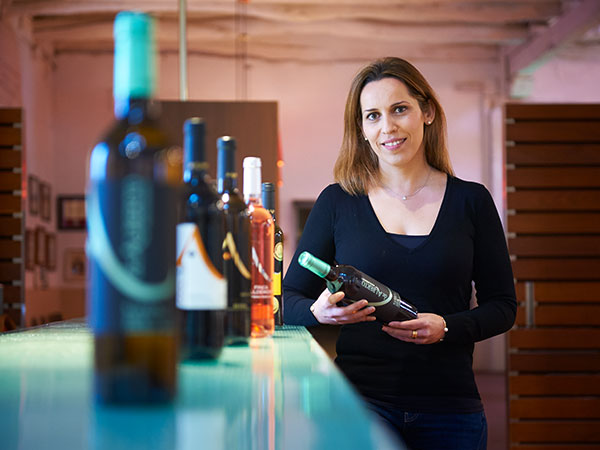
De Alberto’s Pálido, in contrast, never sees the damajuanas. Instead, it rests on the fine lees in tank for a year after fermentation. Then it is fortified to 15 percent alcohol and transferred to barrels, where it ages for three years or more, developing a blanket of flor “about two fingers thick,” San Martín says, that holds oxygen at bay.
“We usually drink this as an aperitif,” she told me as we tasted the savory Pálido. Over the course of a day tasting clean, crisp verdejo, this deep, earthy white was the wine that held in my memory—I had come in search of Pálido and was not disappointed.
And ever since, I have been trying to learn the history of this wine called Pálido.
As it turns out, San Martín is the current president of the DO Rueda, and her personal interest in Pálido may have convinced other members to allow the recent change in the regulations. She does not know how many other producers plan to make Pálido commercially.
Santiago Mora, the general director of the DO Rueda, sent me some historical documents from the 20th century in which Pálido was mentioned; it was abandoned in the regulations published in 2002. Still, the wine’s historical significance remained a mystery. So, he put me in touch with Miguel Esteban de Iscar, a winegrower and professor of history who had researched his PhD thesis on Rueda ass well as a history of winegrowing in Serrada, his hometown.
Eagerly searching his 1,000-page thesis, I found a few mentions of wines that were “dorado,” or golden, and fewer still of wines that were “pálido.” So, we began a long correspondence as I tried to ascertain what was, in fact, the historical basis of this wine. Esteban de Iscar continued to patiently answer my queries with information about Rueda in centuries past, rather than anything specific about Pálido. And with as much patience as I could muster in my computer-generated Spanish, I asked him point-blank: Were there, in fact, wines called Pálido in the past?
There were no branded wines in the past, he responded. “And there were no labels for Pálido. The names of these wines were ‘White Wines,’ to which, on occasion, their geographical origin was added, such as, for example, wines from the Tierra de Medina, Rueda, La Nava, La Seca, Serrada, which are today the towns that form the heart of DO Rueda.” The quality of the wine was distinguished by its price, he told me in his email. Wines were also distinguished by their aging methods—new, aged, quatro añejo, trasañejo and older wines, based on time in barrel.
“At the turn of the 20th century, some wines began to be called rancio or soleras, taking into account their different forms of production and aging.” That’s when people began to use terms like Dorado and Pálido to name the wine, terms that are now codified by the DO.
To clarify his point, Esteban de Iscar cited records from 19th-century associations of expert wine judges who would grant diplomas ranking the quality of growers’ wines, and advise them on how to improve their production. These judges described the best wines in terms of the ripeness of the fruit and the alcohol level they achieved (above 15 percent), by their clarity and by their color, often dorado or pálido. Fortified for long preservation, these wines were suited for export or for the royal court, which had, by then, decamped from Valladolid to Madrid.
At the time, any fresh young verdejo would have been sold in the local tavern. That was, in fact, the reverse of the region’s production today, where the young verdejo, its freshness preserved by cold fermentations in stainless steel and the cleanliness of modern winemaking, is bound for markets throughout Spain and for export, while these traditional styles of fortified wines are a local curiosity.
Eventually, I shared my own interest in Pálido with Esteban de Iscar, drawing parallels with other wines from limestone soils aged under a flor of yeasts. But he would have nothing of it.
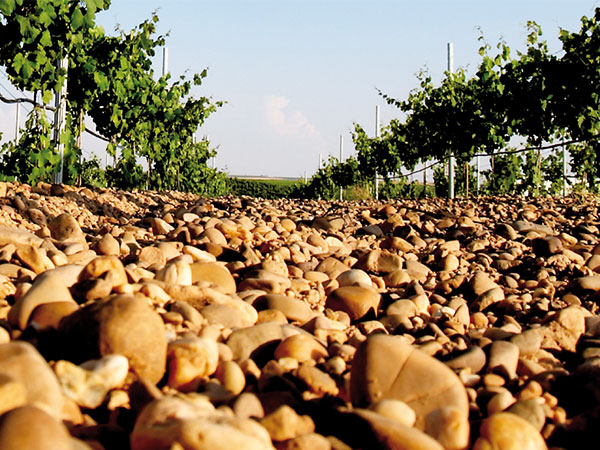
“The vineyards of Rueda sit on gravel terraces left by rivers over the last million years, and formed by soils of quartzite rock mixed with sand. They are not limestone soils,” he wrote. “They are permeable soils, with abundant rock, at 750 meters of altitude…Nothing to do with the soils of the Jerez area, neither by soil, nor by climate, nor by altitude, nor by proximity to the sea.”
I had clearly touched a nerve. But now, I was completely confused. Even in his own thesis, he describes the soil as “the so-called limestones of the Moors.” Then he describes how this limestone was reconfigured over several geological eras through river erosion, tectonics and climate to evolve into the often deep, sandy soils growers farm today.
Having spent some time in vineyards with Pedro Parra, the winefocused geologist, I wondered if anyone knew for certain that such a region, once primarily limestone, no longer had any relevant limestone in the vineyard soils.
—Miguel Esteban de Iscar
Parra acknowledged that it would be impossible to know without digging multiple soil pits—that it would depend on the specific site. He had studied a vineyard along the Ebro River in Rioja, for example, and turned up five varied soils that were, in some way, a result of the river’s geological activity: some alluvial terraces with gravel, sand and iron, some with gravel, sand and a little limestone, some with no gravel or sand, but limestone, along with other areas where there was limestone in varied stages of deterioration, what he terms alterite. For a study Parra did in Ribera del Duero, he found the river laid out alluvial terraces with clay and gravel, or sand, gravel and iron, or deep clay, or deep, silty sand. And he also found areas of limestone rock, of limestone sand and of limestone alterite. At both vineyards, the grower may have thought they had alluvial soils, but a detailed study revealed a more complex soil situation.
As for Rueda and the rivers that rearranged its soils, “Is it possible that there is limestone involved?” Parra mused. Referencing a soil study of the region done by the DO, he said, “If you look at the pH of the soil in the map, it goes from 5.5 (not limestone) to 8.6 (limestone). So, without digging soil pits, the only way to really know is by tasting.” In fact, Parra has become adept at identifying the mother rock in vineyards by the taste and structure of the wine. “With whites, it is more difficult to identify, because you can confuse the tension in a wine from gravels with the tension in a wine from limestone, especially if there is a touch of limestone in the gravels.”
Was it the taste of gravels or of limestone that so caught my attention in that Serrada wine under flor? I’ll have to convince Parra to dig some soil pits. Or maybe, in this case, it’s more about the population of yeasts. In either case, as an acolyte of Jura wines and Fino Sherry, I’ll continue to watch and wait for the return of Rueda Pálido.

Joshua Greene is the editor and publisher of Wine & Spirits magazine.
This story appears in the print issue
of August 2020.
Like what you read? Subscribe
today.