
Ten years ago, when great Greek wine was beginning to hit these shores, you’d have to go to New York to get the full experience. An all-Greek wine list was something you could pull off only in a city where being outrageous is a positive attribute, and competition is fierce when it comes to pouring something your neighbor hasn’t already discovered.
Today, one of the largest Greek wine lists in the US is in Houston, Texas, second only to Kamal Kouiri’s at Molyvos in NYC—which is arguably the deepest in the world. Another standout has taken shape in Vermont, virgin territory for Greek wine, as was Seattle, now becoming a hub for Greek winemakers thanks to Omega’s extensive list.
What’s changed? There’s the economic crisis in Greece, which has pushed winemakers to focus on outside markets. But there’s also a more essential change here in the States. While there are still plenty of diner cooks slinging four inch-high bricks of spanakopita (and they can be delicious)—as well as chefs at glittering cathedrals of seafood and high-concept Greek food—a new crop of restaurateurs is presenting an alternate path that’s truer to the food in Greece than anything we’ve experienced on this side of the Atlantic.
This is the third wave: chefs and restaurateurs who consider Greek wine and food together, as naturally as it happens at home in Thessaloniki or Sparta.
Helen Greek Food & Wine
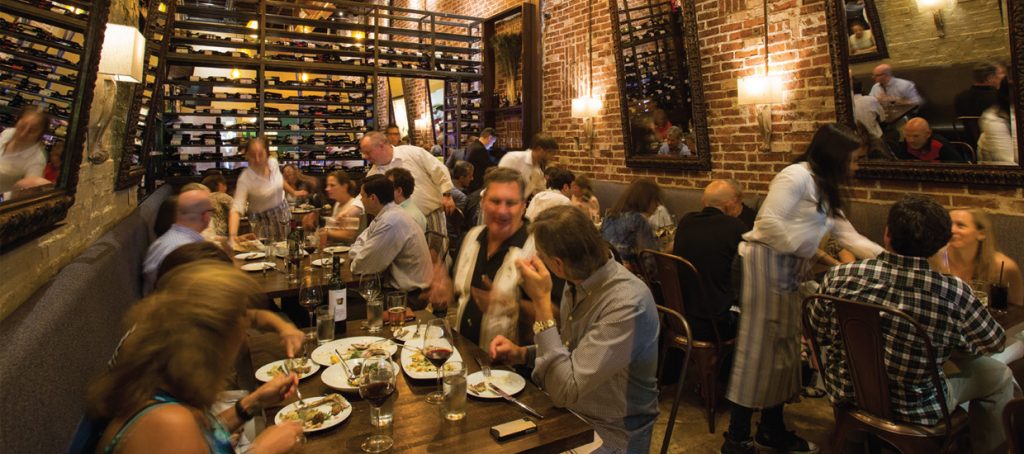
“Why wouldn’t you have an entirely Greek wine list if you open a Greek restaurant?” asks Evan Turner, who launched Helen Greek Food & Wine in Houston, Texas, last summer. “No one bats an eye at an all-French list, or all-Italian—heck, A-16 is not even just Italian, it’s Campanian!”
Some people would think that a lack of Greek wines in their home state would be reason enough to pad a list with some other Mediterranean wines. Turner, instead, set out to convince every Greek wine importer across the nation to get their wines into Texas.
“It took years,” he says, explaining that he put the idea in motion soon after moving here from New York in 2005. “Greece is the final frontier in a lot of ways—one of the few places left that has an amazing wine and food tradition we [Americans] haven’t considered together.”
Turner fell hard for Greece when he was eleven, after his family moved to Thessaloniki. “My mom said I took to it like a duck to water,” he explains.

“Greece is the final frontier in a lot of ways—one of the few places left that has an amazing wine and food tradition we haven’t considered together.”
—Evan Turner
For most of his adult life he’s been trying to telegraph the culture to Americans through the country’s food and wine. “Helen is a 1,600-square foot love letter to the country that made me a far better person for having lived there,” he says. “There is a lot more to be seen as Greek food than what we know here in the US. It’s a country the size of Louisiana, but there are over 300 indigenous grape varieties, and, because of terrain, what you eat is entirely different from place to place. Especially pre-eighties, pre-euro, before there was Burger King, Pizza Hut, any of that nonsense.”
He put in time in some of NYC’s best Greek restaurants before heading to Houston, where his idea for Helen started with the kitchen. “I wanted a kitchen that didn’t have space for a walk-in. Our freezer is the size of a home fridge. We get food delivered every day, and run through it all in that day. I wanted it to be like it is in Greece, where what you have is what we have today; if you’re late, we might be out,” he says. “Fortunately, we live in an age where that’s become cool.”
Then there’s the menu. “I think about it like this: What if you packed up a whole bunch of Greeks, from Patras to Ioannina to Metsovo to Kos and Crete, and settled them in southeast Texas. How would they go about cooking their food here?” Turner points to the red peppers from Florina in far northern Greece, with their own PDO (Protected Designation of Origin). “We can’t get them,” he says, “but we have plenty of peppers here.” Right now, he’s stuffing banana peppers with a combination of Greek cheeses, cornbread and fresh herbs, and blistering them on the grill, Greek-style. Or lamb: He uses the local Dorper lamb, and looks for off-cuts. “In the eighties, lamb was for Easter, for name-day celebrations and important events. This idea of the My Big Fat Greek Wedding feasts is very modern. Only Greeks here in the US with more money that can do that.” Right now, he’s serving ribs instead of chops—“they’re more fatty and succulent; it evokes more of that poor, humble cooking that Greek food is all about.”
What Turner is doing is essentially what Greeks started out doing in their diners, serving up American-sized whacks of family-style food, and what the next generation strained to distance themselves from, with their white-tablecloth paeans to lamb and seafood. Only he’s grounded it in a philosophy that’s truer to real-life Greek food, and brings wine in as an essential tie to the place.
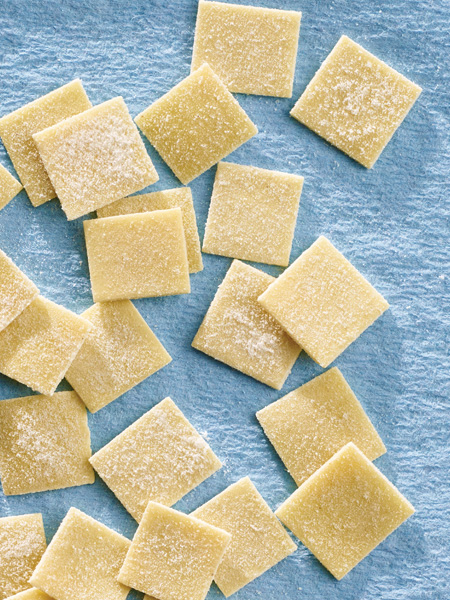
“The goal is food that evokes home even if you can’t completely replicate it,” he says. “We serve hilopites, little square pasta, with the classic brown butter, cheese, lemon zest,” he says. “It’s a dish that parents and yia yias make; you never actually see it on restaurant menus. But I remember an old woman over the fence from us who would make me hilopites, and I’d sit there with a spoon ladling it into my mouth until I’d almost pop. To be able to serve that with something like a malagousia from Zaferakis is the bees knees.”
2429 Rice Blvd., Houston, TX; 832-831-7133, helengreekfoodandwine.com
Hilopites with Brown Butter
adapted from William Wright, Executive Chef at Helen Greek Food and Wine, Houston, TX

Ingredients
- 2 cup hilopites pasta
- 4 scallions, thinly sliced, whites and green tops separated
- 1 tbsp clarified brown butter (recipe follows)
- 4 tbsp compound brown butter (recipe follows)
- Fresh-ground black pepper
- Basil leaves
- 1/4 cup myzithra cheese, finely grated
Compound Brown Butter
- 1 pound unsalted, good-quality butter
- 1 qt heavy whipping cream
- 1/4 cup red wine vinegar
- 1 tsp sea salt
Instructions
- Fill a large, deep pot with water. Salt the water until it is a little stronger than sea water and bring to a rolling boil. Add the hilopites and cook for three minutes. While the pasta is cooking, put a medium-size sauté pan over low heat. Add the clarified brown butter and the whites of the scallions and cook until softened.
- Drain the pasta, reserving a cup of the pasta water, and add it to the sauté pan. Add 3 tablespoons of the compound brown butter and toss to coat the pasta well. Turn off the heat and adjust the consistency to your taste with more compound butter and a little of the pasta cooking water if needed.
- Spoon into serving bowls and garnish with torn basil, scallion greens, black pepper and myzithra cheese. Serve with a malagousia like Zaferakis from Tyrnavos.
For the Compound Brown Butter:
- In a deep saucepan combine butter and cream. Place over high heat until butter is melted and mixture starts to simmer.
- Lower the heat and let the cream and butter cook slowly, stirring only occasionally, being sure to scrape the bottom of the pot thoroughly each time.
- When the mixture begins to separate, raise the heat to medium and begin to whisk the mixture every couple of minutes. The goal is to allow the fat to rise to the top and the milk solids to fall to the bottom of the pot, where they will brown. Whisk the mixture to make sure that the milk solids brown evenly but not hard enough to re-emulsify them with the fat.
- When the liquid turns dark caramel in color and the aroma is fragrant and nutty, remove the pan from the heat. Very slowly add half of the vinegar while whisking. If you pour too fast, the hot butter will boil over.
- Pour the butter into a heat-proof bowl or jar and let cool. Once cooled, skim the clarified butter from the top. This flavorful brown butter can be stored in a jar and kept in a cupboard, ready to use for any general cooking.
- Using a hand blender, slowly emulsify the remaining vinegar into the remaining browned parts of the butter just until it becomes smooth and glossy. Season with salt. You are looking for a nice tang from the vinegar to balance the richness of the browned butter, and just enough salt to make the flavor shine.

is W&S’s editor at large and covers the wines of the Mediterranean and Central and Eastern Europe for the magazine.
This story appears in the print issue of August 2016.
Like what you read? Subscribe today.