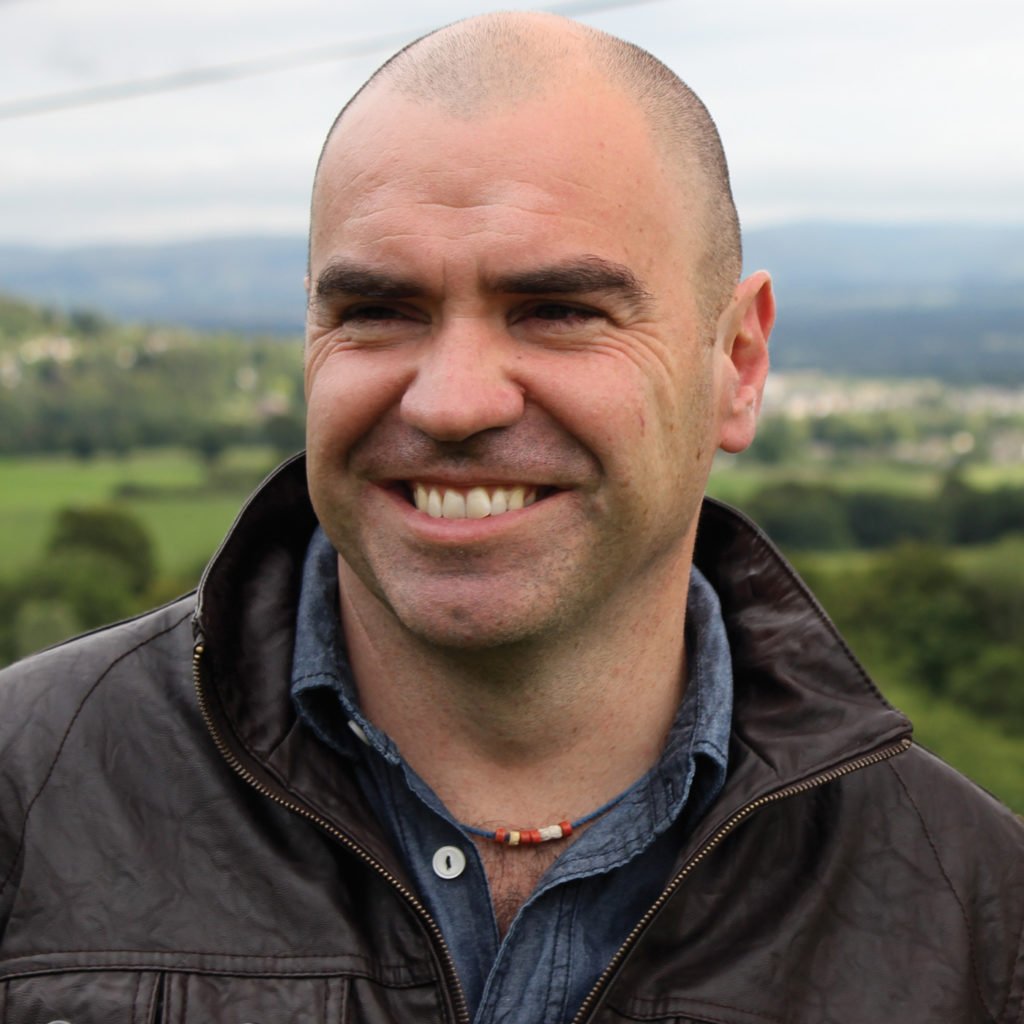
Gerard Nebesky spent a decade running the Bohemian Café in Occidental, went up against Bobby Flay on the Cooking Channel in a paella throwdown and now occasionally jets off to the Caribbean to cook for celebrity clients. But in western Sonoma he’s best known for his obsessive pursuit of foraged food. I found out about him via a tip from Greg Miller at Flowers Winery and suggested a challenge: Nebesky would help me forage some coastal ingredients, and I’d reach out to a few nearby winemakers to scare up some wines to play with our foraged goods at a dinner party. People have been foraging along the California coast for millennia, long before Europeans arrived with their grapevines. But commercial vineyards have only shown up on the coast itself in the last few decades. How might the very literal flavors of the coast connect with the wines grown nearby?
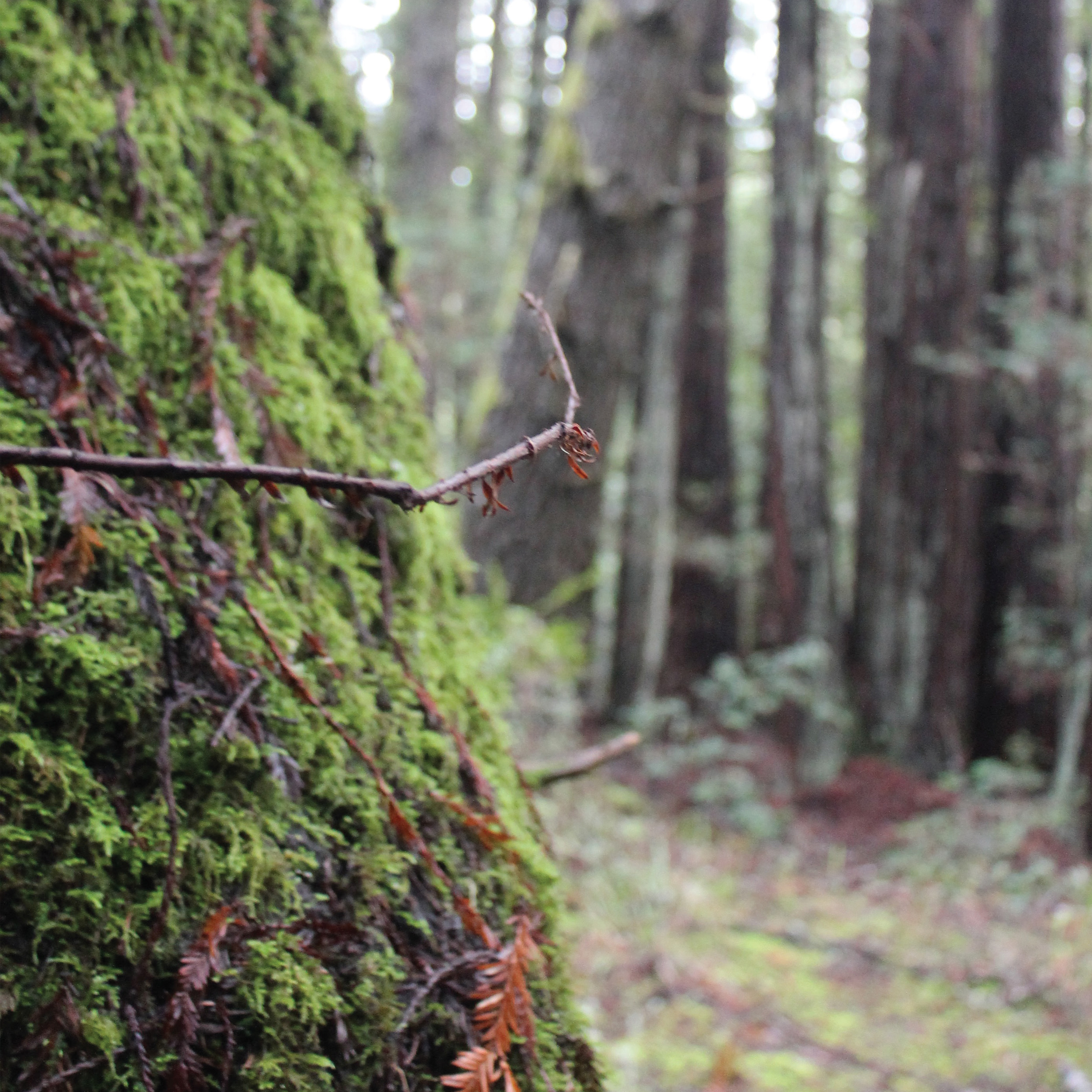
A few weeks later I met Nebesky and a few of his foraging buddies at his house, on a bluff near Occidental just below a pinot noir vineyard, and we headed to Salt Point State Park, one of California’s few public parks to allow legal mushroom gathering. By ten in the morning we were hiking up a hillside less than a mile from the ocean, winding around the pillar-like trunks of redwood trees. I carried a pocketknife, a cloth bag and an increasingly fogged-up camera. It was mid-January, less than a day after the most recent rain, and the ground was spongy, the top layer a thick blanket of moisture-blackened redwood fronds. The rich smells of the damp earth and the minty, green aroma of the redwoods mingled in an intoxicating aroma. It’s probably not a scent completely unique to the redwood forests of coastal California—the French have their sous bois, the Italians their sotto bosco—but it’s one that often springs to mind when I’m tasting wines grown in the nearby ridges of the Sonoma Coast, where these forests were cleared long ago, often for grazing, and the land later planted with vines.
It didn’t take long for us to find something.
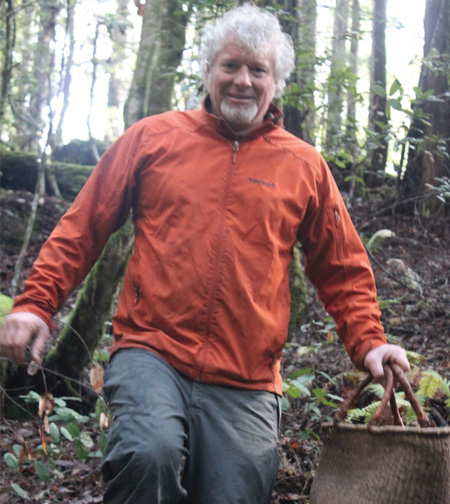
“Hedgies!” The call came from Nebesky’s friend Joe Szuecs, the group’s resident mushroom expert. He caught the foraging bug while living in Oregon, and has harvested and eaten over 50 species of wild mushrooms.
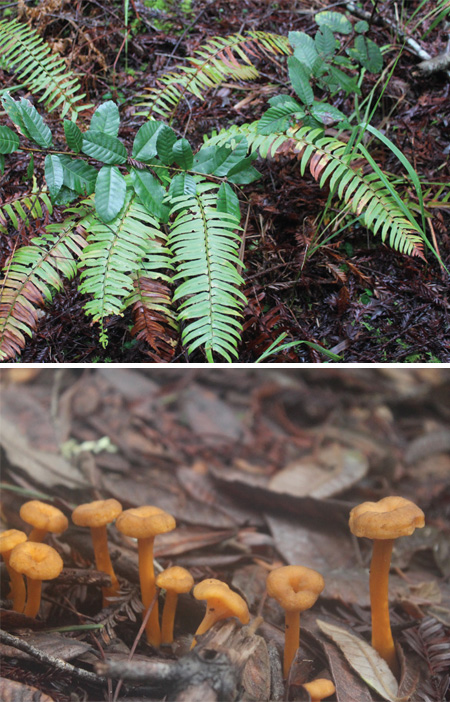
In this case, he’d stumbled on one of his favorites, the hedgehog mushroom, with its pale, caramel-tinted cap standing out in stark contrast to the dark leaves below it. The underside of the cap immediately identified it: Instead of radial gills, the spores are borne on tiny spines.
I caught sight of Nebesky’s stark white hair bobbing in and out of the trees, his young komondor—a Hungarian sheepdog—at his heels. He held a small rubbery fungus growing like a pale, translucent tongue on a fallen branch: Pseudohydnum gelatinosum. “They don’t taste like anything,” he told me, “but with berries and cream they’re amazing. It’s a textural thing.”
The most common edible mushroom we found was the yellow-foot, or winter chanterelle. Szuecs called it the “hedgie-stretcher”—fine for adding some texture and bulk when other wild mushrooms are scarce, but not as meaty or perfumed as its close relative, the better known golden chanterelle. In some spots they seemed to be everywhere, sprouting by the dozens near fallen logs. In my experience they’re subtle but actually quite good, especially sautéed with a little garlic and tucked inside warm crèpes.
Szuecs spotted another member of the chanterelle family just above a small creek—a dull, conical shape that blended in perfectly with the undergrowth, the delectable (if well camouflaged) black trumpet. With its firm texture and earthy, rich, deeply mushroomy scent, it’s known as a sort of poor man’s black truffle. (Per Szuecs’s suggestion, a few days later I mixed some finely chopped black trumpets with my morning scrambled eggs—incredible.)
We split up, and within five minutes I was lost deep in a thicket, following a sporadic trail of hedgehogs until I could barely make out the occasional whoops of my foraging companions. After a few more minutes of hollering we managed to regroup and continued heading uphill. Three hours later we made it back to the car parked along Highway 1, our bags and baskets loaded with an impressive collection of wild mushrooms—including a few stray apricot-scented golden chanterelles and one late-season matsutake with a pungent scent that Nebesky compared to “Red Hots and sweaty socks.”
The surf was too rough that day for hunting sea urchins, and Dungeness crabs and razor clams were off-limits—the warm El Niño waters off the coast had created conditions ripe for the growth of bacteria that can lead to an accumulation of dangerous neurotoxins in those species.
Still, I’d managed to catch a low tide just outside the Golden Gate in San Francisco the day before and harvested a healthy basket of wild California mussels, dodging the incoming waves to scrape them off the rocks. Some were as small as a fingernail, others the size of Manila mangos. If you looked closely, these imposing gray rocks were actually vividly alive: pale barnacles and feathery dark green and maroon bunches of seaweed growing on and around the black mussel shells, purple-clawed crabs wedged in cracks in the rocks, pink anemones and yellow starfish hanging out where the stones sank into the beach sand.
Nebesky, meanwhile, had a massive red abalone in the freezer. He harvests abalone and sea urchins by free-diving in the coves along the coast. The slow-growing red abalone has been zealously protected in California for decades. Nebesky’s specimen still had a blue plastic tag threaded through one of the breathing holes in its shell. (By law, divers must immediately tag each abalone after they pull it out of the water. The limit is three abalone per day, and game wardens are often on the lookout, ready to pounce and issue steep fines for illegal harvesting.)
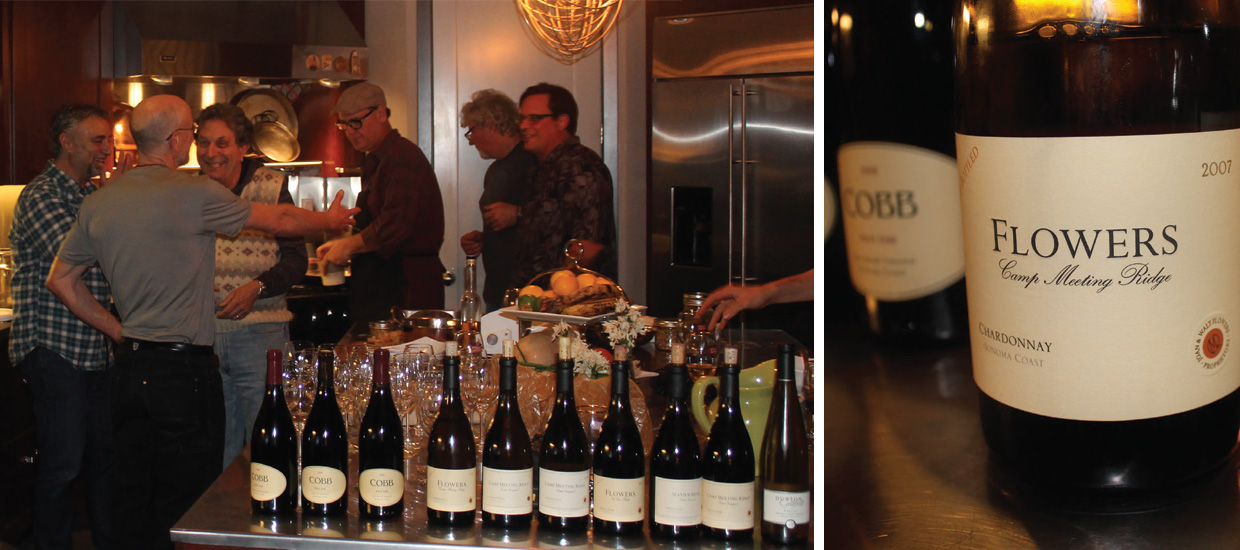
Back at his house, fortified by cold bottles of Stella, we started prepping: cleaning the mushrooms, arduously scrubbing the barnacle-encrusted mussels. At dusk the winemakers showed up—Dan Goldfield from Dutton-Goldfield, Greg Miller and David Keatley from Flowers, Webster Marquez of Anthill Farm with his wife and one-year-old in tow and Ross Cobb of Cobb Wines. Nebesky and his friends prepared hedgehogs and black trumpets sautéed with plenty of olive oil, a quick abalone and lime ceviche, a flatbread topped with cauliflower mushrooms (Sparasis crispa) and fresh goat cheese, polenta with mushrooms and tomato sauce, farro with dried porcinis harvested earlier in the year, ravioli made with both dried and oil-preserved porcinis, and my mussels with spicy chorizo. Then the winemakers started opening their bottles.
You talk to the old Italians around here, and they were doing this a hundred years ago. Although in those days, they were drinking zinfandel.
—Dan Goldfield, Dutton-Goldfield
West Sonoma’s bright, sometimes briny chardonnays would have been a sure thing with Dungeness crabs, sea urchins or razor clams. But with lighter shellfish at play, we had a challenge. Luckily, Dan Goldfield had brought a bottle of his just-bottled 2015 riesling from Marin County, and that helped bridge the gap, its youthful refreshment just the thing to wash down spicy mussels. Granted, coastal rieslings are few and far between, but Pey-Marin’s The Shell Mound Riesling, also from Marin, and Radio-Coteau’s Platt Vineyard Riesling, from a cool site above the Petaluma Gap, would have also worked.
The abalone was a different matter. Abalone seared in butter would have made an easy chardonnay match, but Nebesky’s lean, briny ceviche found more in common with the riesling than most of the chardonnays—except for the 2011 Flowers Camp Meeting Ridge, from some of the oldest chardonnay vines on the coast and one of the coolest vintages in California history. It was zippy, racy and tight, with mouthwatering citrus flavor that held up to the salt and acid and kept the wine’s oak in the background.
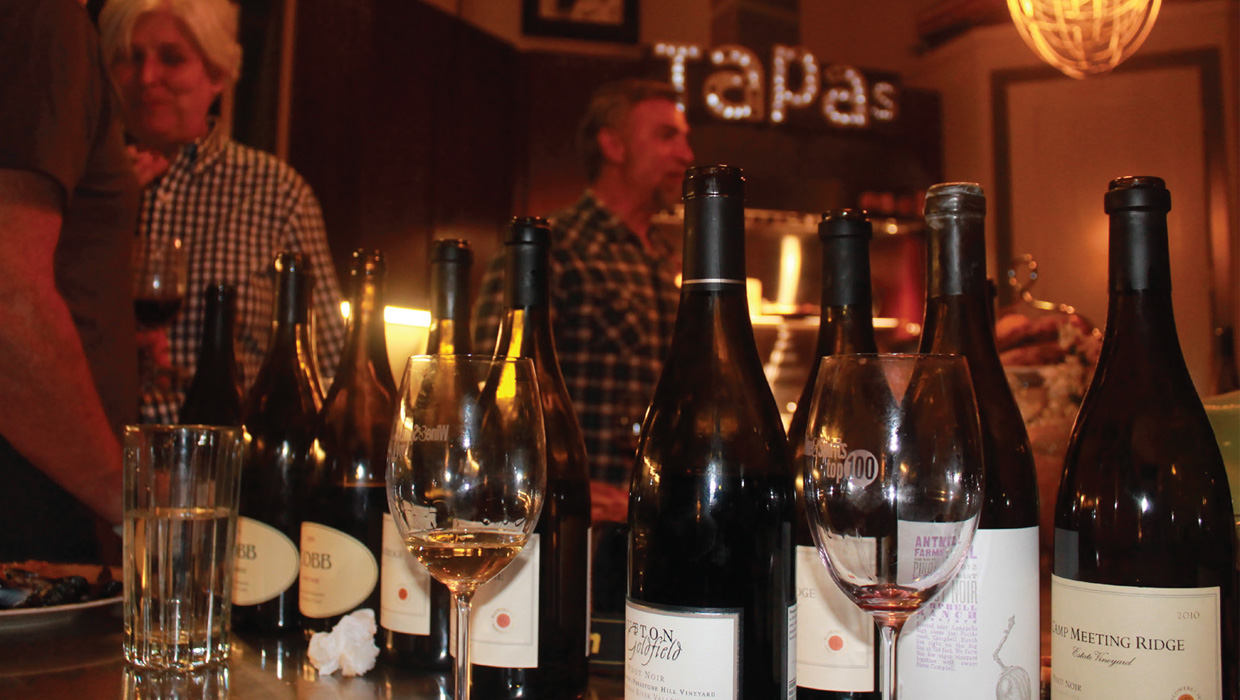
The mushrooms, meanwhile, offered plenty of fodder for the wines. Black trumpets—which share some of the rich, savory aromas found in cool-climate pinot noir—were great with many of the pinot noirs. The key was a bit of age. The primary fruit of the younger wines struggled to match the mushrooms, but a trio of 2008s from Cobb Wines, a 2010 Camp Meeting Ridge Pinot Noir from Flowers and a pinot-weight Anthill Farms Sonoma Coast Syrah from the cool 2011 vintage all worked. Szuecs pointed out that porcinis in particular have an abundance of sugar, which is why porcinis caramelize so well, and why, perhaps, the almost-sweet earthiness of our wild mushrooms matched so well with the satiny textures and savory flavors of the slightly older wines.
The one exception was the 2007 Flowers Sea View Ridge, a wine that was still so bright and youthful that it wasn’t ready for mushrooms. If it had been salmon season, it might have been the wine of the night—but give it a few more years if you’re thinking about drinking it with a wild mushroom risotto. The biggest surprise was how well the older coastal chardonnays went with the toothsome, copper-colored sautéed hedgehogs. “Solid as a rock,” Goldfield said of the 2007 Flowers Camp Meeting Ridge, which was deliciously earthy and still quite firm. (Ross Cobb recalled that it was the last wine he bottled as Flowers’ head winemaker before leaving to focus on his own wines.) Goldfield’s riper and more mature 2003 Rued Vineyard from Green Valley also worked well. The subtle nuttiness of aged chardonnay was a perfect bridge to the hazelnut flavor and slight chewiness of the hedgehogs.
Though not a forager himself, Dan Goldfield mentioned that his good friend Johnny Gonnella came from a family that might be in the running for the coast’s original foragers of European decent: the Gonnellas and the Negris.
Johnny Gonnella Szuecs and Nebesky knew him too, and had hunted porcinis with him. The first generation of Gonnellas came to western Sonoma to work as loggers and stayed, buying property in what became the little valley town of Occidental. At various times they ran a bakery, a hardware store, a shoe shop and general store. Johnny’s aunt still owns Negri’s restaurant in downtown Occidental. It’s been in business since 1943. “You talk to the old Italians around here, and they were doing this a hundred years ago,” Goldfield said—hunting, fishing, gathering mushrooms. One of Johnny’s uncles, Goldfield recalled, worked as a lineman for the telephone company, so he spent his days on the remote roads that twist through Sonoma’s coast range, and would tip off his relatives whenever he spotted a patch of porcinis or chanterelles.
Sometimes the old-timers would make a whole day of cooking a foraged seafood cacciatore and drinking wine.
“Although in those days, they were drinking zinfandel,” Goldfield added—the grape that they used to grow in small patches out on these ridges, long before pinot noir and chardonnay meant anything on these remote shores.
Gerard Nebesky on preparing hedgehogs, black trumpets and abalone
Hedgehog Mushrooms
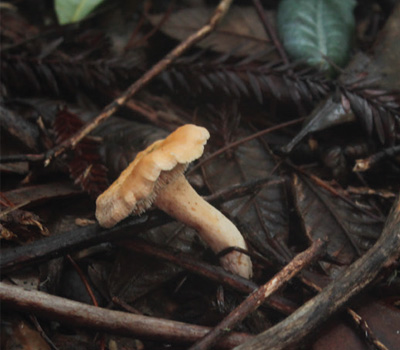
“I pick hedgies a little hastily, as they are small and it takes a long time to get your quota. So I don’t do a lot of cleaning in the field, but rather reserve that time for home and keep hunting. Once home I pinch the dirty base off and throw the mushrooms into a salad spinner. I know true fungi lovers frown at this, but these later mushrooms are plenty tough for this type of cleaning, and they’re not absorbent like porcinis. After a few good dunks in cold water, I spin them dry and place them in a bowl. Heat up a large pan and dry-fry initially in one layer—not too crowded—and then add olive oil or butter and sauté until done. Finish with sea salt. For storage, add a tiny pinch of nutmeg while cooking, then place the hedgies in a jar, top with olive oil and freeze. One month, six months or even two years later, when you pull the jar out of the freezer the mushrooms will have an amazing nutty flavor, as will the olive oil. Then you will see why the hedgehog is my favorite mushroom.
Black Trumpets
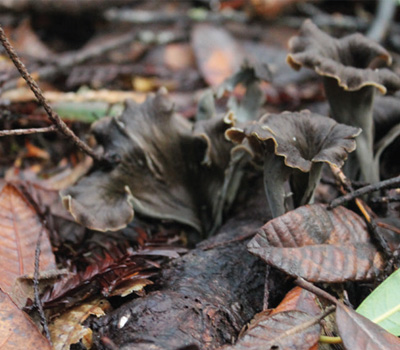
“The black trumpet is a very tough mushroom that can be cleaned the same way as hedgehogs (see above), only, before the cold water dunk, it needs to be snipped at the dirty base and then torn in half lengthwise. It will take only one time eating pasta while crunching dirt and sand to make sure you do the cleaning properly. As with the hedgehogs, dry-fry at first in a non-crowded pan followed by olive oil and finish with light sea salt. I have never stored black trumpets in oil but I have dried plenty, and it is a champion for that. It shrinks a lot and your booty will be disappointingly small once you open the dehydrator, but they will really deliver once reconstituted.”
Abalone Ceviche
Slice a half pound of the inner, most tender abalone meat into strips about two inches long by half an inch wide, place in a glass bowl and add the juice of one lime and one Meyer lemon, two tablespoons of olive oil and a pinch of salt and cracked pepper. Chill for 30 minutes, then stir in chopped parsley. Serve.

Longtime senior editor at Wine & Spirits magazine, Luke now works for the Stanford Technology Ventures Program.
This story appears in the print issue
of April 2016.
Like what you read? Subscribe
today.