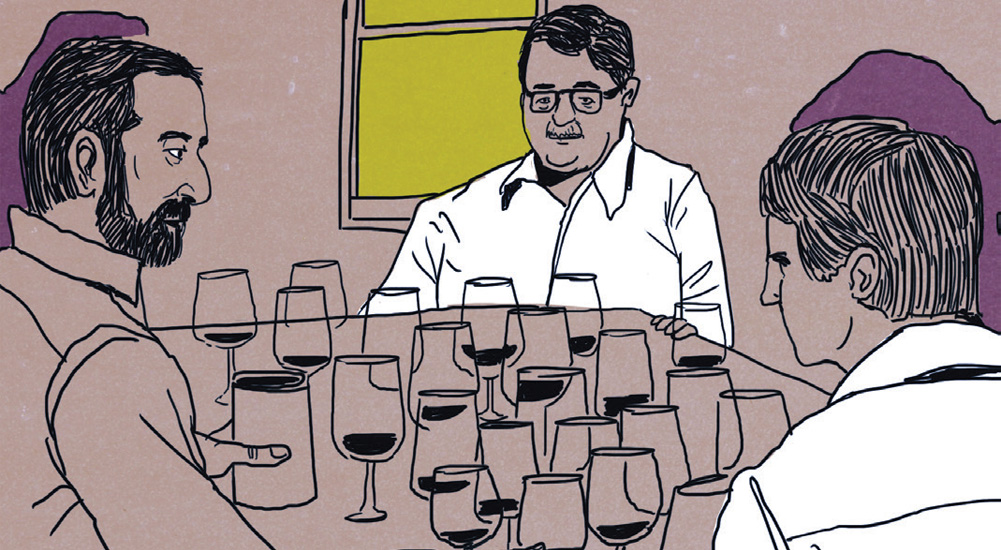
In contemporary Douro, many shippers and growers produce both dry table wines and fortified Ports. We organized a tasting that pitted a producer’s dry red wine against its Port wine, using the warm 2011 vintage to consider the status of classic Douro wines. Try this with a cool vintage, and the results might be completely different. Our panel included Scott Carney, MS, dean of wine studies at the International Culinary Center, NY; Roger Dagorn, MS, wine director at Toqueville and 15 East, NYC; Nacho Monclus, wine buyer at Lupulo, NYC; Tara Q. Thomas and Joshua Greene of W&S.
FLIGHT #1 – Altano 2013 Douro • Dow’s Fine Ruby Porto
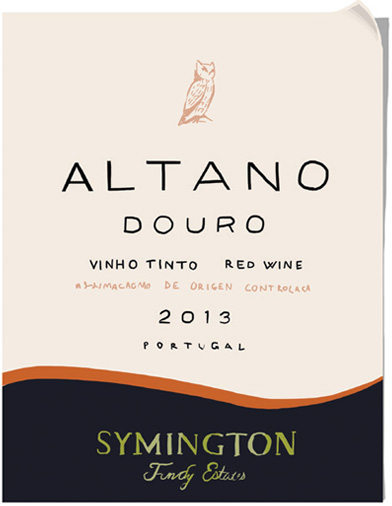
We began with a comparison of two basic wines from the Symington Family. The Symingtons have the largest vineyard holdings in the Douro, producing Altano from a modern, relatively flat vineyard in the Douro Superior; Dow’s basic Ruby represents a mix of grapes from throughout the region. The Altano is bright and youthful, showing some heat and plenty of tarry strawberry-jam flavor. The Ruby, a popular pour at restaurants, has a familiar flavor profile, a simple, sweet mouthful of jammy strawberry fruit. “There was a time when sweetness was prized,” Scott Carney pointed out, “but now there are so many places that people can go for sweetness.” In a sense, the dry wine reads as a more modern and fresh interpretation of the Douro.

“There was a time when sweetness was prized, but now there are so many places that people can go for sweetness.”
—Scott Carney, MS
FLIGHT #2 – Quinta de la Rosa 2011 Douro Reserva • 2011 Vintage Porto
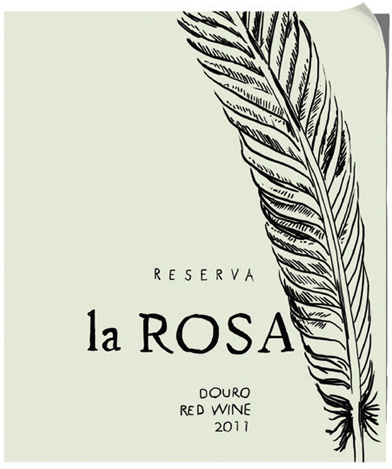
The Bergqvist family ran Eucalyptus Pulp Mills until 1987, when they sold the company and focused their attention on a small quinta they owned just downriver from Pinhão. Jorge Moreira has made the wines at the quinta since 2002. For the Reserva, Moreira blends touriga nacional, touriga franca, tinta roriz and other varieties from the older terraces at La Rosa, capturing the floral notes in the plummy fruit, as well as a bitter, tannic power. The Porto comes from the estate as well. Tasting the wines side by side, Tara Q. Thomas could envision an equation with the Reserva plus sugar equaling the 2011 Porto, that sweetness lending the fortified wine “a great, lush texture, wrapping around the wine’s structure like a hotel bathrobe.” Even so, the Port is focused more on fruit than sugary sweetness. Both wines were massive, with impenetrable color, two factors many people associate with classic wines from the Douro, but perhaps are really only one expression.
FLIGHT #3 – Quinta do Noval 2011 Douro • 2011 Vintage Porto
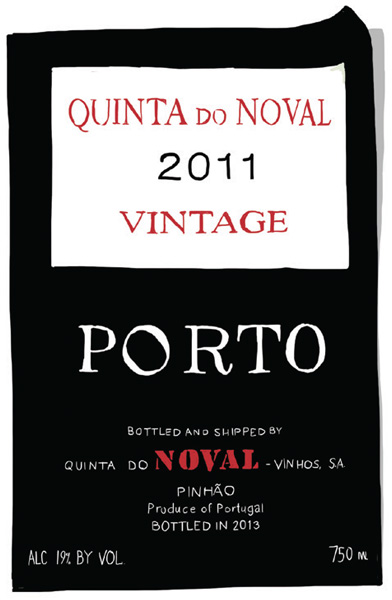
People assumed because Douro is a hot place, it was a place to make big wines,” Christian Seely told me recently as we tasted the 2012s at Quinta do Noval. Seely, now managing director of AXA Millésimes, had worked with Antonio Agrellos through the replanting and renovation of Noval in the 1990s, and though he now spends more time in Bordeaux, his heart is still in Douro. “If you taste old Vintage Port,” he said, “they are delicate. Hugely extracted wines are easy to do, but are masking the true nature of what Douro terroir is about. 2012 wasn’t quite as sunny or warm as 2011. You don’t have the same extraordinary ripeness or structure. But you’ve got beautiful fruit.” It’s as good a reason as any to try this tasting with the 2012s, though it might not be particularly fair to the Port wines. The touriga nacional that Seely and Agrellos planted at Noval now provides a substantial component for one of the most compelling dry reds in the Douro. In cool years, the touriga is fresh and luscious, the violet-scented fruit primarily a vehicle for the schist soils of the Vale Mendiz.
In a ripe year, like 2011, the Douro red comes across as big and rich, a deeply saturated red that’s completely savory. Agrellos has managed the tannins so they still hold their mysterious, schist depths, without any sharp edges. The wine is bold, then quietly reserved. Noval’s 2011 Porto is tarry and as sweet as a sugar plum, carrying the classic violet scents of touriga nacional. The tannins rein in the sweetness of the fruit, contrasting its clean, modern lines with something that feels archaic. Like many 2011 Ports, this wine defines a new classicism for the Douro, Noval’s needing a decade, at least, for the wine to shed its baby fat.
FLIGHT #4 – Niepoort 2011 Douro Charme • 2011 Porto Vinha Velha Bioma
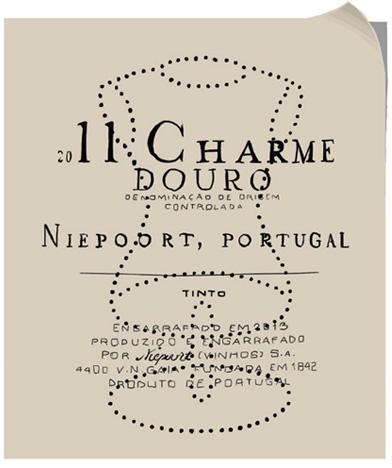
Dirk Niepoort, the leader of the revolutionary flank of the Douro table wine movement, started investing in vineyards in the 1980s. He steadfastly believes in selecting sites for table wine and Port and farming them for those styles and outcomes. Charme is the only exception: His lightest, most elegant, in some vintages delicate table wine, it grows at an ancient mixed block of vines in a vineyard where the concentration and ripeness of the fruit is suited to Port. In one of his many “Projectos,” Niepoort created Charme by foot tredding whole grape clusters in the round lagars in the old Sandeman museum in Pinhão (now a Niepoort vinification center), finishing the fermentation in French oak barrels. In some years, the oak can dominate the delicate complexity of the fruit, but in a cool year, Charme strips the Douro to its essence, a wine without weight, without heat and with an energy and hidden power that captures the Vale Mendiz in liquid form. That’s classical.
The 2011 vintage was not a cool year, producing a Charme of more moderate weight. In the glass, the color is a faded pink at the rim, completely different from every other wine on the table. The wine is not heavily concentrated, but the intensity of its flavor is unbridled. It’s a bright red wine with elegance and finesse, the delicacy of its fruit layered in scents of forest floor, dried flowers, mushrooms and crushed stone. “The Douro upside-down,” said Tara Q. Thomas.
Bioma comes off a block of 80-year-old vines at the Quinta da Pisca, long a major component of Niepoort Vintage Port. The wine ferments with all its stems in the same round lagars where Niepoort vinifies Charme. Bioma is then fortified and left to settle over the winter before it moves to a cool spot in the Quinta de Nápoles cellar, where it ages in pipes (550-liter casks) for three years. The old vines and their ripe stems give the Port a fresh herbal note, brightening its massive raspberry flavor. Another 2011 Porto that defines modern classicism.
FLIGHT #5 – Quinta do Vesuvio 2011 Douro • 2011 Porto
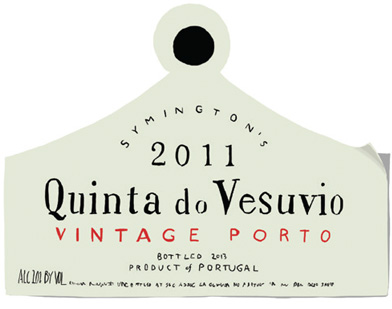
From one of Dona Antónia’s grandest 19th-century vineyard projects, just upriver from the Cachão de Valeira, Vesuvio’s 800 acres rise up a vast, conical hill, the vineyards at the top replanted by the Symington family after they purchased the property in 1989. Today, vineyards account for 329 acres at Vesuvio, providing fruit for both this estate red and single-quinta Port. The warmth of the 2011 vintage favors the Port in this pair, the table wine rich and chocolatey, with the Christmas-cake spice of a warm year in the Douro. While it’s full and complete, it doesn’t have the pure pleasure of the 2011 Port. Yet, Dagorn points out, the family resemblance is clear: “The dry wine is more vinous and the Port sweet, but not unctuously sweet; the tannic structure brings the two wines together.”
FLIGHT #6 – Ramos Pinto Douro Duas Quintas Reserva 2012 • 1992
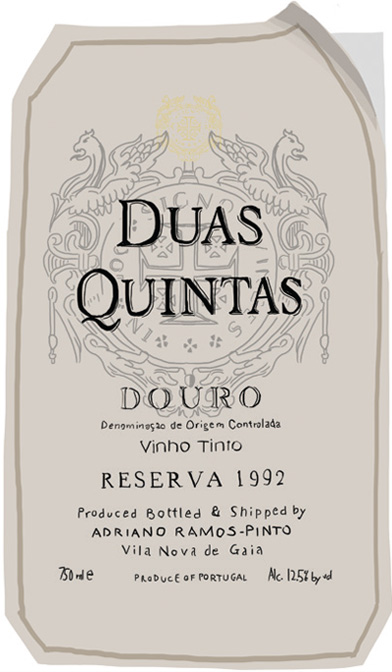
João Nicolau de Almeida at Ramos Pinto was among the first Port shippers to focus on table wine, eventually producing a red he called Duas Quintas Reserva in the early 1990s. Our panel had the pleasure of tasting the 1992 for this issue, a wine from a hot year in the Douro, built to withstand that heat—on the same architecture his father, Fernando, used for Ferreira’s Barca Velha. The wine benefits from vineyards João Nicolau de Almeida designed from the ground up—at Ervamoira, in the far upper Douro, where he implemented the results of his experimental work in the 1970s, when he was hired to select five recommended grape varieties for planting. He blends the fruit of that vineyard on the banks of the Coa river with grapes from the firm’s Quinta dos Bons Ares, a cool site high up in the hills.
Almeida’s latest release, the 2012, is a gracious, elegant young wine with plump fruit and earthy tannins following a parallel line. It benefits from experiments he did after finding that early-19th-century slip of paper with a farmer’s recipe for dry Douro reds. From 1995 through 2008, he made a wine called Reserva Especial, only in a few vintages, using the results to determine a strategy for Duas Quintas. “We are going to the traditional ways of farming the vines,” he told me, “using the old rootstock—rupestris—organic farming, and mixed varieties—but knowing what varieties we are mixing.”
He cited another paper from Pereira’s archives, this one from 1640, suggesting that varieties should be mixed. “It said, ‘if this one doesn’t work, the other one will.’ The mixed vineyards were a way to protect the production. The farmers did not think a lot about the variety, as their work was completely separate from the blenders. The farmers and shippers lived in two separate worlds.”
The worlds have since collided, with empirical knowledge from both forming new classics of the Douro.

Joshua Greene is the editor and publisher of Wine & Spirits magazine.
This story appears in the print issue of Fall 2015.
Like what you read? Subscribe today.